
ASEAN cement industry unites on sustainability
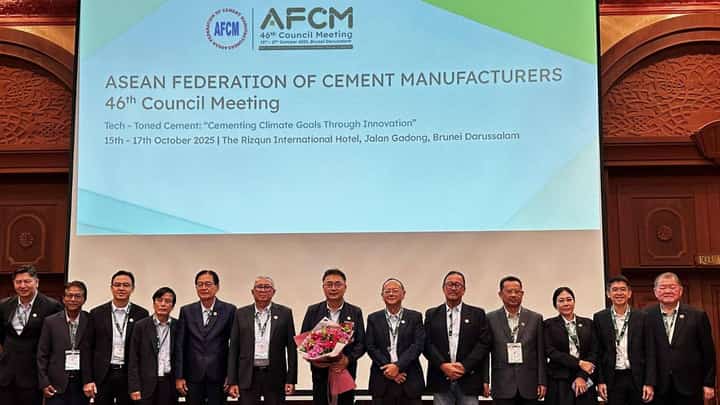
Cement manufacturers across Southeast Asia have reinforced their commitment to sustainable development with the launch of the 2035 ASEAN Federation of Cement Manufacturers (AFCM) Roadmap, a regional framework aimed at accelerating low-carbon cement production.
The announcement came during the 46th AFCM Council Meeting held in Brunei under the theme “Cementing Climate Goals Through Innovations.” The event gathered leading cement associations from eight ASEAN countries, including the Cement Manufacturers Association of the Philippines (CeMAP), Thailand, Indonesia, Malaysia, Singapore, Vietnam, Cambodia, and Brunei.
The roadmap, supported by the Global Cement and Concrete Association (GCCA), outlines four strategic areas to cut CO₂ emissions across the region: promoting low-carbon cement, transitioning to cleaner energy, increasing the use of supplementary cementitious materials, and adopting deep decarbonization technologies.
Representing the Philippines, CeMAP President John Reinier Dizon highlighted Manila’s alignment with the AFCM’s sustainability goals.
“The Philippines fully supports AFCM's direction in advancing sustainability. This year, we launched our own Philippine Cement Sustainability Roadmap, setting clear actions to reduce our carbon footprint, promote low-carbon cement, and expand the use of alternative fuels,” Dizon said.
The meeting, chaired by Dr. Chana Poomee of the Thai Cement Manufacturers Association, emphasized the importance of regional collaboration and knowledge sharing. By uniting on sustainable practices and innovation, the ASEAN cement industry aims to play a key role in both environmental stewardship and economic development in the region.