
Supreme Court reawakens judicial heritage through week-long conference
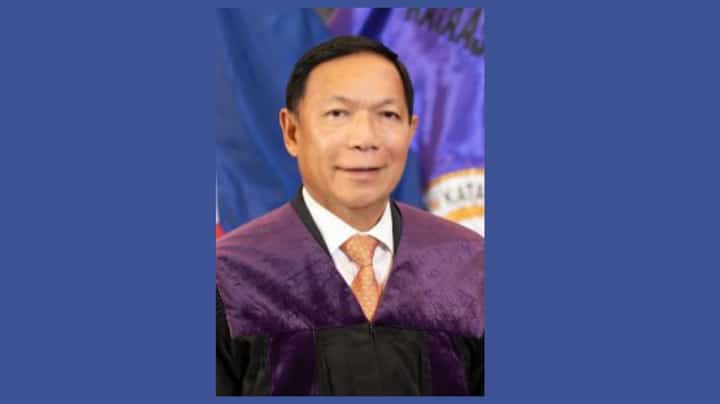
A week-long judicial heritage conference was held by the Supreme Court (SC) in partnership with the Philippine Judicial Academy (PHILJA) and the Pacific Judicial Council (PJC) to revisit the historical roots of judicial systems.
The Judicial Heritage Conference, titled “Echoes of the Law: Reawakening Judicial Heritage Across Cultures,” took place from 5 to 9 October in Taguig City and Tagaytay City.
The event gathered justices, judges, scholars, and cultural leaders from the Philippines and the United States to examine the historical, cultural, and ethical foundations of judicial systems. Discussions centered on colonial legacies, indigenous justice practices, judicial leadership, and integrating culture into modern legal frameworks.
Associate Justice Samuel H. Gaerlan, who delivered the keynote address on 6 October at Shangri-La The Fort, traced the evolution of Philippine judicial institutions from pre-colonial barangay justice to the present judiciary.
He cited indigenous practices such as the bodong or peace pact as enduring models of restorative justice, linking them to the Supreme Court’s Strategic Plan for Judicial Innovations 2022–2027, which aims to build a judiciary that is efficient, inclusive, and culturally grounded.
“Today, we not only honor the beauty of the past, but we likewise chart a luminous path forward,” Gaerlan said.
Chief Justice Robert J. Torres Jr. of the Supreme Court of Guam and PJC President opened the conference, urging participants to view law not merely as written statutes but as living traditions shaped by communities and shared histories.
Speakers included Dr. Maria Serena I. Diokno, who discussed how colonial rule influenced Filipino legal thought, and Manuel L. Quezon III, who spoke on the evolution of judicial independence during the Commonwealth era.
U.S. Court of Appeals Judge Michelle J. Childs warned of threats to judicial independence such as disinformation and political interference, while Court of Appeals Presiding Justice Fernanda C. Lampas-Peralta highlighted judicial modernization through digital transformation and environmental justice.
Cultural perspectives also featured prominently. Dr. Fernando Zialcita of Ateneo de Manila University analyzed the Filipino value of utang na loob (debt of gratitude) in conflict resolution, cautioning that it can both promote reconciliation and foster favoritism.
During the closing ceremonies on 9 October at the Judicial Academy of the Philippines in Tagaytay City, Senior Associate Justice Marvic M.V.F. Leonen, then Acting Chief Justice, called on the judiciary to reconnect with its moral and cultural roots.
“Justice is a living, thriving heritage,” Leonen said. “Corruption thrives when heritage is silenced because corruption feeds on forgetfulness.”
The senior associate justice outlined four strategies to strengthen judicial heritage—education, judicial practice, institutional reform, and cross-cultural dialogue—underscoring the Supreme Court’s commitment to integrate heritage and innovation through the SPJI.
The conference concluded with a reenactment of a Kalinga bodong peace pact, symbolizing how traditional justice systems continue to inspire modern law’s pursuit of fairness and reconciliation.