




Giving road safety the green light it deserves
We have the solutions to prevent both death and disability.

Text size
We have the solutions to prevent both death and disability.
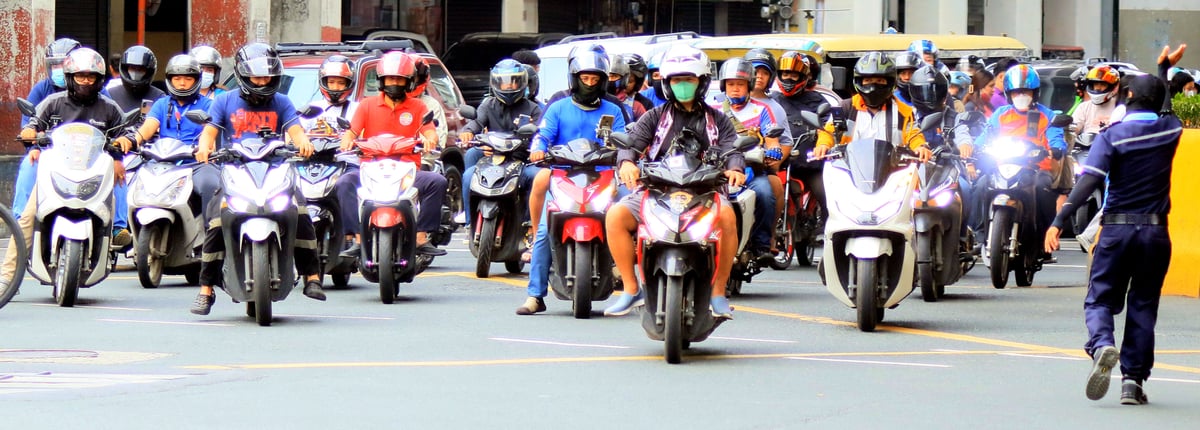
Ninety percent of all road deaths occur in low- and middle-income countries.
DAILY TRIBUNE FILE PHOTO
Each year, 1.2 million people lose their lives on the world’s roads. Another 50 million are maimed or injured.
These are not faceless statistics.
They are children on their way to school.
Parents traveling to work. People whose lives are shattered in an instant.
Road crashes are the eighth leading cause of death globally — and the leading killer of young people and children over five.
Yet the road-crash epidemic remains largely invisible.
Why? Because, like so many health crises, it is rooted in inequality.
Ninety percent of all road deaths occur in low- and middle-income countries, primarily in the Asia-Pacific and Sub-Saharan Africa.
The vast majority of victims come from the most vulnerable parts of society.
Housing is probably the biggest issue affecting people the world over.
Malacañang on Monday called for a more thorough investigation into the questioned flood control projects in Taguig…
The defense on Monday backed the move by senator-judges to exclude a prosecution witness who testified on the firearms…
They are pedestrians, cyclists, motorcyclists and children. People who do not own — or cannot afford — large vehicles.
The infrastructure they rely is often simply not there.
Sidewalks are missing. Crosswalks and traffic lights do not exist. And public transportation is either unsafe or unavailable.
But we have the solutions to prevent both death and disability:
Better urban planning and pedestrian infrastructure.
Improved public transport that can also enhance air quality and reduce congestion.
Laws requiring helmets and seat belts.
Stronger enforcement of speed management.
And improved emergency protocols.
These interventions can save thousands of lives.
The United Nations is committed to road safety.
To date, 94 countries have received our support — through WHO (World Health Organization), our Special Envoy, Mr. (Jean) Todt and the Road Safety Fund.
And we are seeing results:
In Brazil, speed management protocols have reduced fatalities.
In Rwanda, helmet laws are keeping motorcyclists safe.
And in Lao PDR, a better licensing system is raising the bar on driver safety.
Less than three months from now, we will enter the United Nations Decade of Sustainable Transport — an opportunity to build partnerships that place road safety at the heart of sustainable transport.
The Sustainable Development Goals set a clear target under Goal 3 — Good Health and Wellbeing — to cut road traffic deaths in half by 2030. But right now, the pace of decline is far too slow.
Change will take bold new partnerships — bringing together governments, civil society, the private sector, and, crucially, you, the philanthropic leaders in the room.
Your vision and innovation have helped tackle countless public health challenges, from polio and tuberculosis to hunger and maternal health.
Now, that same commitment can help transform road safety.
Safety on our roads is integral to development, urban planning, and climate action alike.
Together, we can save millions of lives — and give road safety the green light it deserves.
(Excerpts of United Nations Secretary-General António Guterres’ remarks at the opening of the high-level event entitled “Catalyzing Philanthropic Leadership on Road Safety and Global Health” on 13 October 2025.)
