
‘Quezon’ review: Bold, beautiful, cartoonish


TBA Studios’ Quezon marks the long-awaited conclusion to their so-called Bayaniverse Trilogy that began with Heneral Luna (2015) and Goyo: Ang Batang Heneral (2018). Nearly a decade after the last installment, writer-director Jerrold Tarog returns — this time with celebrated playwright Rody Vera as co-writer — with a film that feels both the most ambitious and the most technically refined of the three. It’s a feast for the eyes of meticulous production design, gleaming cinematography, and faultless editing, though makeup is still very much crude.
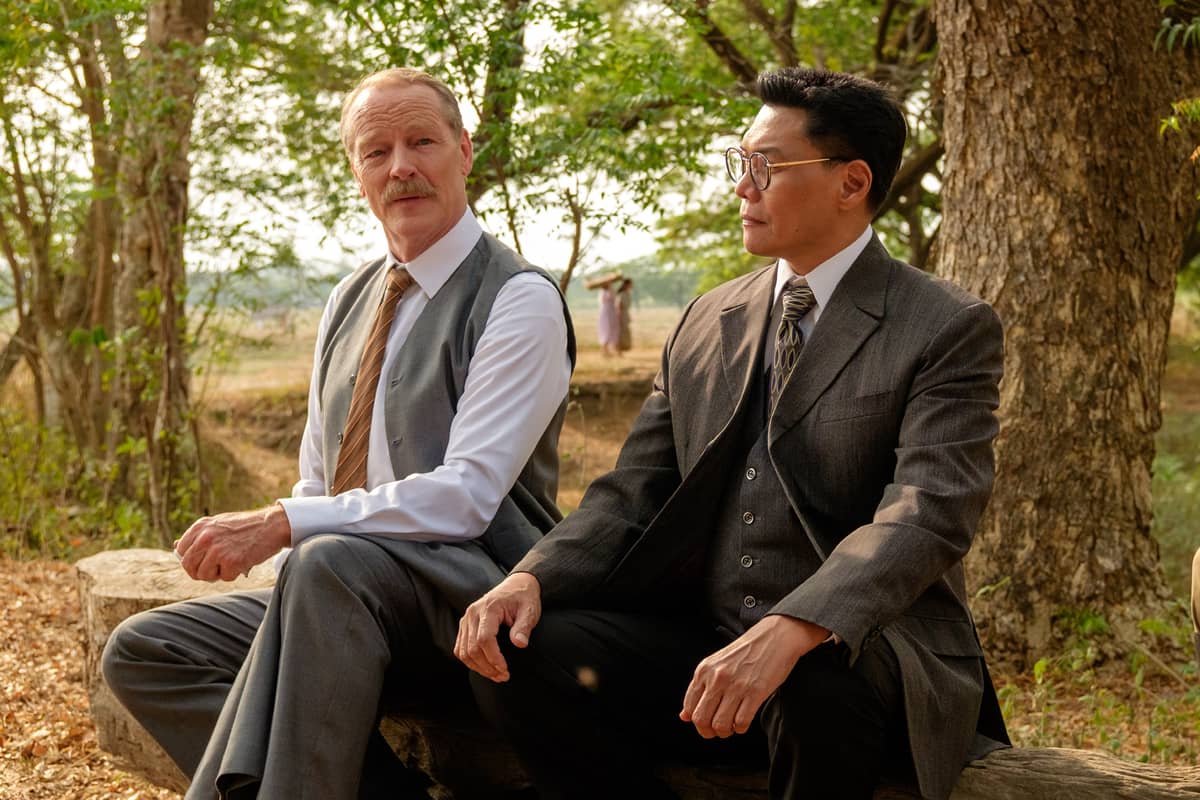
Iain Glen and Mon Confiado in the historical film ‘Quezon.’
There’s no denying the scale of Tarog’s achievement in world-building. It looks spectacular: the 1930s setting feels lived-in, the sets no longer read as sets, and the costumes and props blend naturally into the frame. Every scene is drenched in color and theatrical flourish. From a purely technical standpoint, Quezon is one of the most impressively produced local films in recent memory.
A fusion of fact and invention, the film is an inspired reimagining of the life of Manuel L. Quezon — the first president of the Philippine Commonwealth — told through Tarog’s signature blend of history, myth, and aesthetic sophistication. The film aspires to show how our history has formed what the Philippines is today: a nation built on contradiction, forever grappling with the moral ambiguities of its leaders.
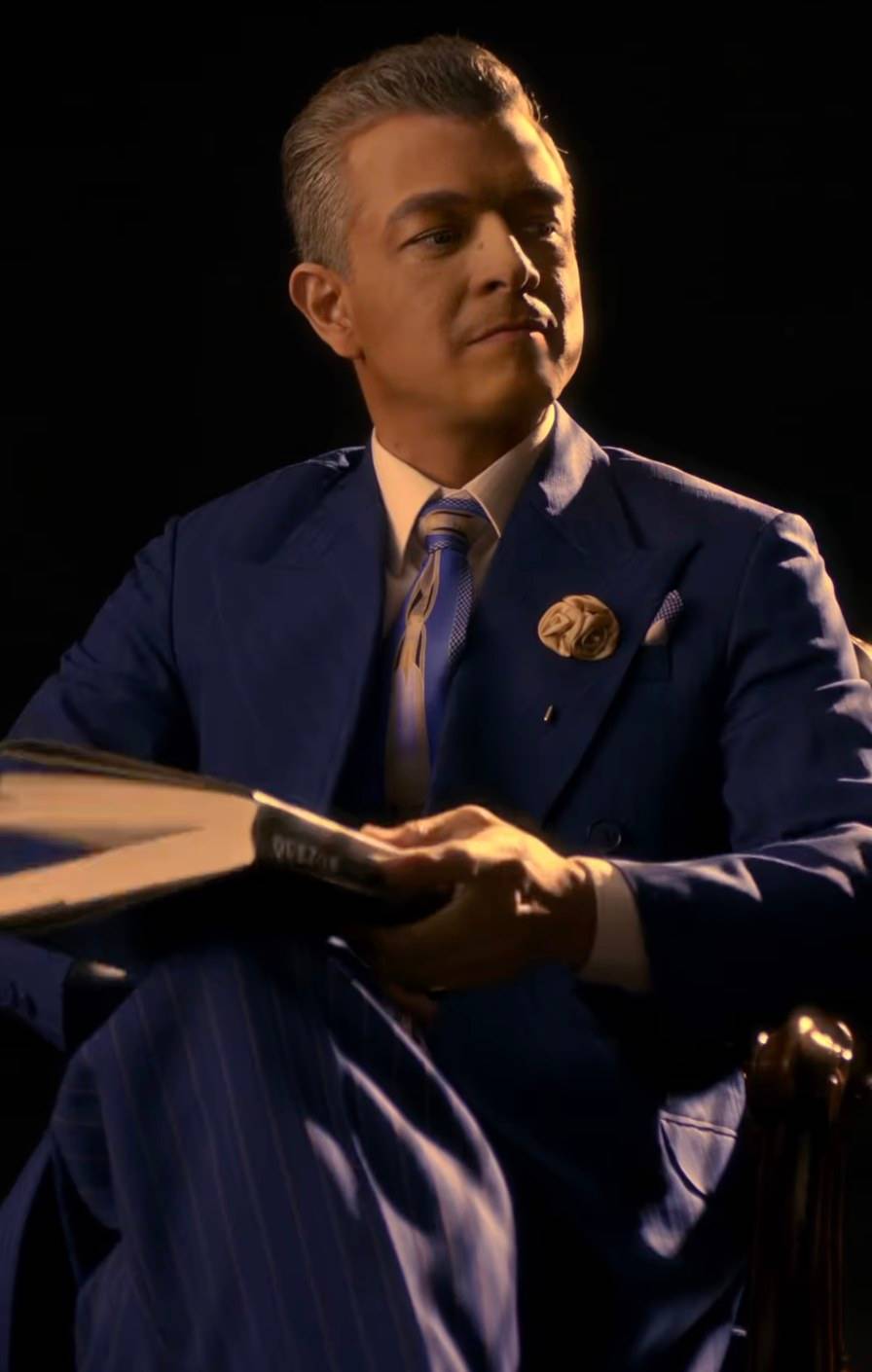
JERICHO Rosales as Manuel L. Quezon.
Photographs courtesy of TBA Studios
But the film moves frantically, its dialogue expressed with dramatic flair, and its emotions heightened to almost musical proportions. Every shot bursts with brio. As though terrified that historical seriousness might bore his audience, he cranks up the energy — the rapid editing, the high-pitched acting, the manic rhythm —resulting in a display that feels modeled after the Marvel Cinematic Universe.
Jericho Rosales’ portrayal of Quezon is all mimicry, and he never disappears into the role. His clipped English, his mannered gestures, his almost gleeful egotism all feel like performance rather than immersion. Romnick Sarmenta as Sergio Osmeña suffers from a similar problem. His forced high-pitched voice and his penciled eyebrows (their tips curving upward) make him look and sound like a cartoon.

ROMNICK Sarmenta as Sergio Osmeña.
PHOTOGRAPH COURTESY OF TBA STUDIOS
In contrast, Cris Villanueva as the older Joven Hernando, Iain Glen as Leonard Wood, and Mon Confiado as Emilio Aguinaldo provide the film’s rare flashes of authenticity. Their performances feel nuanced, as if they wandered in from another movie — one with genuine emotional resonance.
Tarog also once again proves unable to craft a film that can stand on its own. He continues to rely on flashbacks, diegetic devices, and spoon-fed explanations to hold the viewer’s hand, as if unwilling to trust the audience’s capacity to follow the story unaided.
Here, Joven’s daughter Nadia (Therese Malvar), a filmmaker, creates a series of silent films that function as a movie within the movie. Stylish, on-screen sequences reveal Quezon’s darker side. These segments, alternating with flashbacks, replace the need for text overlays or voiceovers and give the film some structural cohesion. But the result is a film that feels overstuffed and overextended.
For viewers familiar with Matthew Rosen’s 2018 Quezon’s Game, the biographical drama where Raymond Bagatsing portrayed the president with human restraint, Tarog’s Quezon will feel like the opposite. Here, Quezon is not the statesman who helped shape the nation’s early independence; he is an ambitious, megalomaniacal man obsessed with legacy and power. The film is determined to expose only the darker side of the cunning and brilliant Quezon—without offering any balancing glimpse of his contribution or his humanity.
Although Tarog wants to humanize Quezon, he instead inflates him into caricature—a historical figure rewritten as a parody. The film’s own ambition mirrors that of its subject: grand and excessive. With brisk pacing and dynamic editing, it feels like watching an exquisitely made two-and-a-half-hour commercial: exhausting and emotionally thin, yet impossible to look away from because of the spectacle.
Tarog’s Bayaniverse Trilogy is never about historical accuracy, anyway; it is about the creation of a historical mythology. His MCU-like saga, featuring every hero and villain, every flaw and failure, contributes to a larger portrait of the Filipino condition: disunity, cutthroat competition, and political corruption.
Overall, Quezon teeters between historical drama and cartoonish parody. It’s loud, restless and visually overwhelming. The result, paradoxically, is dullness: the noise numbs rather than excites. Still, it dazzles the senses and provokes reflection on the roots of corruption and ambition in our leaders. It is a film of enormous technical accomplishment that reflects the Filipino psyche. And for all its excesses, it achieves what Tarog set out to do: to make history feel alive, unruly, and painfully familiar.
3 out of 5 stars
Now showing in Philippine cinemas