
DOST, DepEd join forces to boost science-based disaster preparedness in schools

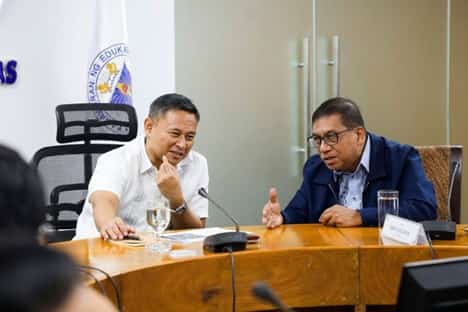
The Department of Science and Technology (DOST), through its attached agency, the DOST-Philippine Institute of Volcanology and Seismology (DOST-PHIVOLCS), expressed readiness to provide technical assistance to the Department of Education (DepEd) in strengthening science-based disaster preparedness and response in schools nationwide.
This move comes after recent earthquakes struck Cebu and Davao Oriental, and aligns with President Ferdinand R. Marcos Jr.’s directive to ensure that decisions such as class suspensions are guided by scientific data, localized risk assessments, and established safety standards.
During a meeting at the DepEd Central Office in Makati City, officials from both departments discussed the need to “over-engineer” school structures—building beyond standard requirements—to help campuses situated near fault lines withstand strong earthquakes.
“Science plays a vital role in ensuring that our decisions during disasters are not only quick but also precise. Through close collaboration with the Department of Education, we aim to strengthen disaster preparedness in schools, ensuring that safety protocols and class suspensions are always guided by data and evidence,” said DOST Secretary Renato U. Solidum Jr.
Solidum said the partnership with DepEd through DOST-PHIVOLCS will make hazard information and risk assessments more accessible to the education sector.
“By equipping DepEd personnel, especially our teachers and school administrators, with scientific knowledge and tools, we can help schools make informed decisions that protect lives while supporting the continuity of learning,” he explained.
He also emphasized that preparedness begins with understanding science-based principles shared by DOST and PHIVOLCS in cultivating a culture of readiness—where students, teachers, and officials act decisively to prevent disasters through informed action.
DepEd Secretary Sonny Angara echoed Solidum’s views, underscoring the importance of prompt and data-driven decision-making during emergencies.
“Nang makita ko mismo ang pinsala ng lindol sa Cebu at Davao Oriental, mas napatunayan nating mahalaga ang tamang datos at koordinasyon. Sa tulong ng PHIVOLCS, masisiguro nating ang bawat hakbang ng DepEd ay mabilis, ligtas, at may batayang siyentipiko,” Angara said.
DepEd also expressed plans to partner with DOST-PHIVOLCS for training programs to enhance the capacity of regional and field offices in assessing building stability and responding effectively during earthquakes.
The department is also proposing the establishment of a DepEd Command Center, in coordination with DOST-PHIVOLCS, to serve as a central monitoring hub for disaster response and early warning.
DepEd personnel may soon be trained to use checklist-based systems that can automatically send alerts once risk thresholds are detected, ensuring faster and more coordinated action.
Both agencies agreed to strengthen coordination in issuing scientific advisories and educational materials to maintain public trust and prevent misinformation during crises.
Angara also highlighted the need to integrate preparedness with learning continuity.
Under DepEd Order No. 22, s. 2024, or the Revised Guidelines on Class and Work Suspension in Schools During Disasters and Emergencies, authority to suspend classes lies with local chief executives, schools division superintendents, and school principals—guided by PHIVOLCS advisories and actual ground conditions.
DepEd also reaffirmed DepEd Order No. 21, s. 2015, which directs regional offices to monitor prevention, mitigation, and preparedness efforts to ensure uninterrupted learning during disasters.
DepEd stressed that preventive suspensions should trigger immediate implementation of modular, online, or take-home learning while school safety inspections are ongoing.