




Palace hands off on ICC denial of Rody’s release
The chamber noted that members of Duterte’s family ‘physically resisted’ his arrest and ‘publicly demanded’ his return to the Philippines.

Text size
The chamber noted that members of Duterte’s family ‘physically resisted’ his arrest and ‘publicly demanded’ his return to the Philippines.
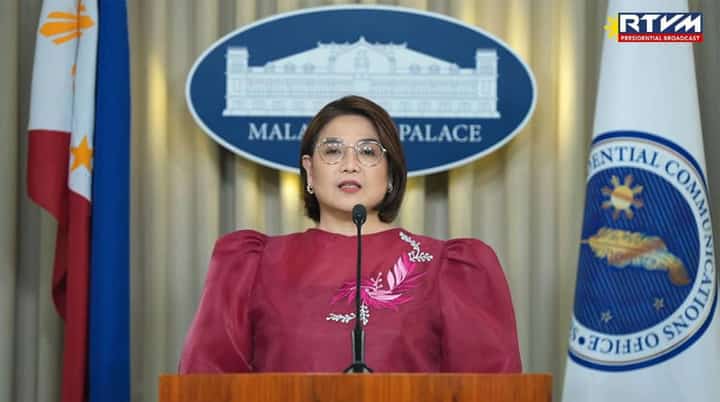
Malacañang on Monday said it would leave matters regarding the International Criminal Court’s (ICC) denial of former President Rodrigo Duterte’s request for interim release to his legal team.
“Whatever the decision, let his legal team and the parties act on it,” Palace Press Officer Undersecretary Claire Castro said during a press briefing.
Castro reiterated that President Ferdinand “Bongbong” Marcos Jr. is not involved in the case, distancing the current administration from the ongoing ICC proceedings.
The statement came after the ICC Pre-Trial Chamber I rejected Duterte’s plea for interim release, citing that his detention “remains necessary.”
In its 23-page decision dated 26 September, the chamber ruled that the conditions for detention under Article 60(2), in connection with Article 58(1) of the Rome Statute, continue to be met.
Duterte is facing charges of crimes against humanity, including murder and attempted murder, stemming from his administration’s controversial war on drugs.
The chamber noted that members of Duterte’s family “physically resisted” his arrest and “publicly demanded” his return to the Philippines.
It also cited a 19 July speech by Duterte’s daughter, Vice President Sara Duterte, in which she reportedly mentioned breaking him out of the ICC Detention Center and accused the court of colluding with the Philippine government and using “fake witnesses.”
The ICC further cited an 19 August incident in which Duterte allegedly told his daughter he would return to Davao City if granted interim release, contradicting his defense team’s claim that he would remain within the jurisdiction of the state where he would be released.
Meanwhile, five out of 10 Filipinos said Duterte should be held responsible for the killings that occurred during his administration’s war against illegal drugs.
In a survey conducted by the Social Weather Stations from 24 to 30 September, results showed that 50 percent agreed that the former president should be held accountable for the killings related to illegal drugs during his term.
Of this number, 31 percent of respondents answered “strongly agree” and 18 percent “somewhat agree.”
About 32 percent of respondents expressed disagreement — 10 percent “somewhat disagree” and 22 percent “strongly disagree.” Fifteen percent were undecided, and 4 percent did not respond.
Among the country’s three main island groups, the Visayas recorded the highest support for accountability at 54 percent, followed by Metro Manila at 53 percent, Balance Luzon at 52 percent, and Mindanao at 39 percent.
SWS conducted face-to-face interviews with 1,500 respondents aged 18 and above — 300 in Metro Manila, 600 in Balance Luzon, and 300 each in the Visayas and Mindanao.
Housing is probably the biggest issue affecting people the world over.
Malacañang on Monday called for a more thorough investigation into the questioned flood control projects in Taguig…
The defense on Monday backed the move by senator-judges to exclude a prosecution witness who testified on the firearms…
