




Reblocking runs into dead end
Many road users have accepted it as part of their daily ordeal; they wait for days on end for the reblocking to be completed, but when done the finished road is no different from before.

Text size
Many road users have accepted it as part of their daily ordeal; they wait for days on end for the reblocking to be completed, but when done the finished road is no different from before.
Many Filipinos following the hearings on the manipulation of Department of Public Works and Highways (DPWH) funds have expressed the view that if the civil engineers had applied their collective resourcefulness for good, the country would be spared the worst effects of natural calamities.
Unfortunately, their priority was to enrich themselves, particularly through collusion with politicians.
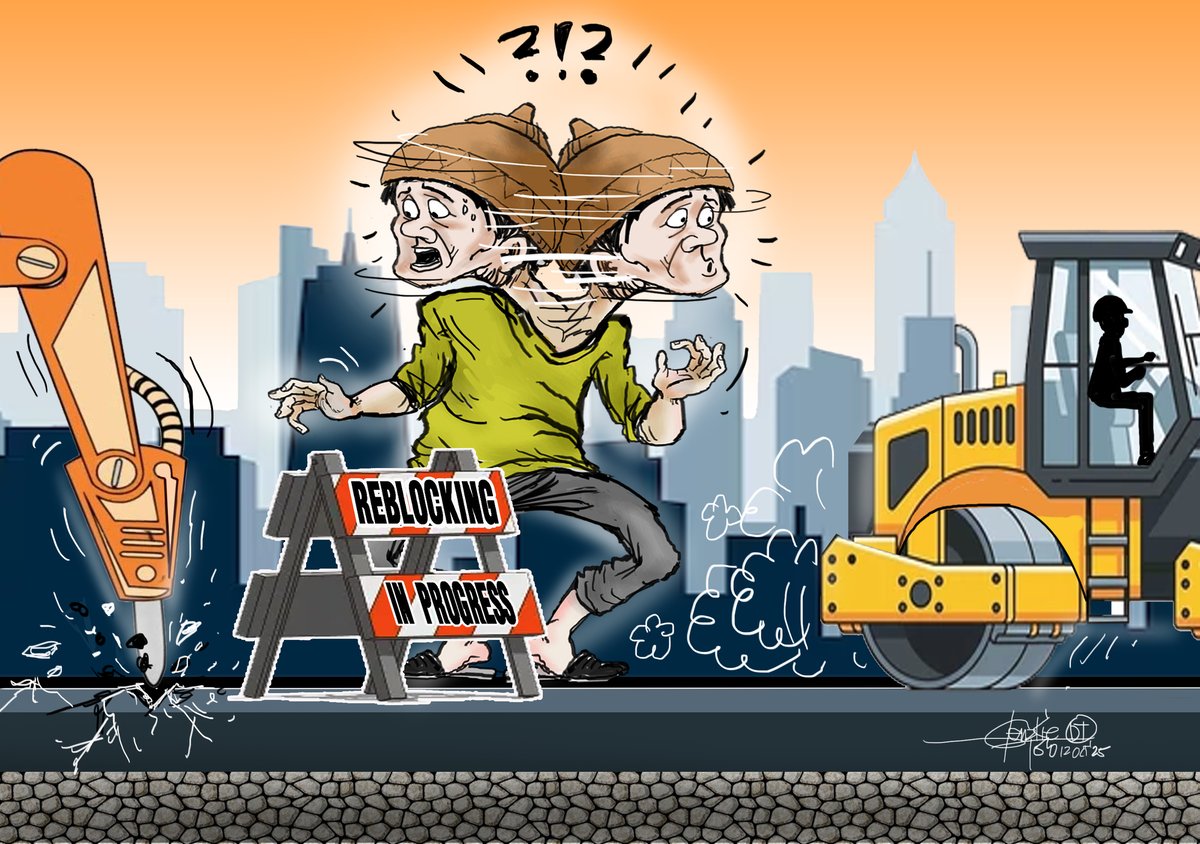
DPWH Secretary Vince Dizon found another money tap in the DPWH that made him shake his head in disbelief: road reblocking, which involves repairing roads that are otherwise in good condition.
“Ever since I can remember, I’ve heard people ask, ‘Why are good roads being dug up and destroyed, only to be rebuilt again?’ Isn’t that common? It happens all over the country. I’ve seen it myself so many times.”
Many road users have accepted it as part of their daily ordeal — they wait for days on end for the reblocking to be completed, but when done the road is no different from before.
Dizon found that it is a lucrative business among the engineers: “There’s money to be made from it — profits from the demolition, profits from the reconstruction. Correct? So effective now I am suspending all reblocking activities.”
Those familiar with road rehabilitation bared that in a typical P50-million district-level reblocking project, up to 70 percent, or P35 million, can be siphoned off. Nationwide, with thousands of such projects, this scales up to billions of pesos annually.
In Bulacan alone, former district engineer Brice Hernandez admitted that all DPWH projects since 2019, including roads, were substandard due to corruption — even streetlights were overpriced.
It was a practice that usually peaked during a pre-election year, indicating a collusion between DPWH personnel and their political patrons.
The scheme starts with the insertion of funds in the DPWH budget for “urgent” reblocking in the engineers’ districts during the congressional bicameral conference committee meetings. These bypass DPWH’s national planning, landing in favored regional or district offices.
District engineers declare roads “defective” via falsified surveys, even if they’re in good condition. Some use recycled photos and exaggerated reports. Projects are “phased” in small chunks of less than P10 million to avoid central oversight.
After a rigged bid, the perfectly good roads are dug up using rented equipment. The work is minimal or staged for photos. Bills for the “disposal” of debris are inflated.
New pavement is laid with cheap materials (thinner layers, low-grade asphalt). Progress reports claim 40 to 50 percent completion overnight, triggering partial payments. Final “acceptance” is rubber-stamped.
Projects are “closed” with fake certificates. Commission on Audit checks are dodged via recycled docs. If flagged, blame is shifted to the “weather” or “unforeseen issues.”
Thus the sting operation ends. Except that the roads that really needed repair were never touched.
Dizon has found that currently scheduled road reblocking projects, which are a cause of road anxiety and traffic delays, are not necessary but are just another of the million ways to generate kickbacks.
One can easily imagine unscrupulous DPWH officials devising ways for their political patrons to generate money from the ever-expanding menu of public projects — a practice that has persisted through the years and continues to this day.
