
Patis Tesoro: Text, drugs and rock n’ roll
‘What if we return to handmade things?’ remarked the so-called ‘Grand Dame of Philippine Fashion’ who has also been nominated to become the next National Artist for Fashion.

“Yes, I tried drugs. I almost got killed!” Patis Tesoro once told me in an exclusive interview for the then The Daily Tribune, forerunner for today’s DAILY TRIBUNE.
Back in 2014, I wrote an article on Patis’ Bohemian collection, opening it with the line, “‘Did you take drugs?’ I asked Patis Tesoro, naive of her past suicide attempt by taking Valium.”
Patis, however, ever a trooper and without batting an eyelash, quipped the opening line written in this article today.
During the same interview, Patis clarified that although she is related to the Tesoro’s souvenir shop chain owners by marriage (her late husband was lawyer and historian Tito Tesoro who was a relative of the souvenir shop owners), she stressed that she works independently and detached from the souvenir shops business.
She also clarified then that she has no relation to young designer Kermit Tesoro, who created Lady Gaga’s rubber armor for an album cover. “If I inspire somebody, then it’s fine. I don’t see anything bad about it,” Patis said then.
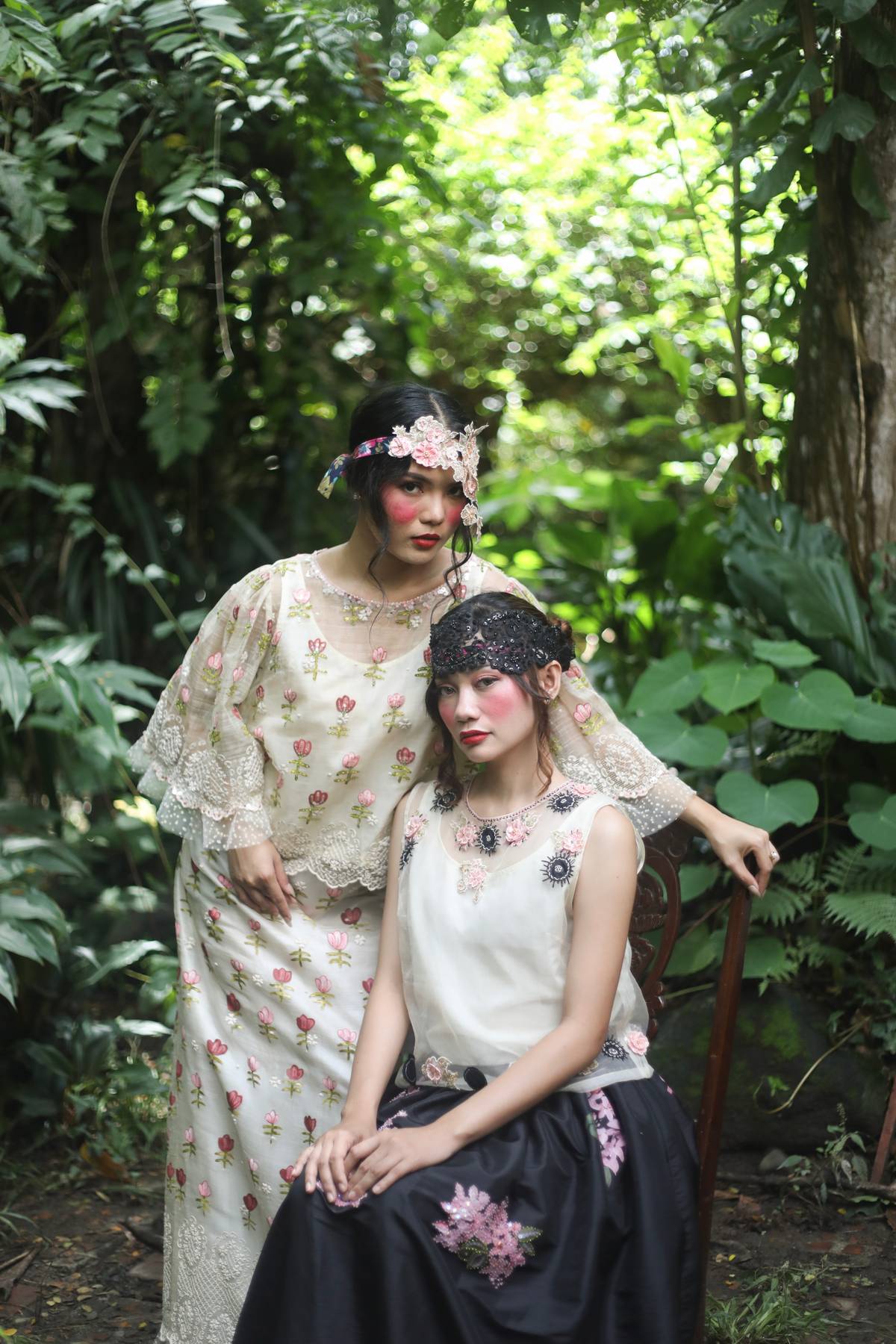
Jake Verzosa
For her other projects, she uses her full name, Patis Pamintuan Tesoro, to differentiate it from the handicrafts and couture brand. Using her complete name, she said, makes her feel like being welcomed into a new family.
True to her nature of being playful, quirky and experimental, Patis dipped her hands into many things, including doll making and even “designer” tombstones.
“Bohemianism is about self-expression,” the designer enthused back then. “It’s about not to be afraid to be yourself and to show the world that I am a Filipino and this is how I look now.”
For the past two years, Patis had been wanting to do a fashion show since it had been a while since she last presented a collection on the runway.
“Everytime I would get started, my creations would immediately get sold,” she shared in a statement. “So for a while, it was hard for me to actually get a full collection together. Even then, I began building the black and white pavilion on my property where I envisioned doing a show.”
‘Grand Dame of Philippine Fashion’
But on 4 November, Patis would finally mount her dream fashion show in years. Dubbed “Filipiniana is Forever,” the benefit show presented by the Zonta Club of Alabang will be held at the grand ballroom of the Hyatt in Bonifacio Global City, Taguig City. Proceeds of the benefit fashion show will be dedicated to funding projects of the club that aims to empower and support women.
According to the club’s statement, the show has been titled as such since it summarizes her Patis’ work and legacy. In her five decades as an artist, champion of craft and cultural advocate, Patis has helped shape Philippine fashion as we know it today. Her life and work have created impact for countless women artisans and communities not only within her sphere of influence but also beyond.
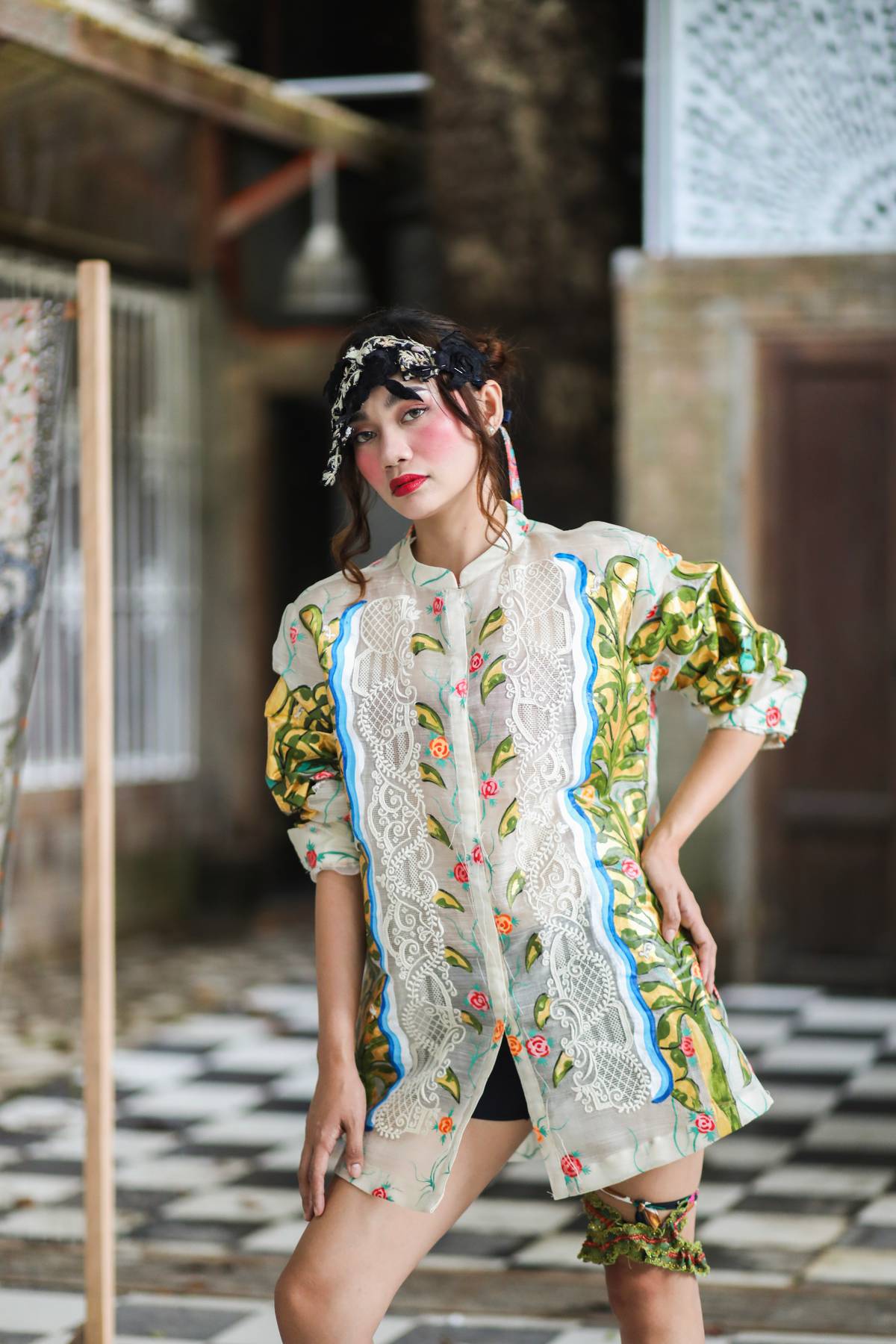
Jake Verzosa
“’Filipiniana is Forever,’ passed from generation to generation, for as long as we have a country called the Philippines,” Patis further stated.
In a preview early this week, she showcased what can be expected from the 100-piece collection inspired by what she calls the sensuality of “halik sa batok” (kiss on the nape).
According to the artist, designer, fashion activist, icon, gardener and champion of Philippine craft, she was initially inspired by the idea of a women’s nape subtly peaking from behind traditional the baro or lightweight embroidered blouse.
“When you are Filipino, you are attractive when you wear the baro’t saya. Characteristically, it is folded at the back to show the nape. It is very sensual. It is also an evolving, wearable piece of art,” she explained.
The collection will also feature dasters or house dresses, a preferred everyday garment of the fashion icon. Of course, she clarified, they will be elevated via handwoven details, patchwork and hand embroidery. Maria Clara gowns, a more formal version of the baro’t saya, are highlights of the collection.
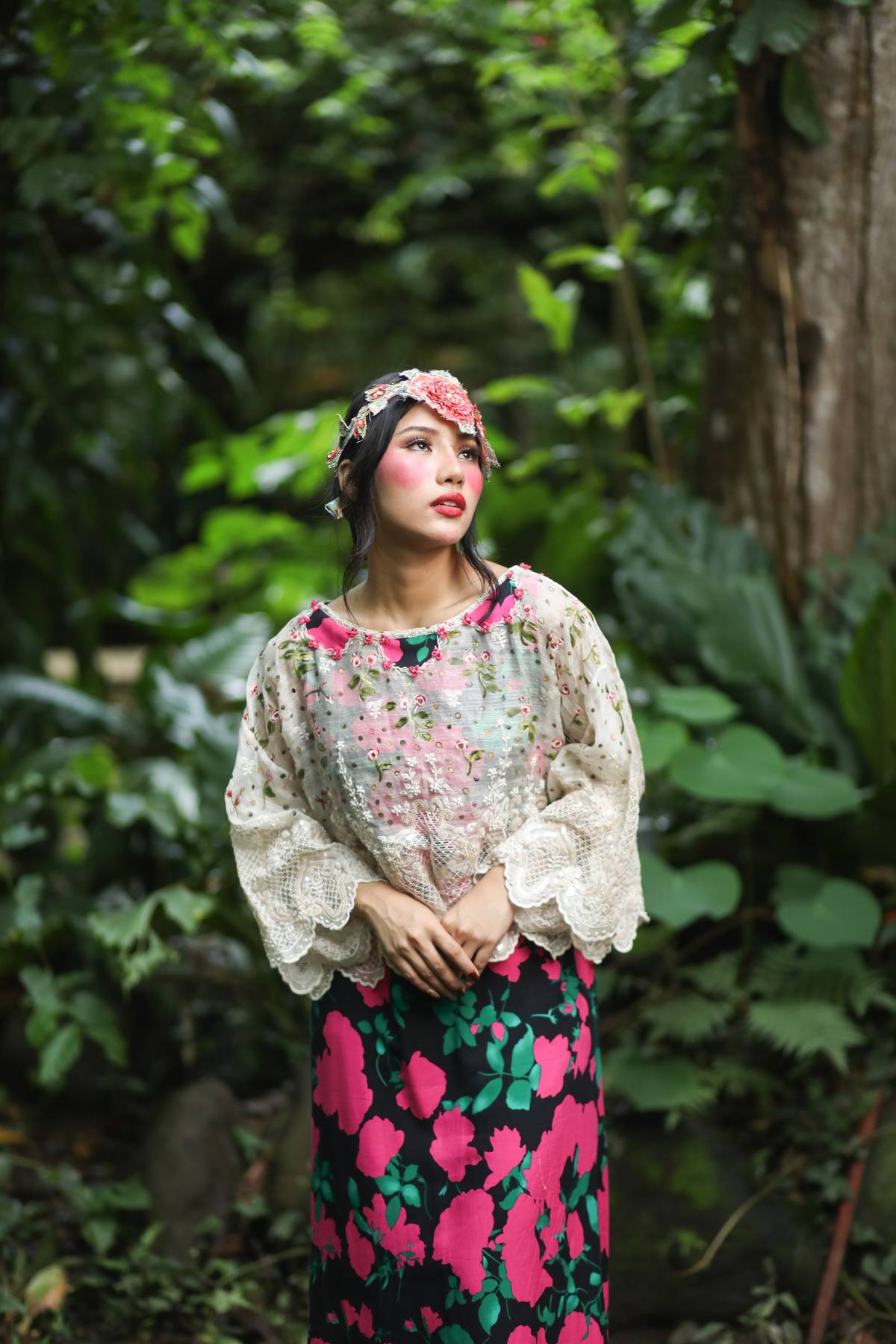
Jake Verzosa
“I wanted to emphasize the beauty of handmade things. Ninety five percent of the collection is handmade. Fabrics are handwoven, hand painted, hand embroidered, hand beaded,” Patis shared.
In my 2014 interview with Patis, she said she believes more and more Japanese cuts will be seen in the near future. In the upcoming show, the collection will be joined on the runway by kimono jackets inspired by Freddie Mercury, as well as hand-painted barongs.
“Filipiniana is a style not reserved to the terno,” Patis told me at my interview back then. “Yes, there are Western influences, but you put them against Indian and you know it’s Filipino.”
In “Filipiniana is Forever,” she also emphasizes a return to craft.
“As humans we are naturally drawn to beautiful things and that includes fashion. We are becoming so globalized. When you look at how everyone dresses on an ordinary day, everyone looks the same!” she observed, noting how this shift has blurred the lines where dressing for cultural identity is concerned. “We express our identity and even status through clothing.”
The creative process that happens inside Patis’ studio unfolds like art in constant motion. “What is the Filipiniana today?” she pondered.
The designer orchestrates a rich symphony of colors, textures, patterns the way a maestro would. She utilizes hand-woven fabrics like piña, jusi, tropical linens and precious weaves from various parts of the archipelago as her canvas or a blank music sheet.
“It comes together as I see the materials,” she said.
She even styled and directed the visual campaign for this collection, in collaboration with Jake Versoza and shot in her San Pablo home. The imagery reflects how “’Filipiniana is Forever’ morphs to fit the times.” At the same time, the designer wanted to stress the relationship between the Filipino dress and national identity.
“All Filipinos aspire to dress in a sheet handwoven piña or what resembles it. Our climate and environment necessitates this mode of dress,” she explained, reflecting on the woman she wants to dress and how this is translated through the campaign. “I wanted to show daily wear to formal wear, focusing on the craftsmanship and artistry of our people.”
According to her, it is time for Filipinos to change face and personality and be more of the times – to show their individuality and freedom through handcrafted or bespoke clothing.
“What if we return to handmade things?” remarked the so-called “Grand Dame of Philippine Fashion” who has also been nominated to become the next National Artist for Fashion.
“Everything is changing so fast now because of technology. And there is a movement of people making technology secondary. They are returning to nature and things made by hand – something that AI (artificial intelligence) can’t touch!”