
Property prices post 7.5% growth in Q2
Data from the BSP’s Residential Property Price Index showed that areas outside the National Capital Region drove the overall growth, with prices up by 11.5 percent.

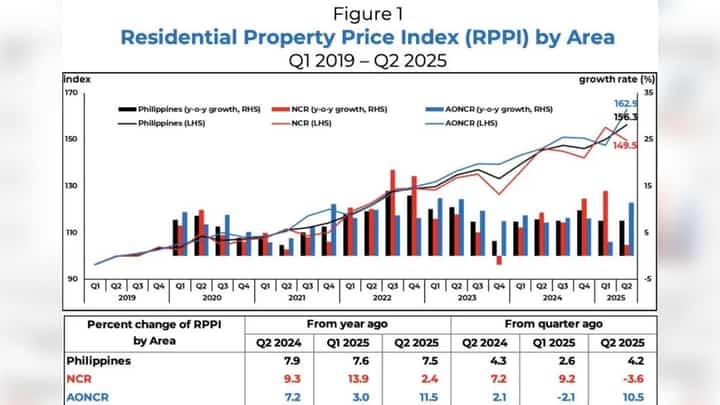
Philippine housing prices continued to climb in the second quarter of 2025, rising 7.5 percent year-on-year, according to the Bangko Sentral ng Pilipinas (BSP).
The figure was slightly lower than the 7.6 percent increase recorded in the first quarter.
Areas outside NCR
Data from the BSP’s Residential Property Price Index (RPPI) showed that areas outside the National Capital Region drove the overall growth, with prices up by 11.5 percent.
In contrast, prices in the NCR posted a modest 2.4 percent increase during the same period.
By property type, house prices — covering single-attached or detached units, apartments, townhouses, and duplexes — rose by 13.1 percent year-on-year. This was enough to offset the marginal 0.2 percent decline in condominium unit prices.
The BSP explained that the RPPI measures the average change in residential property prices over time, based on banks’ data from housing loans. It serves as a key indicator for assessing real estate and credit market conditions in the country.