
SCUTTLEBUTT


Altar to corruption
Our foreign debt is rising again despite the commitment of the economic managers that the government will rely on domestic sources to prevent uncertainties in the volatile swings in the peso’s strength.
External debt reached $148.87 billion at the end of June 2025, up 1.5 percent from the previous quarter, based on Bangko Sentral ng Pilipinas figures.
According to the official line, the external debt is piling up due to the valuation effects of the depreciation of the US dollar, which increased the US-dollar equivalent of borrowings denominated in other currencies by $1.49 billion.
The net acquisition of Philippine debt securities amounting to $660.96 million also contributed to the increase, while net repayments amounting to $315.67 million partially tempered the debt increase.
Public sector debt or foreign loans by the government have been rising substantially since 2020, when the pandemic hit.
In 2020, obligations to overseas sources grew by more than $15 billion to $58.1 billion.
Then it tapered to an $8 billion increase in 2021, reaching $64 billion, and grew by $4 billion to $67.4 billion.
Thereafter, during the term of President Ferdinand Marcos Jr., the borrowing clip picked up by $10 billion to $77.829 in 2023; an additional $8 billion in 2024; and thus far $9 billion this year.
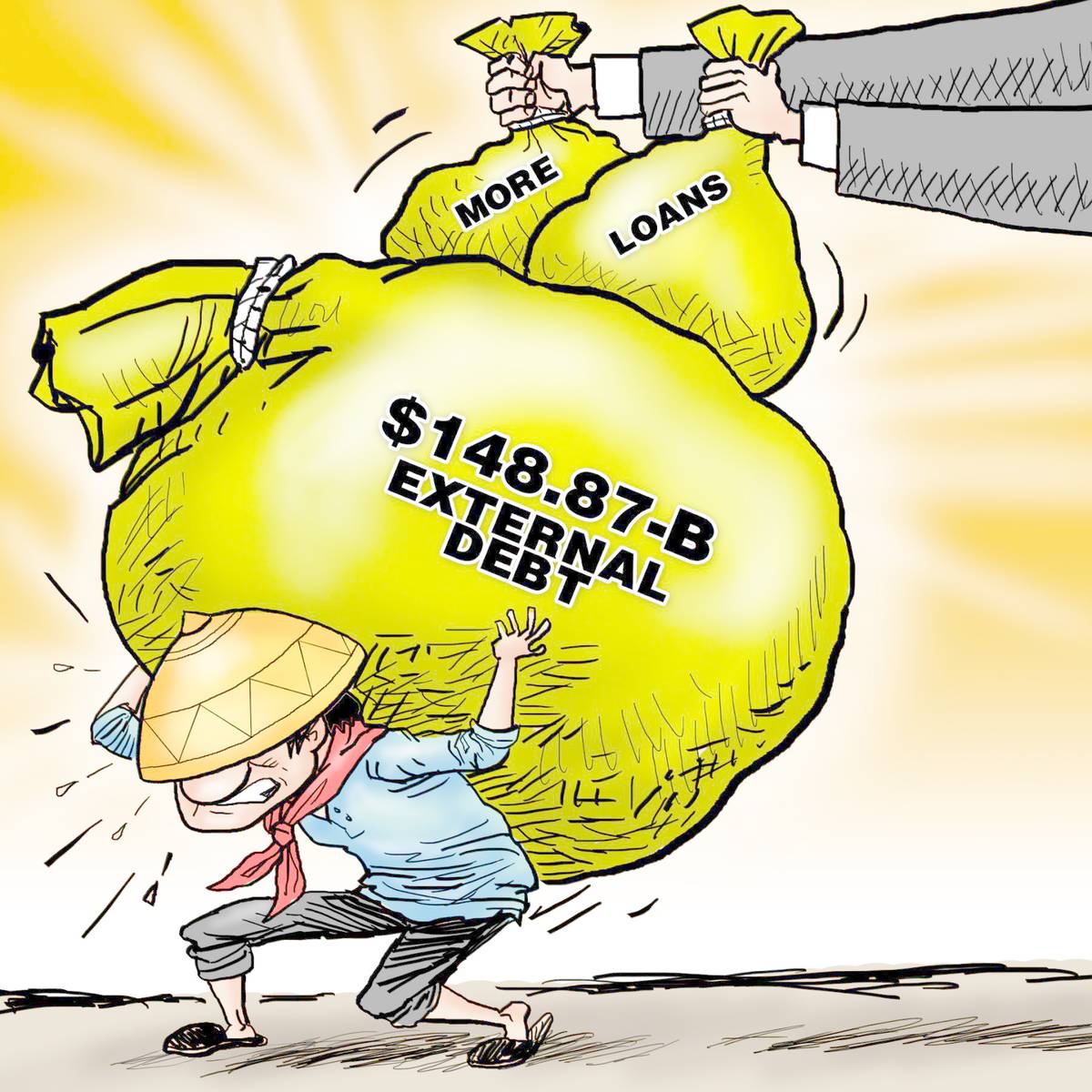
This resulted in a surge in the public sector external debt to gross domestic product (GDP) ratio from 11.8 percent in 2016 to 19.9 percent lately.
The debt picture mirrors the government’s reliance on expensive foreign loans to plug the ever-widening fiscal deficit, which is significantly invested in unproductive pork barrel projects and subsidies.
It’s like burning money on an altar to honor the gods of corruption.