
Does cup after cup of caffeine slow down aging?
The study published in June 2025 revealed that caffeine has been linked to potential health benefits, including reduced risk of age-related diseases.


Want another “cuppa” as an added boost? Go ahead, it might do you good.
In a new study from the Cellular Ageing and Senescence laboratory at Queen Mary University of London’s Centre for Molecular Cell Biology, it was revealed that caffeine — the world’s most popular neuroactive compound — might do more than just wake you up. The study in the journal Microbial Cell shows how caffeine could play a role in slowing down the ageing process at a cellular level.
The study published in June 2025 revealed that caffeine has been linked to potential health benefits, including reduced risk of age-related diseases. But how it works inside our cells, and what exactly are its connections with nutrient and stress responsive gene and protein networks has remained a mystery — until now.
In new research, scientists studying fission yeast — a single-celled organism surprisingly similar to human cells — researchers found that caffeine affects aging by tapping into an ancient cellular energy system.
A few years ago, the same research team found that caffeine helps cells live longer by acting on a growth regulator called ToR (Target of Rapamycin). ToR is a biological switch that tells cells when to grow, based on how much food and energy is available. This switch has been controlling energy and stress responses in living things for over 500 million years.
But in their latest study, the scientists made a surprising discovery: caffeine doesn’t act on this growth switch directly. Instead, it works by activating another important system called AMPK, a cellular fuel gauge that is evolutionarily conserved in yeast and humans.
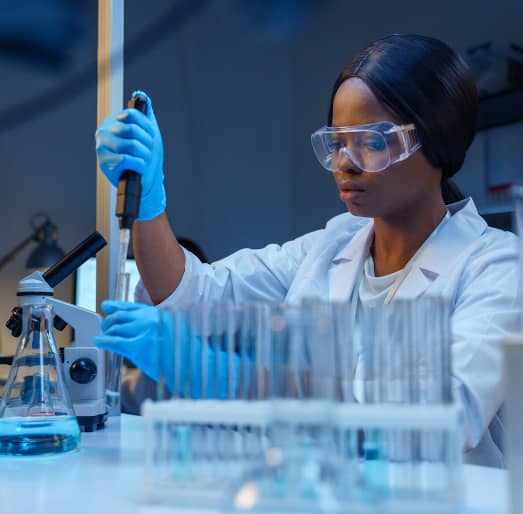
Cellular Aging and Senescence laboratory at Queen Mary University of London’s Centre for Molecular Cell Biology.
Photograph courtesy of Queen Mary University
Cellular fuel gauge
“When your cells are low on energy, AMPK kicks in to help them cope,” explains Dr. Charalampos (Babis) Rallis, reader in Genetics, Genomics and Fundamental Cell Biology at Queen Mary University of London, the study’s senior author. “And our results show that caffeine helps flip that switch.”
Longevity benefits
Using their yeast model, the researchers showed that caffeine’s effect on AMPK influences how cells grow, repair their DNA and respond to stress — all of which are tied to aging and disease.
“These findings help explain why caffeine might be beneficial for health and longevity,” said Dr. John-Patrick Alao, the postdoctoral research scientist leading this study. “And they open up exciting possibilities for future research into how we might trigger these effects more directly — with diet, lifestyle, or new medicines.”
So, the next time you reach for that extra cup of coffee, remember that you might just be giving your cells the boost they need by adding a year or two to life.