
Libel wars and DAILY TRIBUNE ’s spunk
In August 2024, the Angeles City Prosecutor’s Office threw the case out. The reasons? Lack of jurisdiction, insufficient probable cause, and most notably, a ringing endorsement of press freedom.

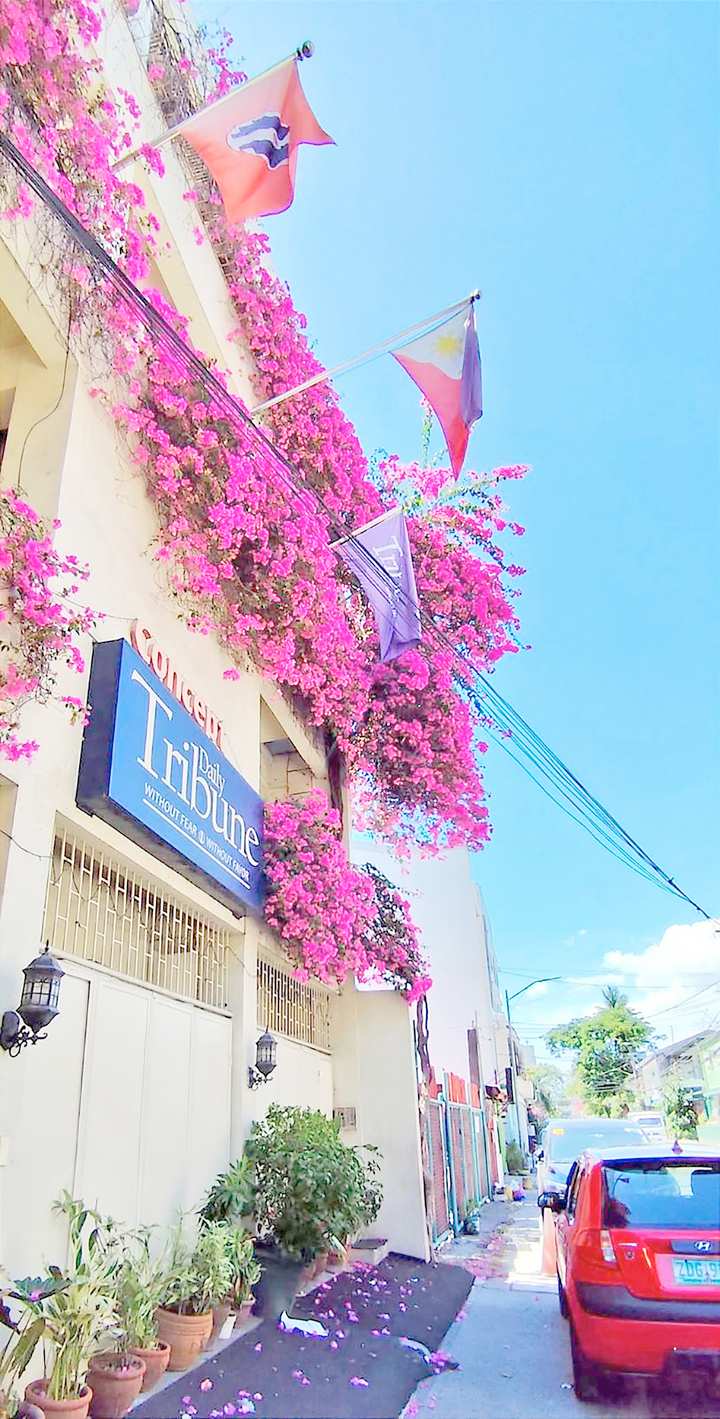
Blossoms and bylines In the heart of Makati City, the DAILY TRIBUNE’s office blooms nearly year-round, where headlines rise with the petals.
PHOTOGRAPH BY John Henry Dodson for the DAILY TRIBUNE
Few newspapers have weathered political storms, legal sieges, and cyber tempests quite like the DAILY TRIBUNE. As it marked its 25th anniversary in June 2025, the paper carries more than just journalistic battle scars, but also the distinction of being one of the most legally embattled — and most resilient — newspapers in the country.
Libel, both in its traditional and cyber forms, has been the sword of Damocles hanging over the Tribune since its founding in 2000. And yet, through arrests, convictions, multimillion-peso lawsuits, and new digital-age prosecutions, the paper has endured — a survivor not just of changing governments, but of changing laws designed (or weaponized) to silence dissent.
This is the story of the Tribune’s 25 years on the frontline of press freedom. It is a story not just of ink and newsprint, but of subpoenas and jurisprudence — of how a newspaper stood its ground while walking a legal minefield.
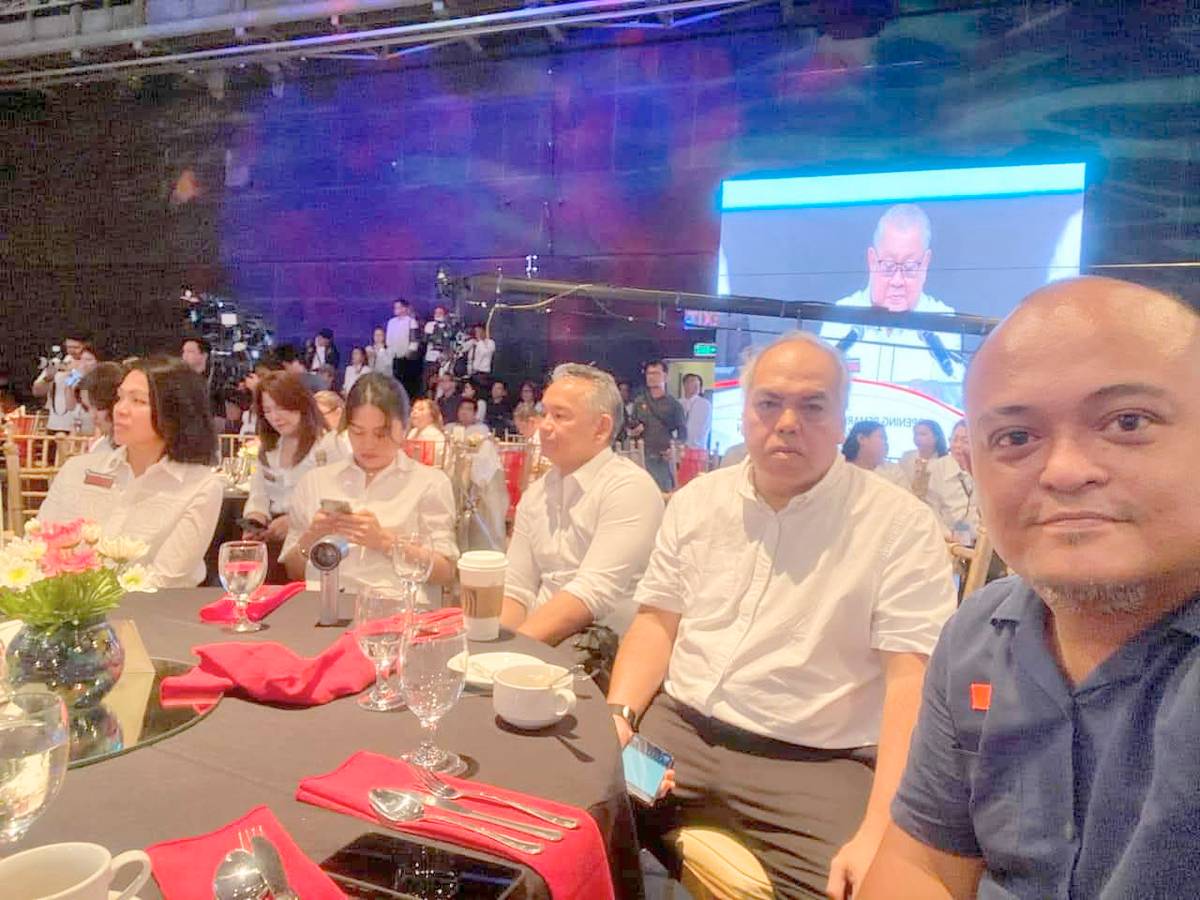
TRIBUNE editors and executives gather in solemn resolve, pledging anew to combat the shadows of fake news.
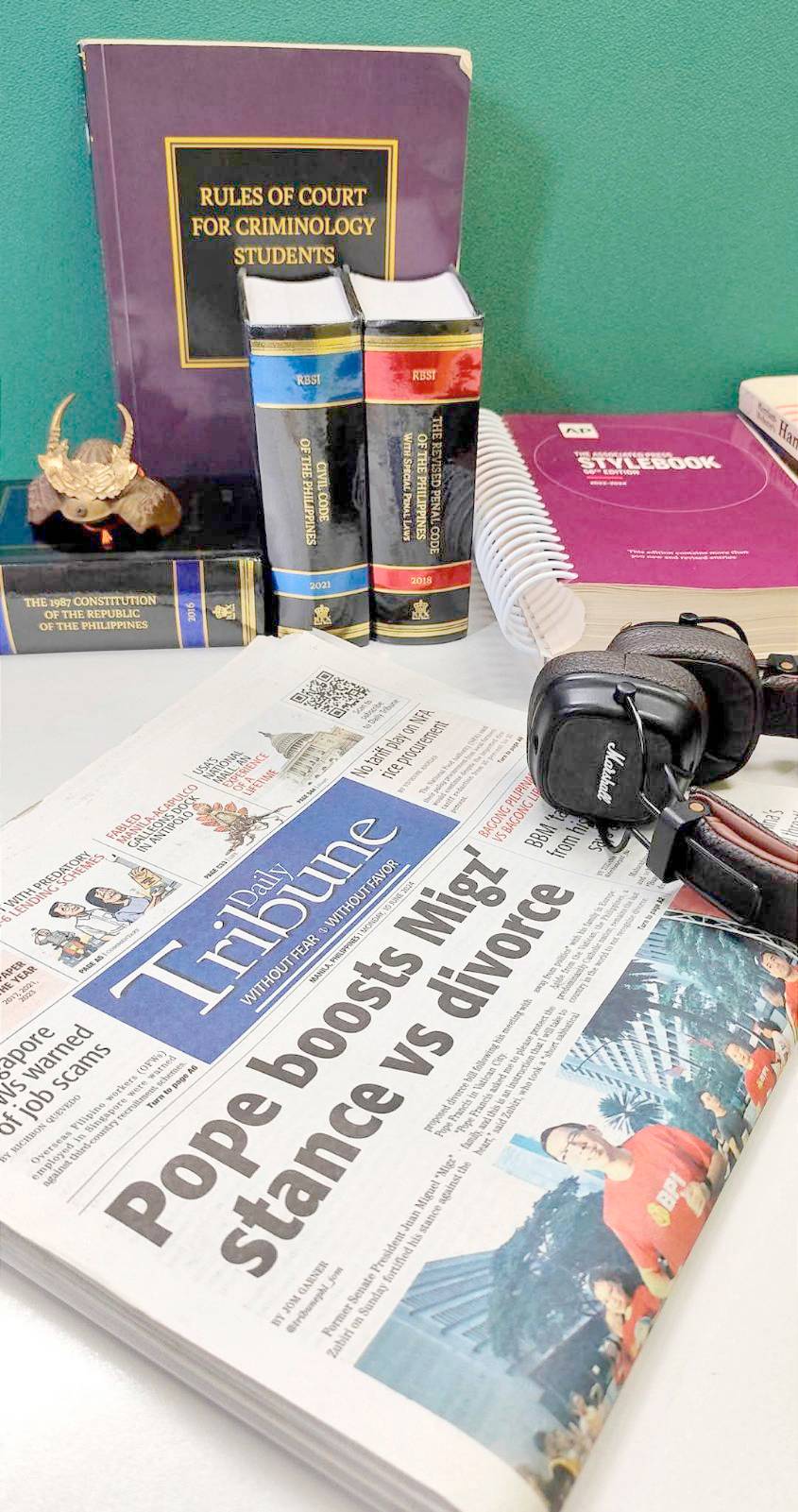
The editor’s arsenal Beyond the AP Stylebook and dictionaries lie tomes of law—the Rules of Court, the Revised Penal Code, the Civil Code, and the Constitution. The pen here is sharp, and deeply informed.
The paper that refused to bow
Founded in 2000 by Ninez Cacho-Olivarez, a fiery and combative journalist who had served stints in other dailies, the DAILY TRIBUNE was born amid the aftershocks of EDSA Dos — the ouster of President Joseph Estrada.
Olivarez was an unapologetic critic of the Arroyo administration. Her paper, often labeled pro-Estrada, gave space to voices silenced elsewhere. But the editorial line came with a cost. In 2003, just three years after the Tribune’s founding, Olivarez was arrested and charged with criminal libel — a harbinger of the legal battles to come.
The case stemmed from a June 2003 column where Olivarez accused then-Ombudsman Simeon Marcelo and the powerful law firm Carpio Villaraza and Cruz (infamously nicknamed “The Firm”) of collusion in the NAIA Terminal 3 dispute. Her column cited supposed transcripts between the law firm and German airport operator Fraport, suggesting under-the-table arrangements.
Marcelo and the firm sued. Not once. Not twice. But dozens of times. Each article in a series triggered a separate libel case. In 2008, after five years of litigation, Olivarez was convicted by Makati Regional Trial Court Branch 59. The sentence: six months to two years in prison, plus over P5 million in damages.
It was the first time a Filipino newspaper publisher had been convicted of libel in such a sweeping fashion. The verdict sent tremors through the press corps. The Committee to Protect Journalists, the National Union of Journalists of the Philippines, and the Center for Media Freedom and Responsibility all condemned the ruling.
“It is high time for the Philippines to remove the threat of imprisonment for journalists,” CPJ said. NUJP called the ruling a clear warning to critical media: jail time awaits.
The 47 other libel suits filed by The Firm loomed like a hydra in the background, waiting to strike. But even as the cases mounted, the TRIBUNE never folded. Its pages remained defiant.

More than news While deadlines and courtrooms mark the terrain, TRIBUNE also ventured into the world of fine art, launching a hit show at Salcedo Auctions.
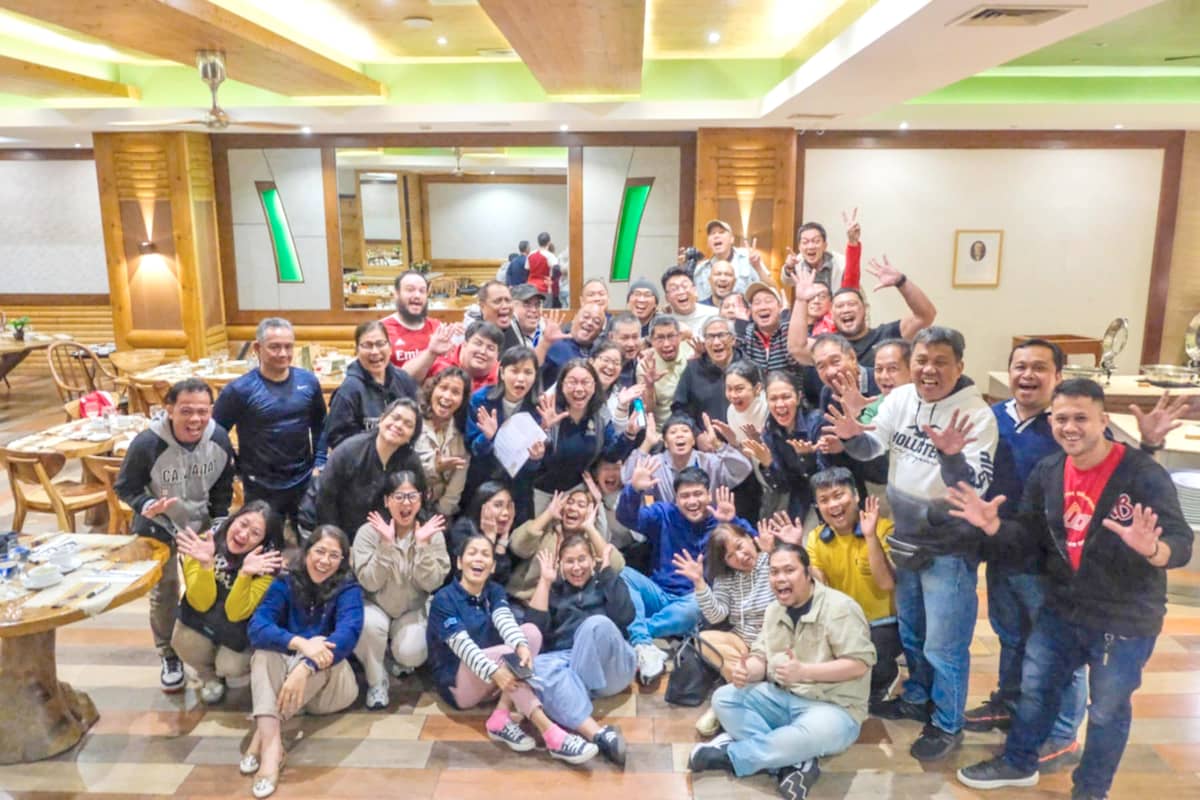
Above the clouds, beyond the grind Teambuilding in Baguio? It’s more than a retreat—it’s renewal, camaraderie, and a breath of pine-scented purpose.
A newsroom under siege
In 2006, during the State of Emergency declared by President Arroyo, government forces raided the DAILY TRIBUNE office in the early hours of the morning. The reason? A supposed threat to national security. Soldiers seized materials and lingered in the newsroom, a quiet form of intimidation.
Olivarez and her staff called it what it was: harassment. The paper continued printing.
“They came for our press, and, of course, we did not have guns,” an editor would later recall. “We responded with a front page.”
Such moments defined the TRIBUNE’s brand of hard-nosed, combative journalism. But they also ensured the legal troubles never stopped. The paper developed a reputation not just as a gadfly, but as a legal target.
In 2011, a libel case filed by a member of the National Press Club over a 2006 column was dismissed due to lack of jurisdiction. The complainant could not establish residency at the time of publication. It was a rare reprieve.
Into the digital crosshairs
The passage of the Cybercrime Prevention Act in 2012 introduced a new kind of danger: cyber libel. Now, anything published online — from columns to breaking news updates — could become grounds for criminal prosecution.
In 2021, Ramon “Tats” Suzara, president of a volleyball organization filed a cyber libel complaint against TRIBUNE staff over alleged defamatory articles on Southeast Asian Games preparations and federation affairs. The case was promptly dismissed by prosecutors, who cited public interest and the lack of malice on the part of the accused
But the bigger storm came in early 2024.
On January 29, Consul General Elmer Cato, then serving in Milan, filed 17 counts of cyber libel against the DAILY TRIBUNE. His accusation: the newspaper had run a “disinformation campaign” that damaged his reputation by reporting on the plight of overseas Filipino workers allegedly duped by job scammers in Italy.
Cato, a former journalist himself, claimed the TRIBUNE’s series of stories implied he was neglectful or complicit. He sought P10 million in damages.
The complaint named not just reporters and editors, but also the paper’s publisher Willie Fernandez and individuals quoted in the story — victims themselves.
But in August 2024, the Angeles City Prosecutor’s Office threw the case out. The reasons? Lack of jurisdiction, insufficient probable cause, and most notably, a ringing endorsement of press freedom. Prosecutor Oliver Garcia wrote that public officials “must not be onion-skinned” and should endure scrutiny in a democratic society.
It was a watershed moment.
The case dismissal was hailed by media watchdogs. It underscored the resilience of both the TRIBUNE and the idea that free press — even adversarial, messy, confrontational free press — must be protected.
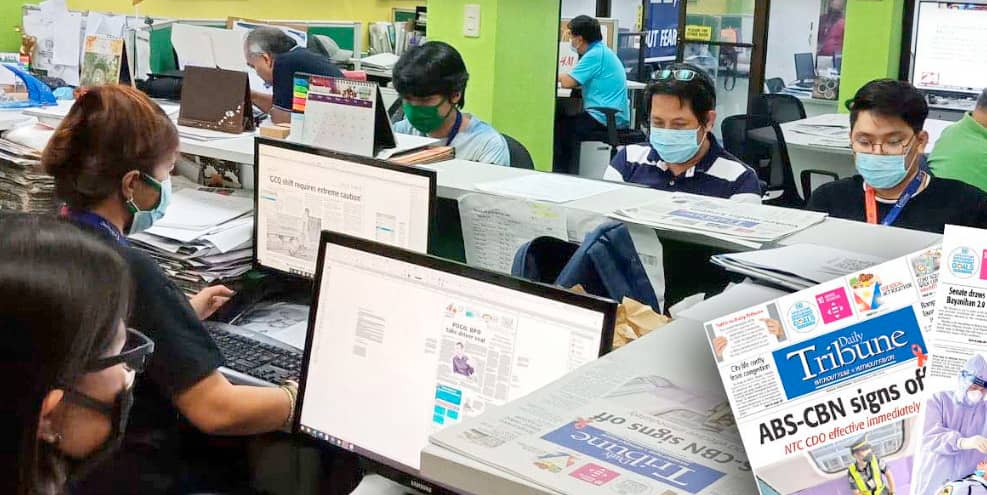
Unbroken rhythm Covid came, but the presses never stopped. Not once did the newsroom fall silent.
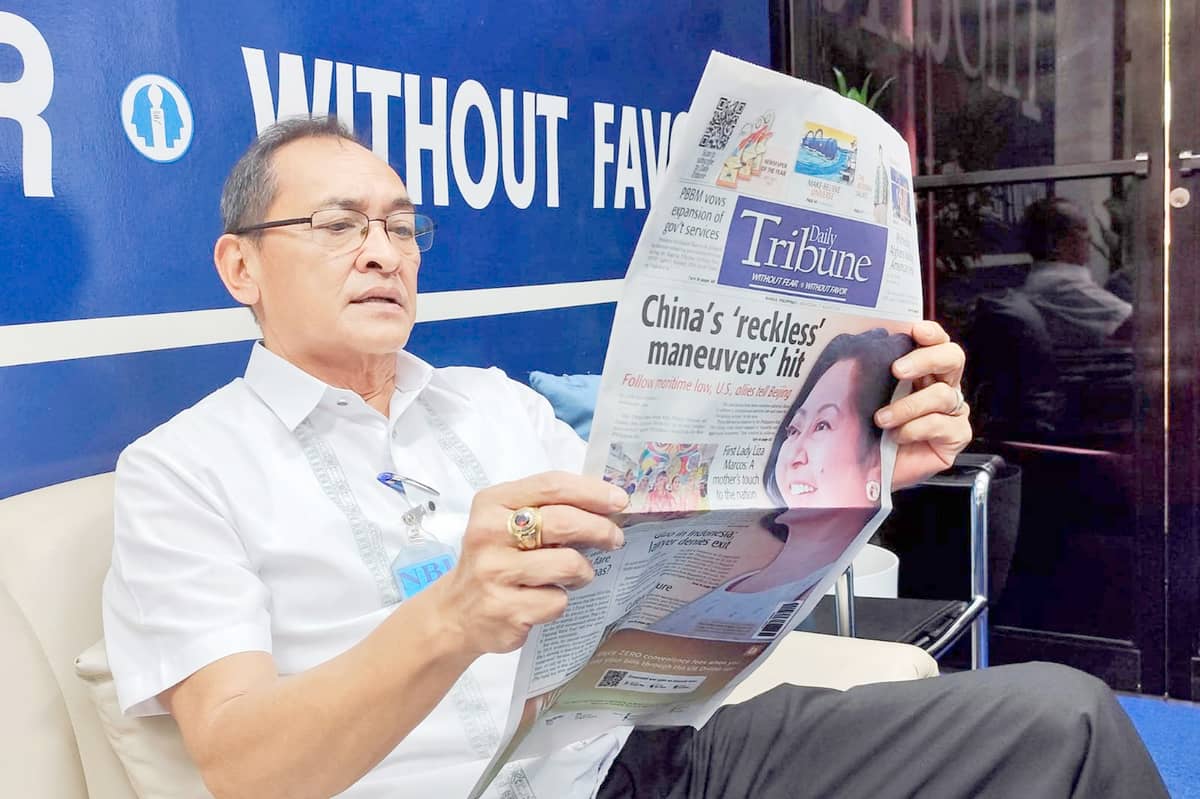
Hot off the press NBI Director Jaime Santiago pauses amid headlines, diving into the day’s truth at the TRIBUNE newsroom.
25 Years, 0 Retreats
And so we arrive in 2025. The DAILY TRIBUNE, battered but standing, celebrates its silver anniversary. Other media outlets may boast reach or digital footprint, but the TRIBUNE boasts something else: scars earned in the trenches of litigation.
Over two dozen of its staff were infected with Covid-19 during the pandemic, but none died. They reported from lockdown zones, never missed a print day, and never worked from home. While others zoomed in, the TRIBUNE showed up.
Legal threats didn’t stop the presses. In fact, they became part of the TRIBUNE’s identity — a badge of grit in a country where truth-telling often comes with subpoenas.
“Libel was the price of honesty,” said Executive Editor Chito Lozada. “We paid it. And we kept printing.”
In 2018, Tribune’s ownership and editorial leadership shifted. But its DNA — skeptical, scrappy, pugnacious — did not only remain intact but was boosted many times over: It still calls out corruption, it still questions the powerful, and it still gets sued.
And yet, no one has gone to jail (cross our collective fingers). No multimillion-dollar verdict has shuttered the paper. The convictions (of Olivarez) were appealed, the complaints dismissed. The ink endures.
Legacy of resistance
Critics call the TRIBUNE partisan. Supporters call it principled. Either way, it has earned its place in the pantheon of Philippine press freedom.
In a media landscape increasingly shaped by conglomerates, sponsored content, and algorithmic curation, the TRIBUNE has stood out as an anachronism — a throwback to the days when newspapers roared and fought and sometimes bled.
It has paid its dues in courtrooms, it has survived State of Emergency raids, it has stared down powerful diplomats and law firms, and it has refused to be cowed.
As it celebrates its 25th year, the DAILY TRIBUNE is not just a newspaper: it is an institution that has fought, quite literally, for its right to publish.