




Million hectares of forest potential investment areas

Of the 1.19 million hectares of potential investment areas, a total 65,588 hectares are suitable for renewable energy site such as solar and wind farm.
Aboitiz Foundation Inc.
Text size
Of the 1.19 million hectares of potential investment areas, a total 65,588 hectares are suitable for renewable energy site such as solar and wind farm.
Aboitiz Foundation Inc.
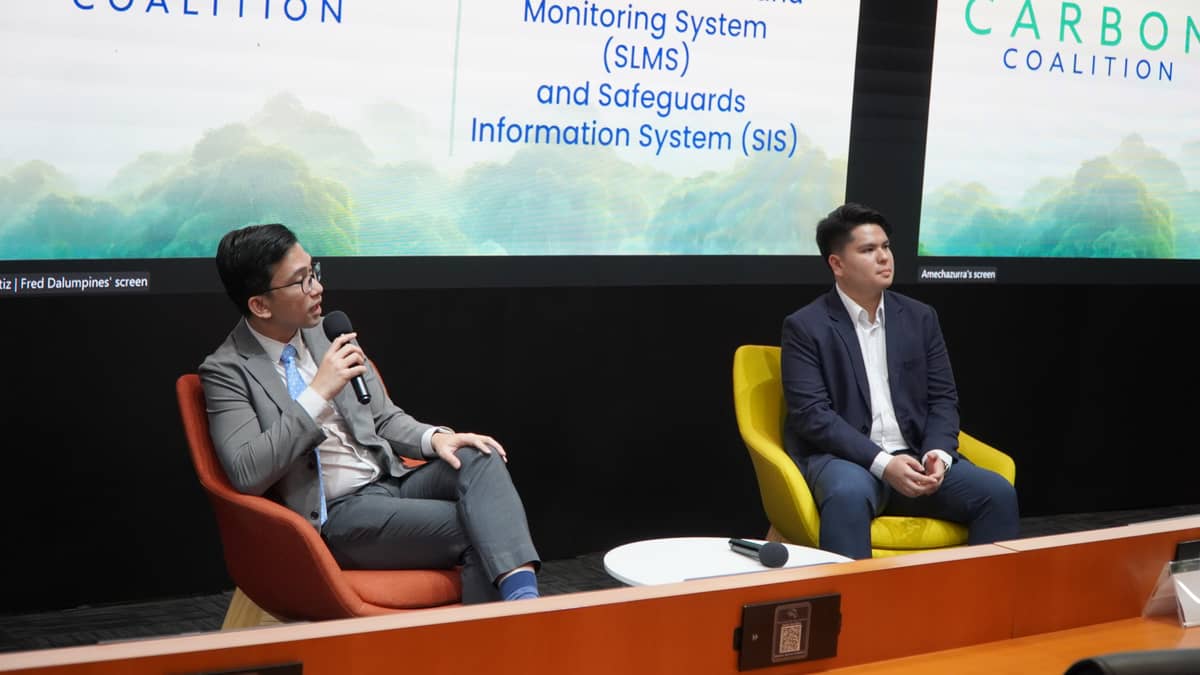
Atty. Ray Thomas Kabigting (left), assistant director of the DENR Forest Management Bureau, and Luke Joshua Castro, project development officer of FMB's forest investment development division, interact with the audience during the CarbonPH Coalition Education Series at the Aboitiz Tech Space of the Asian Insitute of Managerment on 23 June 2025.
Aboitiz Foundation Inc.
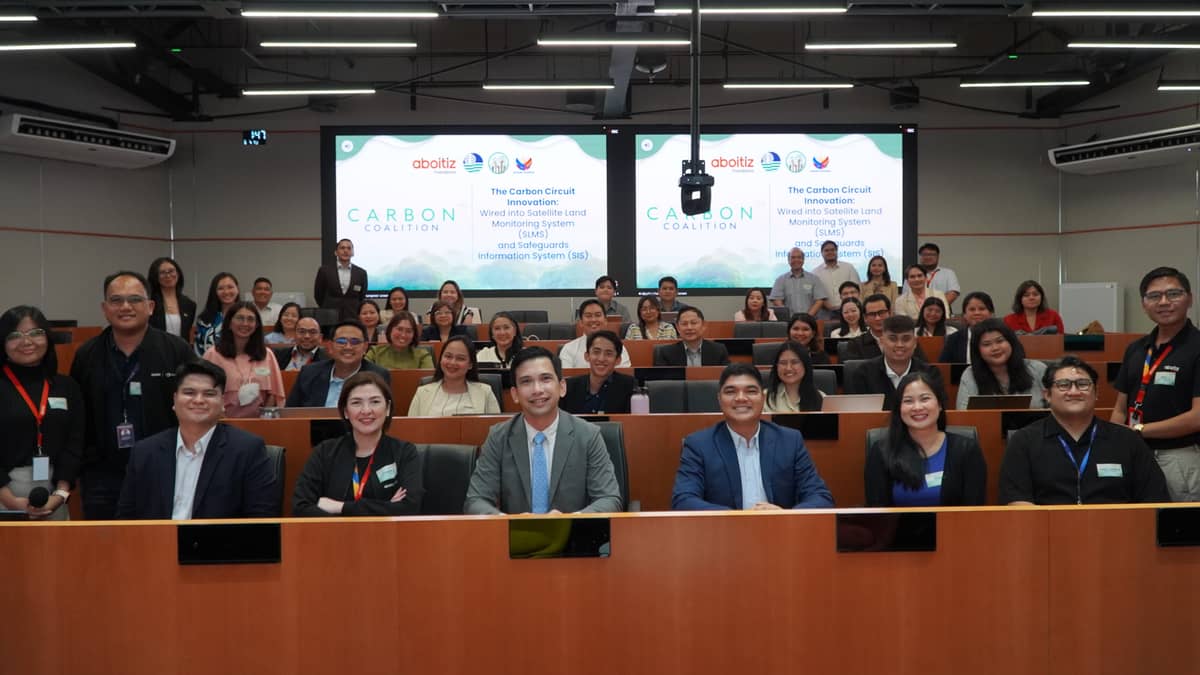
Around 30 company representatives attended the CarbonPH Coalition Education Series featuring speakers from Forest Management Bureau of the Department of Environment and Natural Resources.
Aboitiz Foundation Inc.
There are more than 1.19 million hectares of forest in the Philippines that are potential investment areas (PIAs), according to the Forest Management Bureau (FMB) of the Department of Environment and Natural Resources (DENR).
The said forests can be used as industrial/commercial tree plantation, agroforestry, grazing, ecotourism, renewable energy and protection forestry by interested forestry stakeholders, Luke Joshua Castro, project development officer of FMB's forest investment development division, said at the CarbonPH Coalition Education Series (CCES) organized by Aboitiz Foundation Inc. in Makati City on Tuesday.
Of the 1.19 million hectares, a total 65,588 hectares are suitable for renewable energy investment such as solar and wind farm, according to Castro.
The CarbonPH Coalition Educational Series is a learning session for leaders of private companies focusing on nature-based solutions and sustainability practices.
Aboitiz Foundation president Ginggay Hontiveros-Malvar welcomed 30 company representatives who attended the lecture at the Aboitiz Tech Space of the Asian Insitute of Managerment.
"We are honored to support this vital initiative that champions sustainability, innovation and collaboration," Hontiveros-Malvar said. "We look forward to rich conversations and shared learnings that will help us build a greener, more inclusive future for our country.
"In line with our mission to change today, shape the future, let us continue to inspire and create meaningful change that echoes through generations," she added.
The CCES also featured presentations of the FMB's Satellite Land Monitoring System (SLMS) and the REDD+ Safeguards Information System (SIS).
Atty. Ray Thomas Kabigting, assistant director of FMB, delivered the opening remarks before Jhun Barit, chief of the environmental forestry section of the FMB's Forest Resources Conservation Division, presented the SLMS, REDD+ and SIS.
The SLMS monitors forest cover changes and support the REDD+ (Reducing Emissions from Deforestation and forest Degradation) strategy, facilitating informed decision-making, sustainable resource planning, climate reporting, transparency and economic development, according to Barit.
Its development and use are parts of the Philippines' reporting requirements to the United Nations Framework Convention on Climate Change and REDD+.
REDD+ aims to create financial value for the carbon stored in forests to prioritize its protection and provide a mechanism for developing countries to receive payments for verified emission reductions from deforestation and forest degradation.
Meanwhile, the SIS was crafted to track and ensure compliance with social and environmental safeguards, protecting local communities and indigenous peoples from negative impacts during REDD+ activities in the country and will be formally adopted through a DENR administrative order.
Housing is probably the biggest issue affecting people the world over.
Malacañang on Monday called for a more thorough investigation into the questioned flood control projects in Taguig…
The defense on Monday backed the move by senator-judges to exclude a prosecution witness who testified on the firearms…
