On 25 and 26 June, something special will unfold in Galas, Quezon City — an experience sure to delight the epicurean. At exactly 7:30 p.m., inside a low, brutalist building on the corner of Sto. Tomas and Nicanor Ramirez, a rare opportunity awaits culinary connoisseurs.
This bare, unpainted block of concrete, resembling an old small-town bank long past its prime, now houses Brutal, a cozy, modern restaurant. For two nights only, with limited seating and pre-booking essential, guests will experience a four-hands, eight-course dinner prepared by Brutal founder Wado Tan Siman and French-American chef Jeffrey Le Bon.
The fine dining event is called Manille, the French name for Manila, offering a cross-cultural table curated for the discerning diner. And this writer was able to experience a preview of what’s to come.
The double doors, rippled like an angry black sea with hand-hammered gold handles, revealed a gorgeously minimalist interior. Brutalist, modern, stripped-down and desaturated. The space felt intimate, gray-toned, with unpolished concrete slabs bolted to the walls, but softened by plush brown chairs accented with wood. Soft lighting made the whole room feel like a culinary theater.
We went up a flight of stairs with industrial railings. The second floor, with “cracked” marble floors, could seat about 30 guests. A small cocktail station was tucked into a corner, right beside floor-to-ceiling glass windows that opened to an al fresco area.
Manille offers bold French-Mediterranean-Filipino cuisine — but in essence, it remains proudly Pinoy. Before the meal began, Chef Jeffrey — French by heritage, raised in the United States, and with decades of culinary experience including stints in Michelin-starred kitchens — explained to the media how he met Chef Wado abroad, and how a single conversation between them became the seed for Manille.
“Yes, I’m French, and I do specialize in a lot of French food. You won’t find too much French on the menu for Manille, because I wanted to create something that would meld together with Chef Wado’s food. So there’s a lot of Mediterranean influence, which I’m also quite fond of. So yeah, that’s pretty much how this whole thing happened.”
Chef Wado shared his thoughts with DAILY TRIBUNE:
“With Chef Jeffrey — see, I usually work within my comfort zone, where I feel safe. But this time, since I’m up against someone who’s clearly more international, I felt like I had to step up my game a bit. It was challenging, but at the same time, I was able to bring out my playful side. I also think I managed to level up the dishes — elevate them.”
The experience was exquisite. Its playfulness in technique and preparation resulted in genuine deliciousness. There was nothing pretentious — just a sincere attempt to bridge two culinary cultures and deliver something new yet familiar. The distinctive sweet, sour and salty elements of regional Filipino cuisine met the freshness, olive oil, seafood, tomatoes and herb-forward sensibility of French-Mediterranean cooking.
They offered a three-cocktail pairing, but mocktails were also available. As someone who avoids alcohol, I was glad to try a spicy batwan mocktail — sharp and tangy, with a refreshing soda-orange kick.
Then came the sequence of Manille.
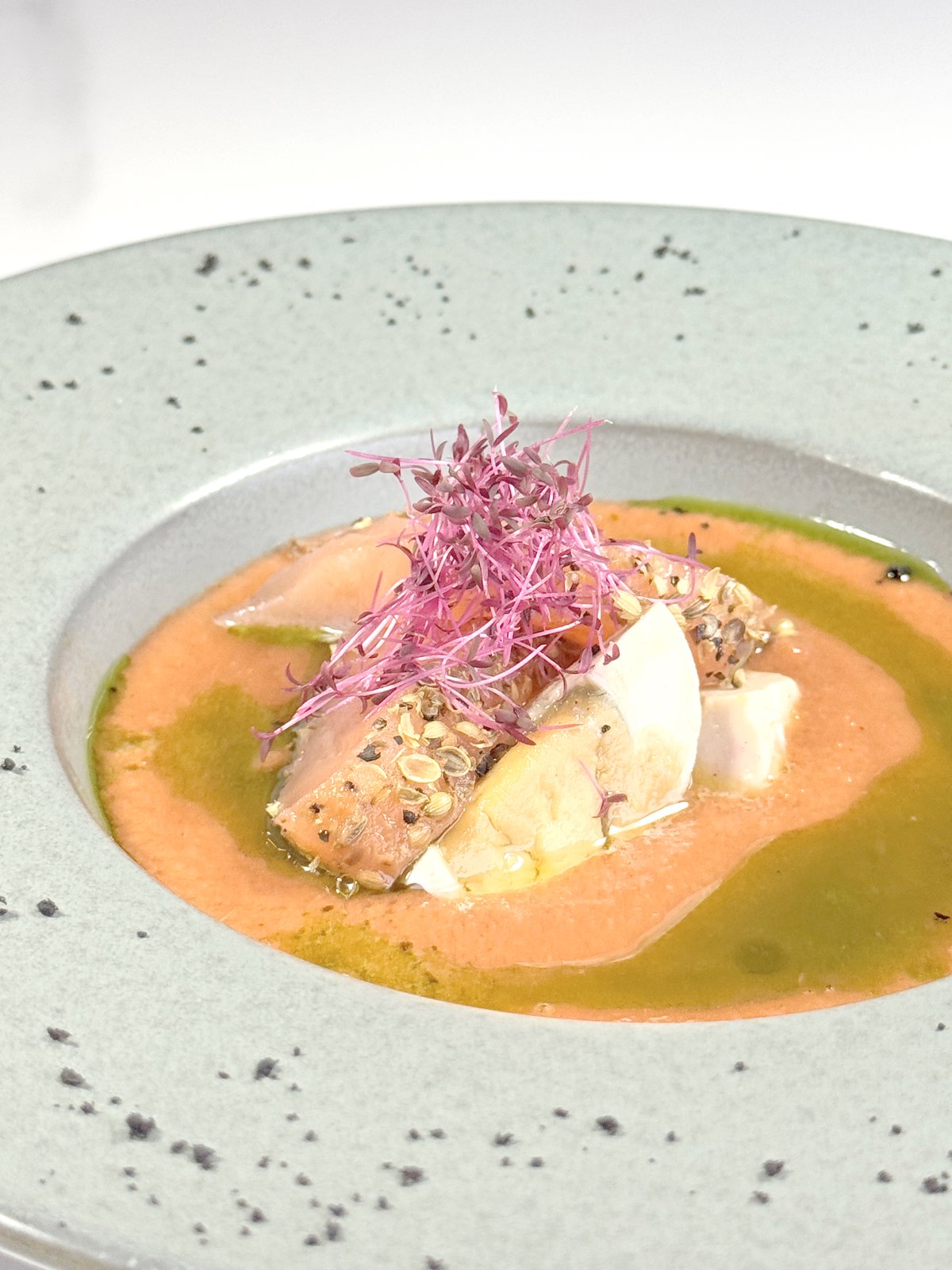
We began with Ensalada. Despite the name, this wasn’t a leafy starter but a mildly spicy tomato soup with salmon pastrami, salted egg, and pako (fiddlehead fern). The spice lingered in the mouth without burning the stomach. Flavorful, elegant, clean and rich.
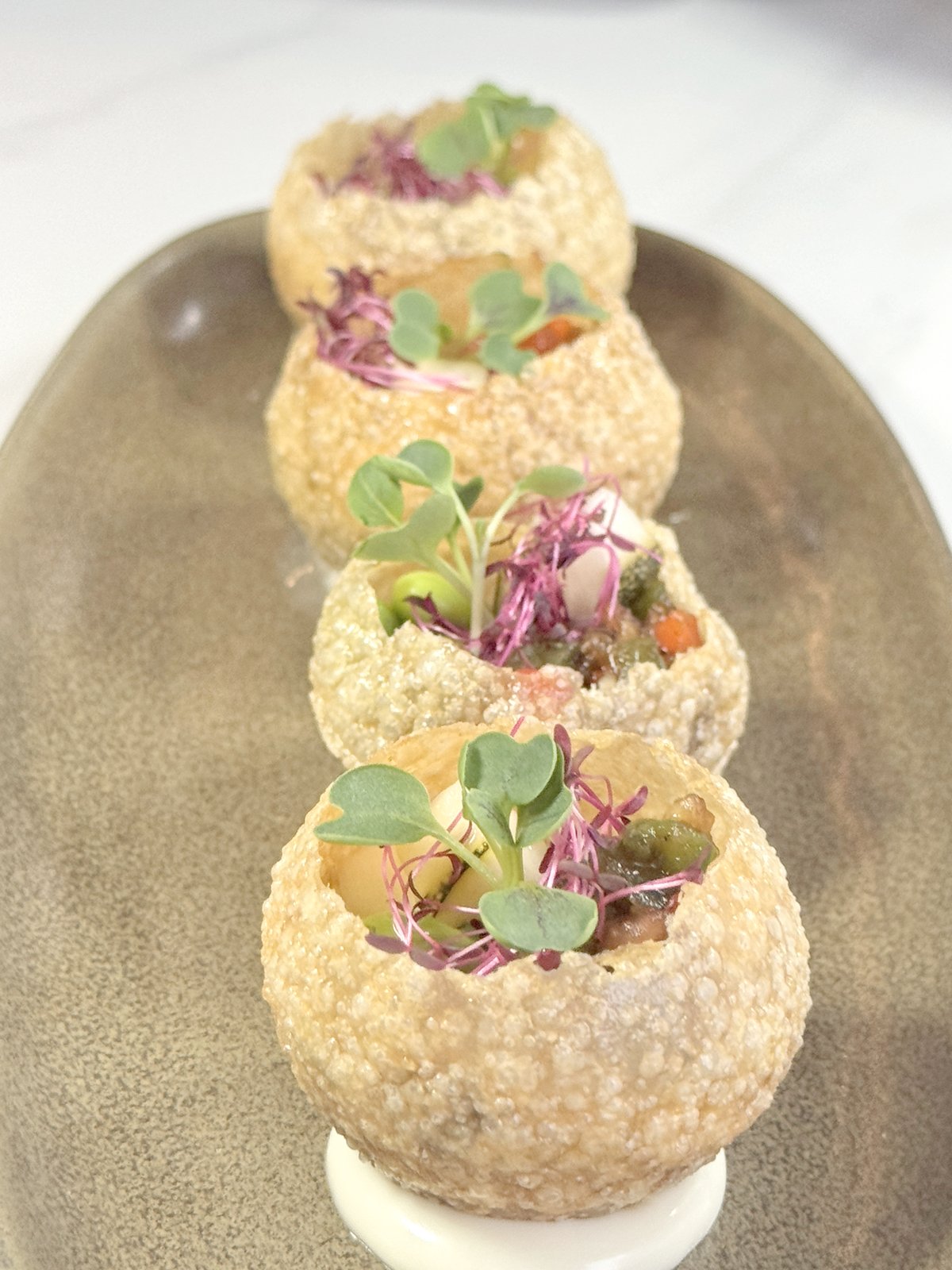
Next was Dinakdakan, a brilliant blend of Filipino smokiness and Indian Indian panipuri crunch. Inside the shell were grilled pork parts, ratatouille-style relish, and edamame. You spritz it with sinamak (Visayan spiced vinegar) using a dropper and pop the whole thing into your mouth. It was an explosion of flavor — scrumptious, punchy, textural and one of the most inventive and delicious courses on the menu.
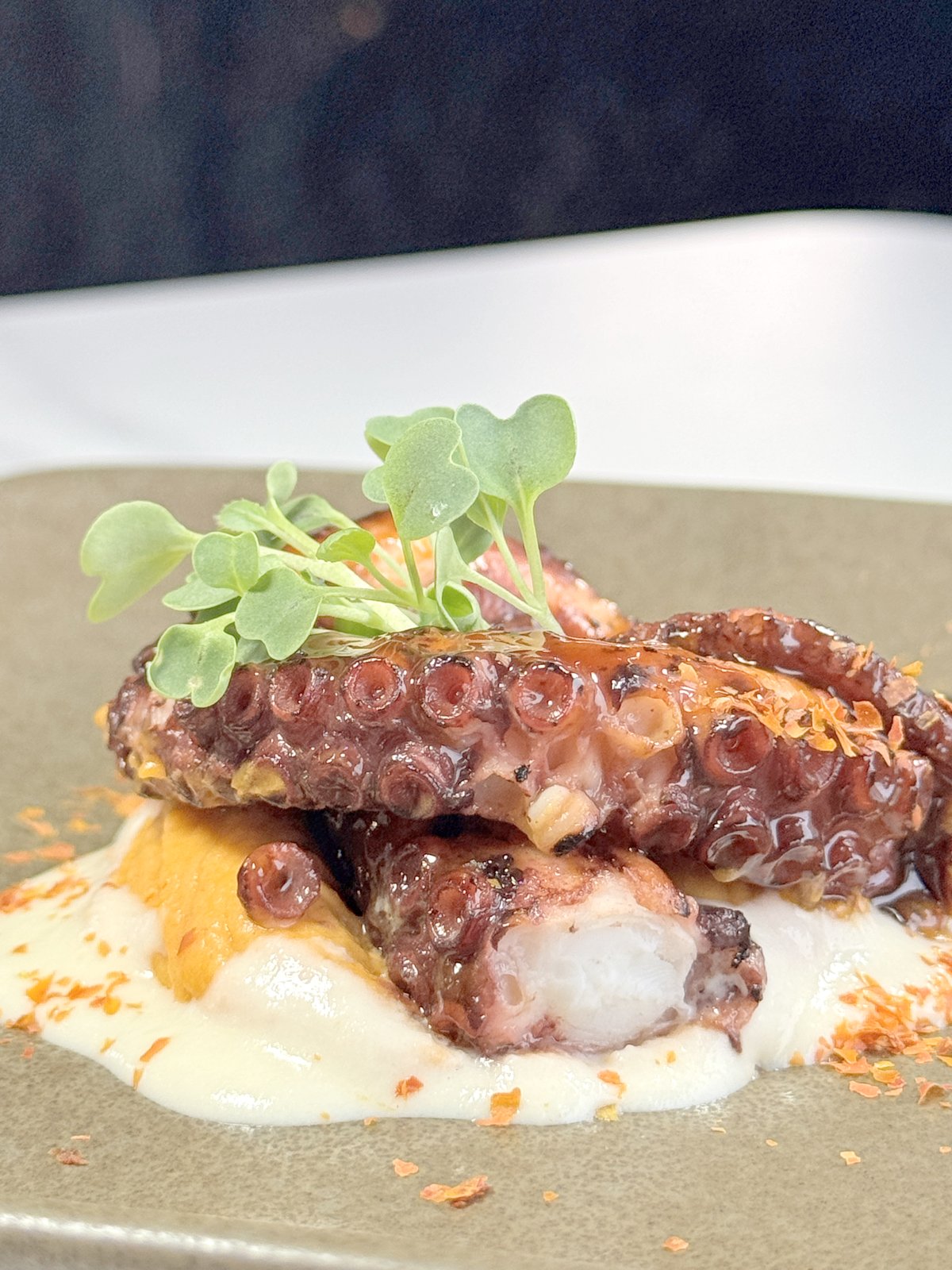
Then came Pugita, grilled octopus with harissa sweet potato purée and onion cream. Some bites were slightly rubbery, but the flavor was spot on: earthy, warm, smoky and beautifully layered.
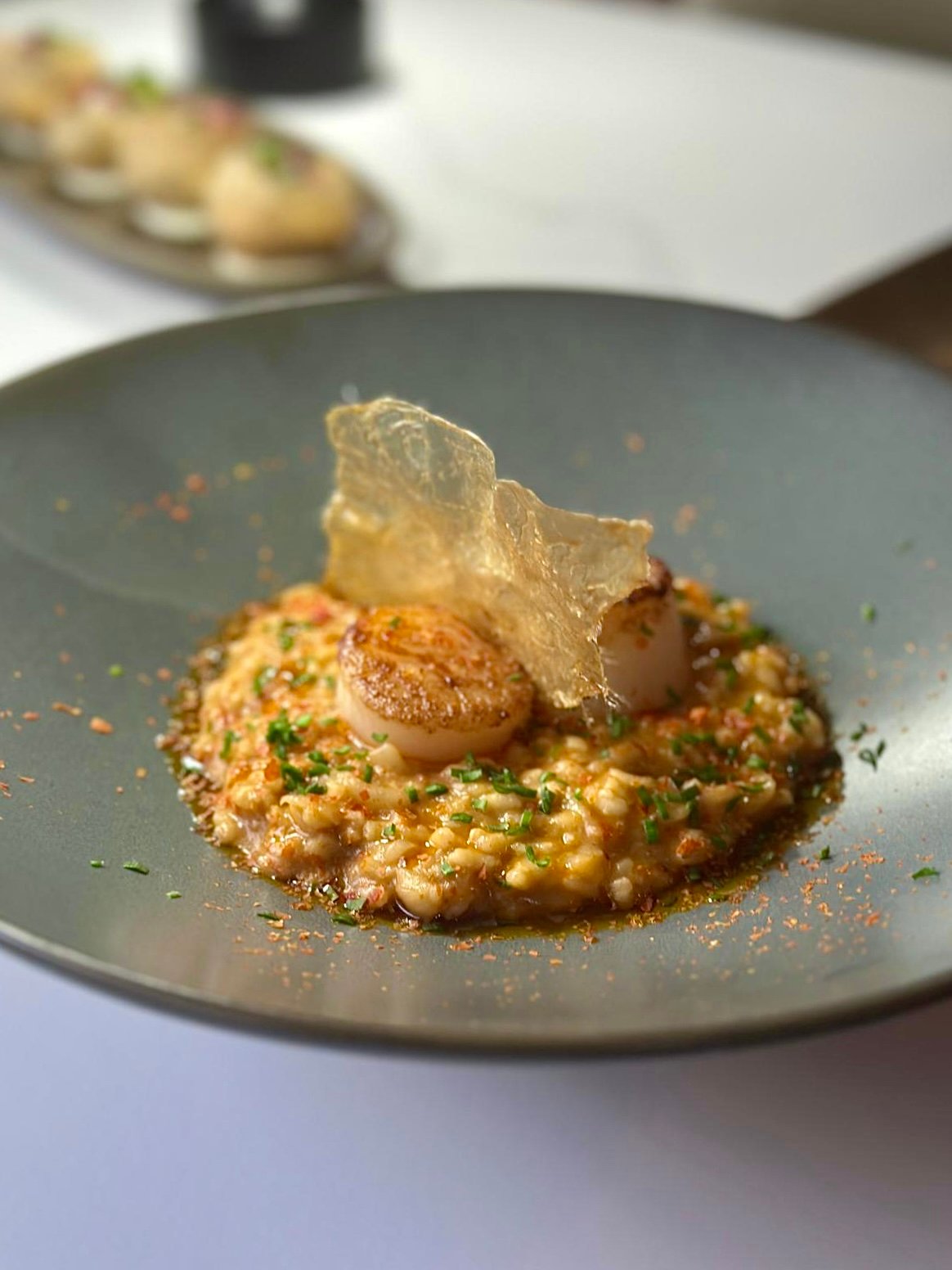
Aligue followed and was unforgettable. Rich and indulgent, the Japanese scallops sat atop creamy shellfish risotto, enriched with crab fat butter and topped with crispy chicken skin.
The fifth course, Pares, was interesting. I’m not usually a fan of classic beef pares, but this version used lamb that was tender and flavorful. The yaki onigiri was crisp, and the balsamic glaze nicely reduced.
Then came Pato, a personal favorite. Seared duck breast was served with blueberry gastrique, Mediterranean pearl couscous and melted red cabbage. The pairing of gamey duck with sweet blueberry was wild, but it worked. The combination was harmonious and satisfying. This was paired with the delicious Samalamig, a smoky glass of arnibal, lemongrass, soda and Don Papa Rhum (but you can opt to remove the alcohol content).
And then came the desserts.
Peras was a delicate mille-feuille with poached pear on the side, chocolate whiskey cream and caramel, topped with almond crumble. Every element came together. One of the best desserts I’ve had in recent memory.
Finally, Uling. Dramatic and unforgettable. Bits of charcoal meringue, torched on the table, hug the side of a marmalade sponge, tangy calamansi curd, on a bed of crispy brown butter pinipig, chocolate ice cream and strawberries, crowned with gold leaf. It was so good I almost wept.
Manille is understated elegance. Decadent but grounded, refined but still comfortingly Pinoy. Chef Wado told DAILY TRIBUNE that he wants guests to feel that Manille is really a journey — a friendship — between the French and the Filipino.
“We really tried to integrate different cooking techniques. At the same time, we want them to feel the playfulness behind both dishes. So I want them to experience both sides of the chefs. That’s really what Manille is about.”
Indeed, Manille is brutally good.