In just a little over three months since he was appointed head of the Department of Transportation (DoTr), Vivencio “Vince” Dizon has become an unrelenting force to attain the agency’s goals.
He has wasted no time in shaking up one of the most crucial — and chronically problematic — sectors in government.
Appearing on DAILY TRIBUNE’s Straight Talk, Dizon outlined the sweeping reforms he has undertaken, including the removal of X-ray machines from MRT stations. This simple move dramatically cut queuing time for millions of commuters.
“When I came in, I rode the MRT from Taft Station just last March. It took me about 30-plus minutes to line up — sometimes up to 45 minutes. Ten years ago, people spent an hour and a half to get on the train,” Dizon said.
The X-ray machines, which had long been criticized for being ineffective and outdated, were removed following consultations with the Office of Transport Security, the Philippine Coast Guard, and MRT-3 operators.
The decision was backed by a new multi-layered security strategy involving increased uniformed presence, trained K-9 units, and the deployment of AI-powered surveillance cameras.
“When I thought back to all the subways I’ve ridden around the world — in Europe, the US, even in Asia — I couldn’t recall a single one where passengers had to go through X-rays,” Dizon said in Filipino. “If they can keep people safe without it, we should be able to do the same.”
The results speak for themselves. According to the DoTr’s time-in-motion studies, what used to be a 30- to 45-minute wait has now been reduced to as little as five minutes during rush hour at Taft and North EDSA stations — the two busiest stops on the MRT-3 line.
Dizon, 50, is not new to public service. A technocrat by training and a reformer by instinct, he is best known for his work as Presidential Adviser on Flagship Programs and Projects under the Duterte administration, as well as his tenure as president and CEO of the Bases Conversion and Development Authority (BCDA) from 2016 to 2022.
Under his watch, the BCDA led significant infrastructure developments such as the New Clark City and the Clark International Airport expansion — projects praised for their efficiency and transparency. He was also the former chief testing czar during the Covid-19 pandemic, where he helped operationalize mass testing and logistics systems nationwide.
Under Dizon’s leadership, seemingly minor problems, such as broken escalators and elevators, have also been addressed with rare urgency.
“Last Monday, I tested the busway elevator — it’s now working. All MRT-3 elevators and escalators are working. There’s just one escalator at Shaw Boulevard that isn’t, but it turns out that’s owned by a private entity. I’m calling them out because our commuters, especially seniors and PWDs, shouldn’t have to suffer,” he said.
But Dizon isn’t stopping there. His vision stretches across all modes of transportation: land, sea, and air.
At ground level, he advocates for a walkable EDSA, citing its original design — wide pedestrian boulevards reminiscent of those in European capitals. He noted the dangers faced by those walking the iconic thoroughfare, which still lacks continuous sidewalks and proper drainage.
“We saw the 1940 plans for EDSA by architect Toledo, and you’d be surprised — a huge portion was dedicated to pedestrians,” he explained. “DPWH says it’s doable. It’s long overdue.”
Dizon was referring to Antonio Mañalac Toledo, a prominent Filipino architect and urban planner during the Philippine Commonwealth era.
Another long-awaited project Dizon is fast-tracking is the construction of the Common Station, a crucial interchange point for LRT-1, MRT-3 and MRT-7 commuters that has been stuck in development limbo since 2008.
“It’s been 16 years. We had to terminate the previous contractor. Now we’re looking to re-bid or do a PPP. I prefer PPP because it’s faster and ensures quality,” he said.
Dizon cited a real-life example to illustrate the inconvenience: a commuter from Baclaran trying to get to Ayala Avenue currently has to transfer between multiple train lines and modes of transport, often exiting and reentering stations entirely. With the Common Station completed — ideally by 2027 — this entire process would take place in a seamless, interlinked facility.
“That’s my personal goal, and I’ve already told the President. When MRT-7 opens in 2027, the Common Station must also be operational,” Dizon said.
Dizon is also pushing for more airport privatizations, arguing that the government is not equipped to run them efficiently.
“We see it in NAIA, Clark and Mactan. When private operators manage them, the service is better,” he noted.
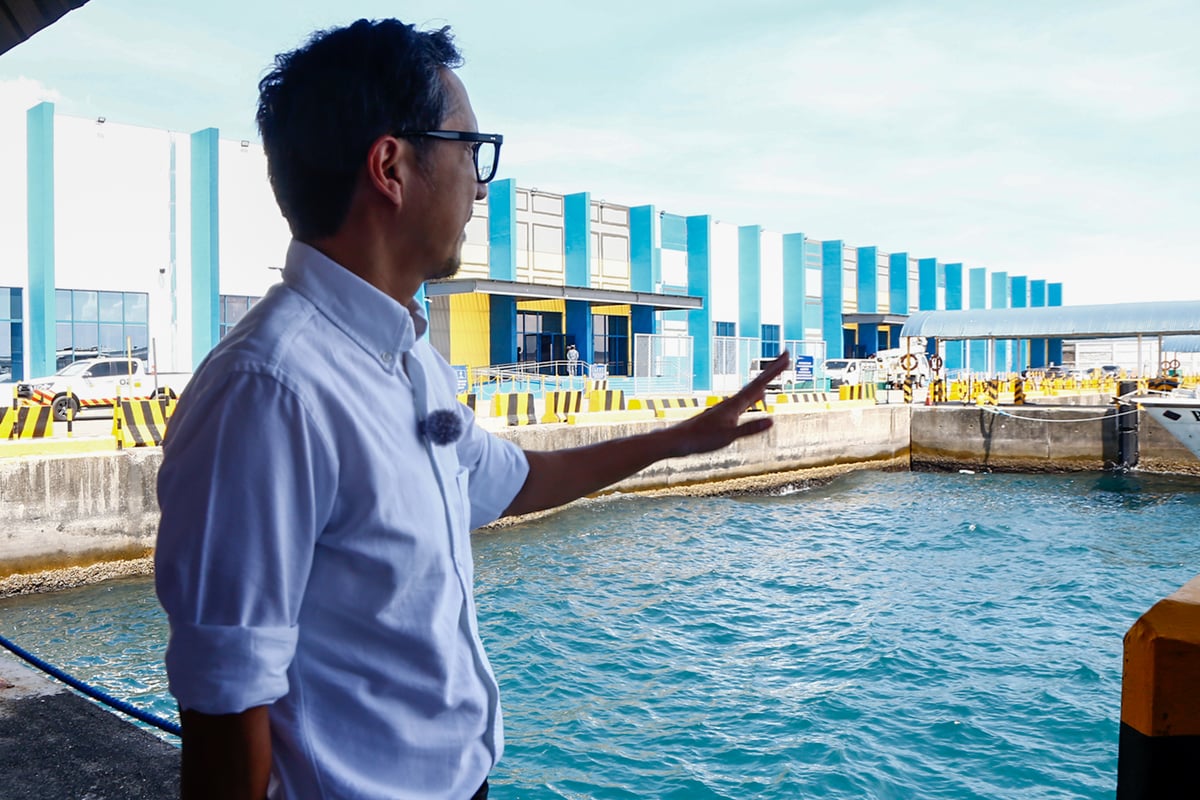
As for sea transport, the DoTr is actively managing logistical issues arising from the degraded condition of the San Juanico Bridge. While the Department of Public Works and Highways (DPWH) rushes to complete retrofitting work, Dizon’s agency is utilizing RORO systems to maintain the flow of goods between Samar and Tacloban.
Collaboration is also key in Dizon’s approach. He praised business leaders like Manny Pangilinan and Ramon Ang for voluntarily foregoing toll revenue to help decongest the skyway system.
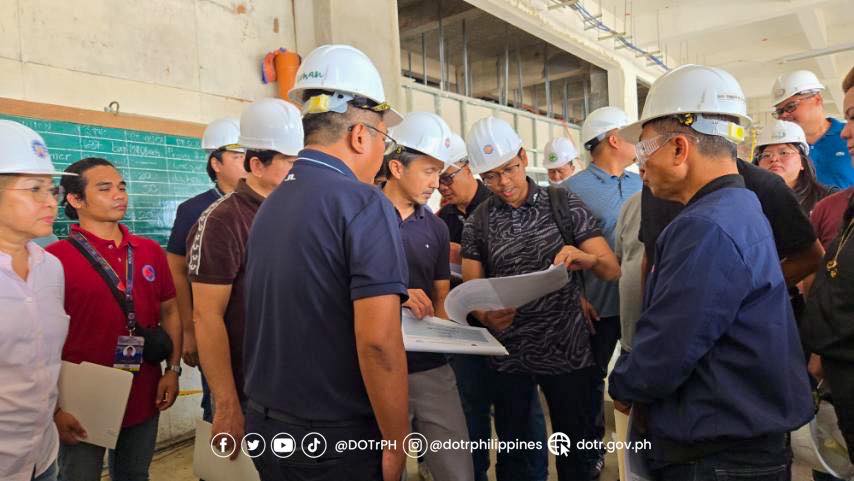
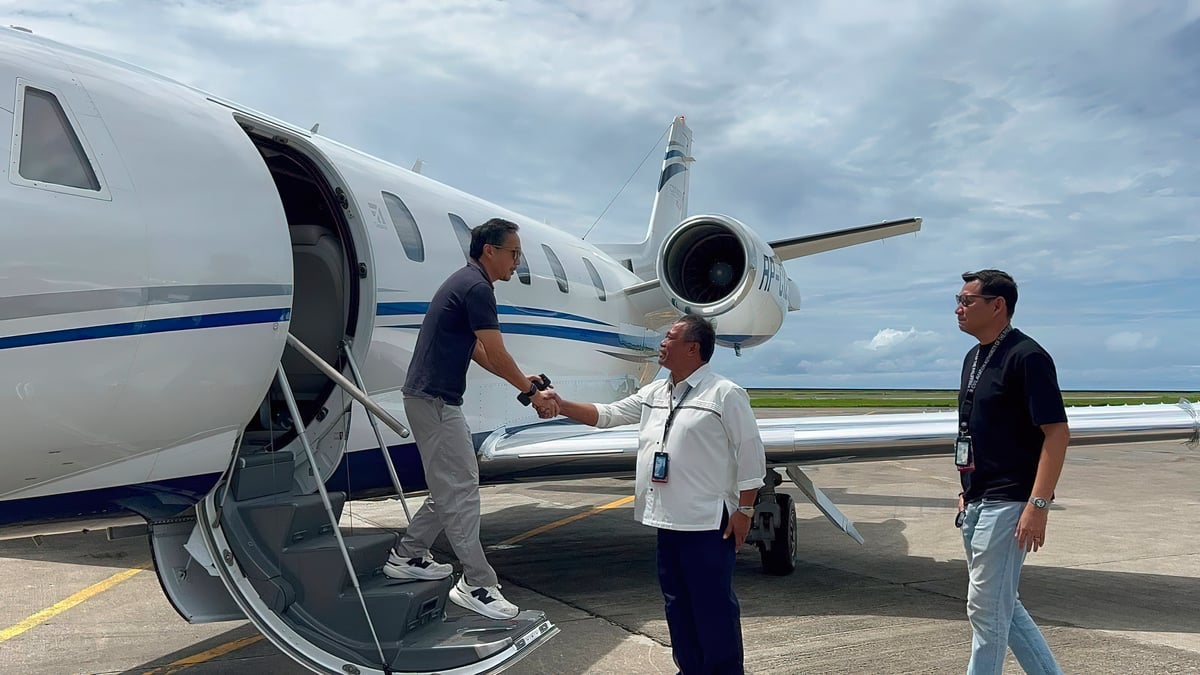
Dizon’s style is hands-on — literally. Since day one, he’s been riding trains, walking footbridges, and inspecting terminals personally to experience firsthand what commuters go through every day.
“It’s the only way to understand the real problems,” he said.
In the eyes of many, Dizon is not just doing his job — he’s redefining it. While it’s still early in his tenure, his actions have already created tangible improvements.
With a clear vision, relentless energy and a rare ability to bridge policy and practice, Vince Dizon may very well be remembered as one of the most effective Transportation secretaries in recent memory.