
Cesky Krumlov: A Real Magic Kingdom
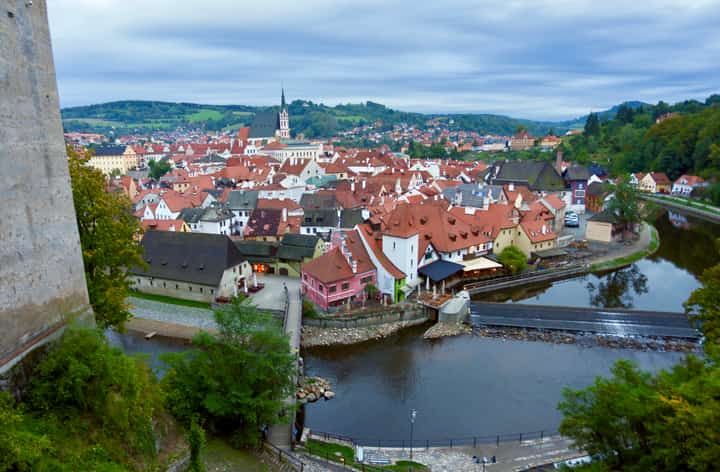
A small central European medieval town still caught in the past despite the influx of droves and the advent of modernity.
I was on the balcony, stage left and almost above the orchestra, in Baroque Castle Theatre, savoring an opera last heard and seen over 200 years ago, performed by a company whose voices are as exemplary as its stage presence. The faces of the actors were powdered white, their eyes and lips highlighted by dark traces of liners and lipstick. Their voices filled the hall, enhanced by an ensemble equally resplendent in wigs and period costumes. Violins, cellos, a harpsichord and other instruments accompanied the singers under the disciplined promptings of a conductor’s baton.
I clung to every note and every pronounced gesticulation of the players while sophisticated music lovers in the audience listened with their eyes closed or followed the melodies in provided musical scores. The words were in Italian as most opera are, but I thought I grasped the meaning and essence of the plot line.
It was a feast for the ears and eyes, a repast for the soul. It was simply magical.
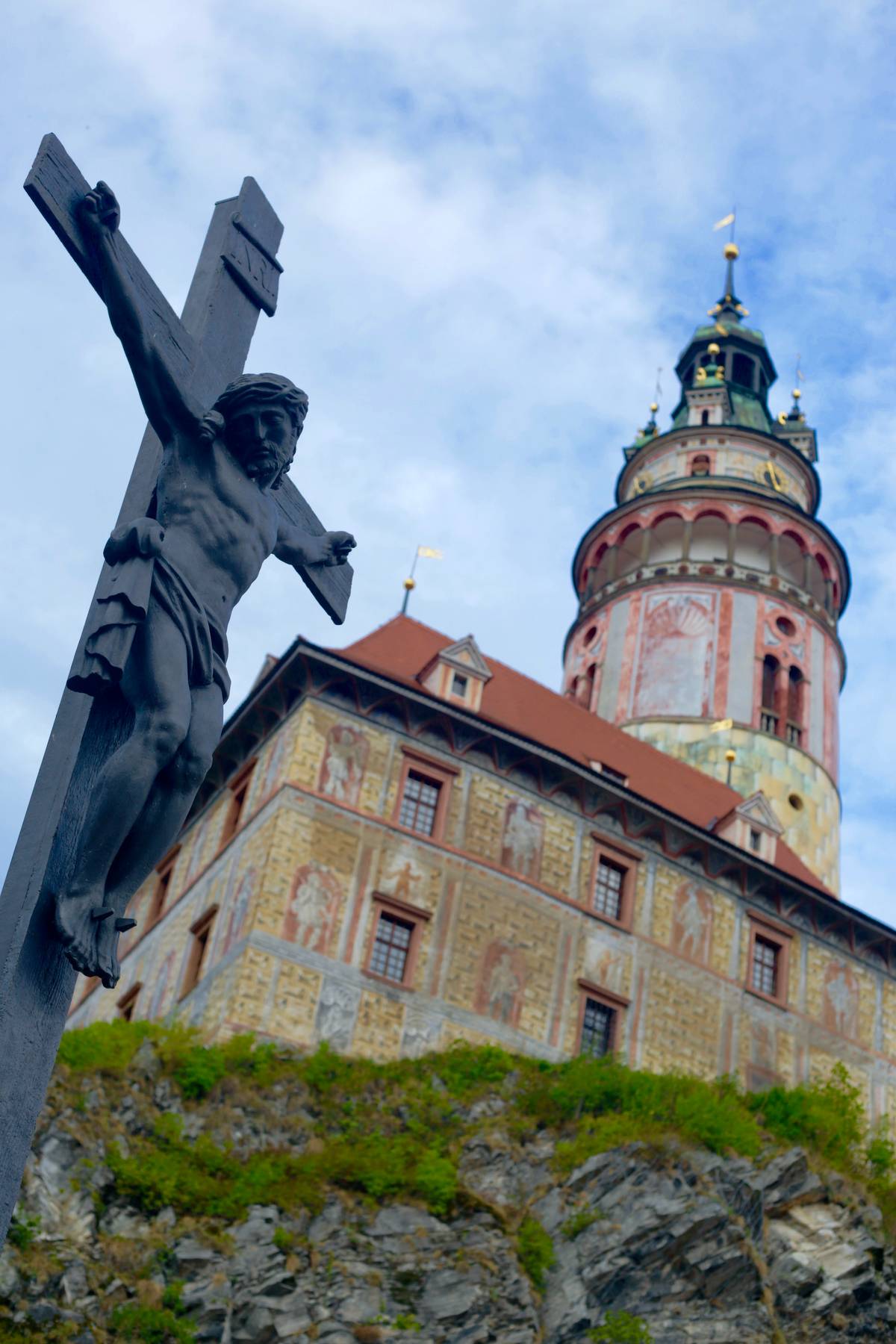
Cesky Krumlov castle is a UNESCO World Heritage Site.
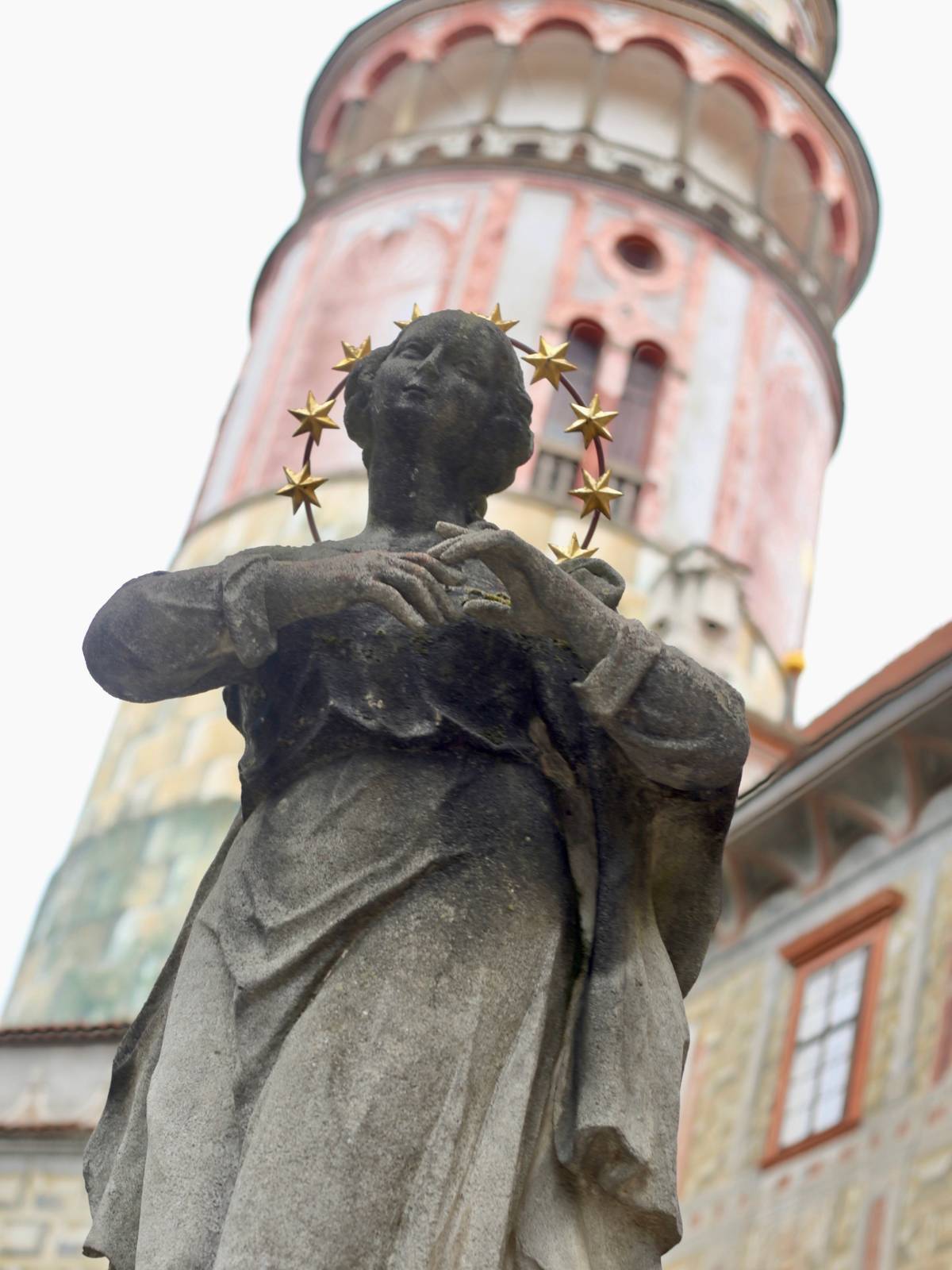
The castle courtyard is decorated with statues.
Fantasy in the air
The magic continued even after the opera had ended, as I stepped outside the theatre to the courtyard of a castle that overlooked the town of Cesky Krumlov. Before me, the UNESCO Heritage Site (about two hours by car from Prague) basked in the afterglow of the final amber streaks from a dying afternoon and ignited old street lamps heralding the coming of night.
Consider a castle on a hill looming above a charming settlement in a natural peninsula wrapped within a snaking river with rolling hills and meadows as backdrops. Cesky Krumlov’s picturesque idyll is perfect for “happy-ever-after-ing” a la Camelot. The castle is the centerpiece, evolving constantly since its construction in the 13th century, incorporating gothic, renaissance and baroque elements with the passage of time. A small central European medieval town still caught in the past despite the influx of droves and the advent of modernity.
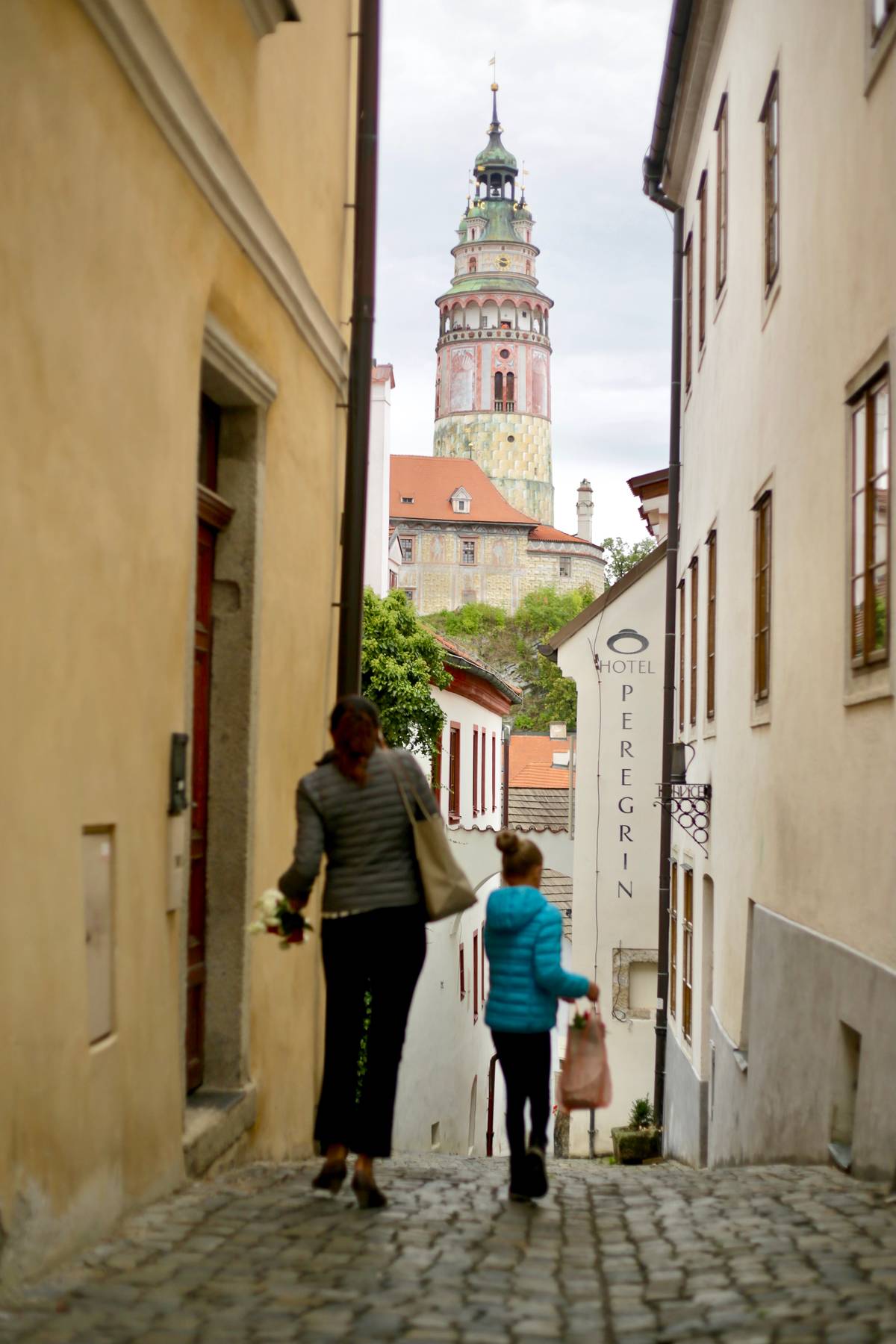
The citadel and its colorful lookout tower were visible from everywhere; a marker to peg your location.
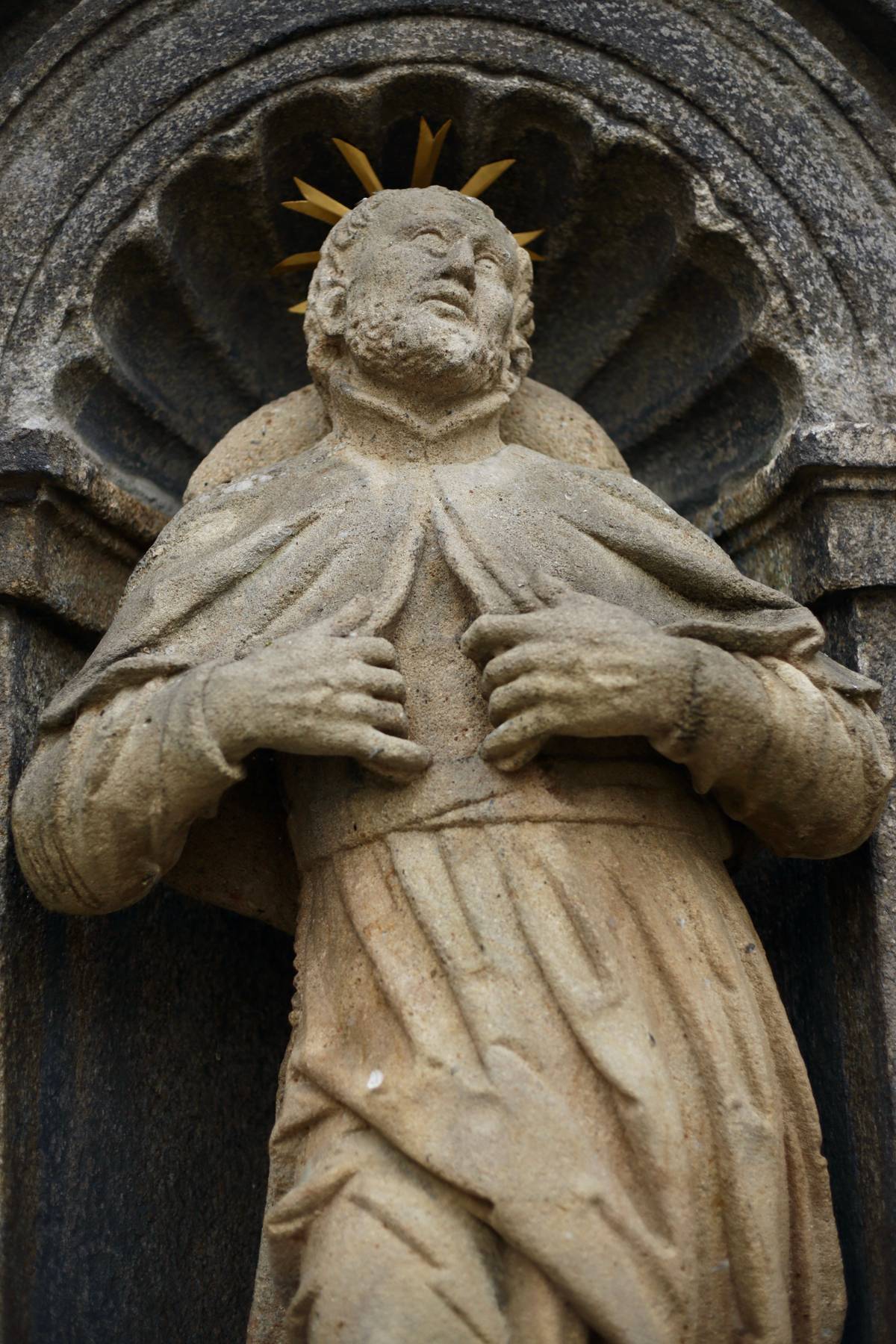
A typical external sculpture on a church wall.
Living museum
Cesky Krumlov has virtually remained intact and preserved because it was never conquered nor subjected to the setbacks of disaster — fire, plagues, or floods. The panoramic red roofs that make up the skyline are untouched and preserved.
The Vltava River, the same body of water that flows from the north through Prague the capital, meanders around the village, vital to the transport of goods and enabling trade back in the day. Not only does it have a functional purpose, it touches the spirit as well, inspiring the artists and poets. A replica of the cathedral of St. Vitus in Prague is both a prime distinctive landmark and treasure where within its high gothic ceilings, vaultings, buttresses, colorful windows and symmetrical orientation, the river’s murmuring can be heard.
This is Prague in miniature, the jewel of South Bohemia, oozing with old European charm.
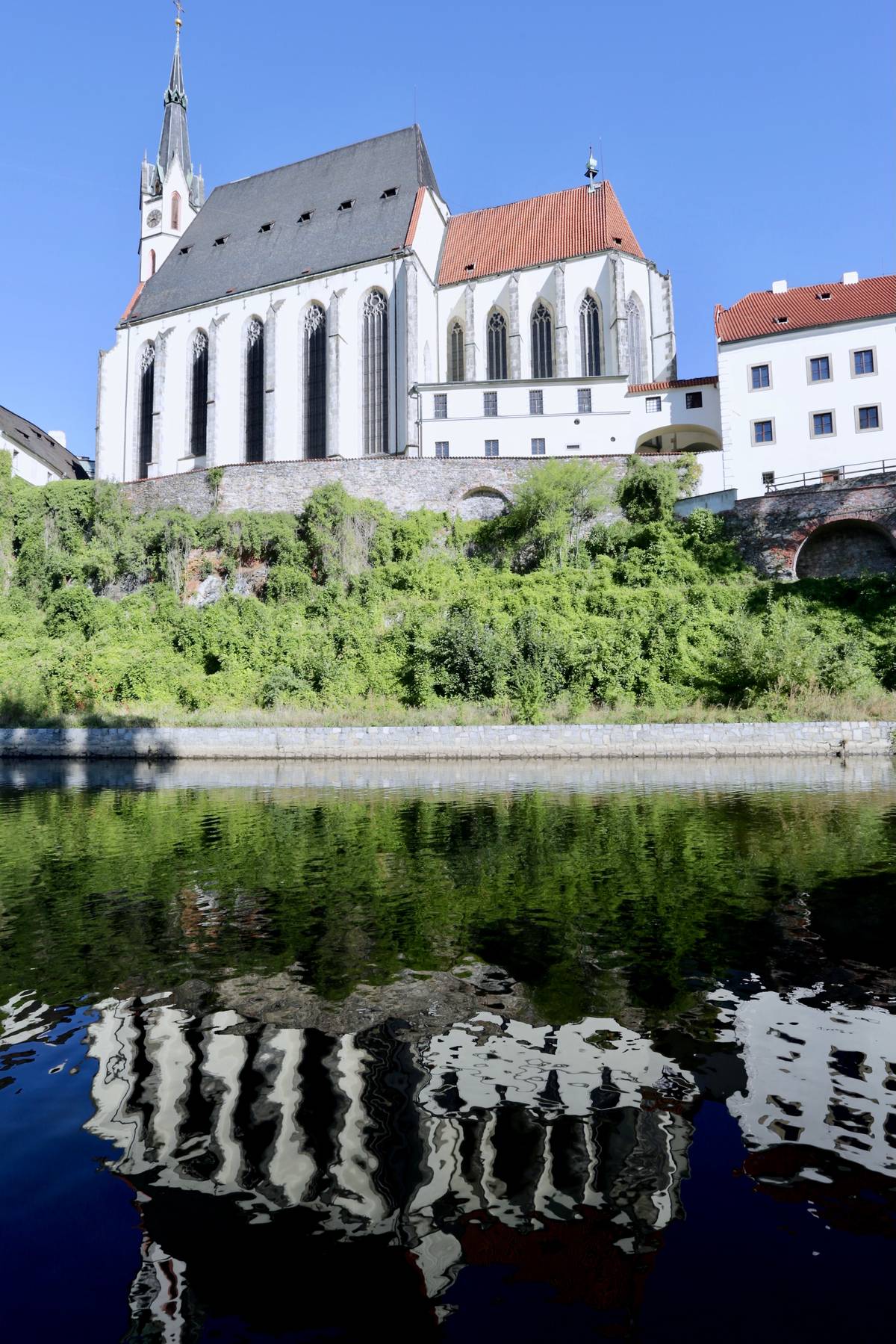
The Gothic Saint Vitus Church reflected on the river.
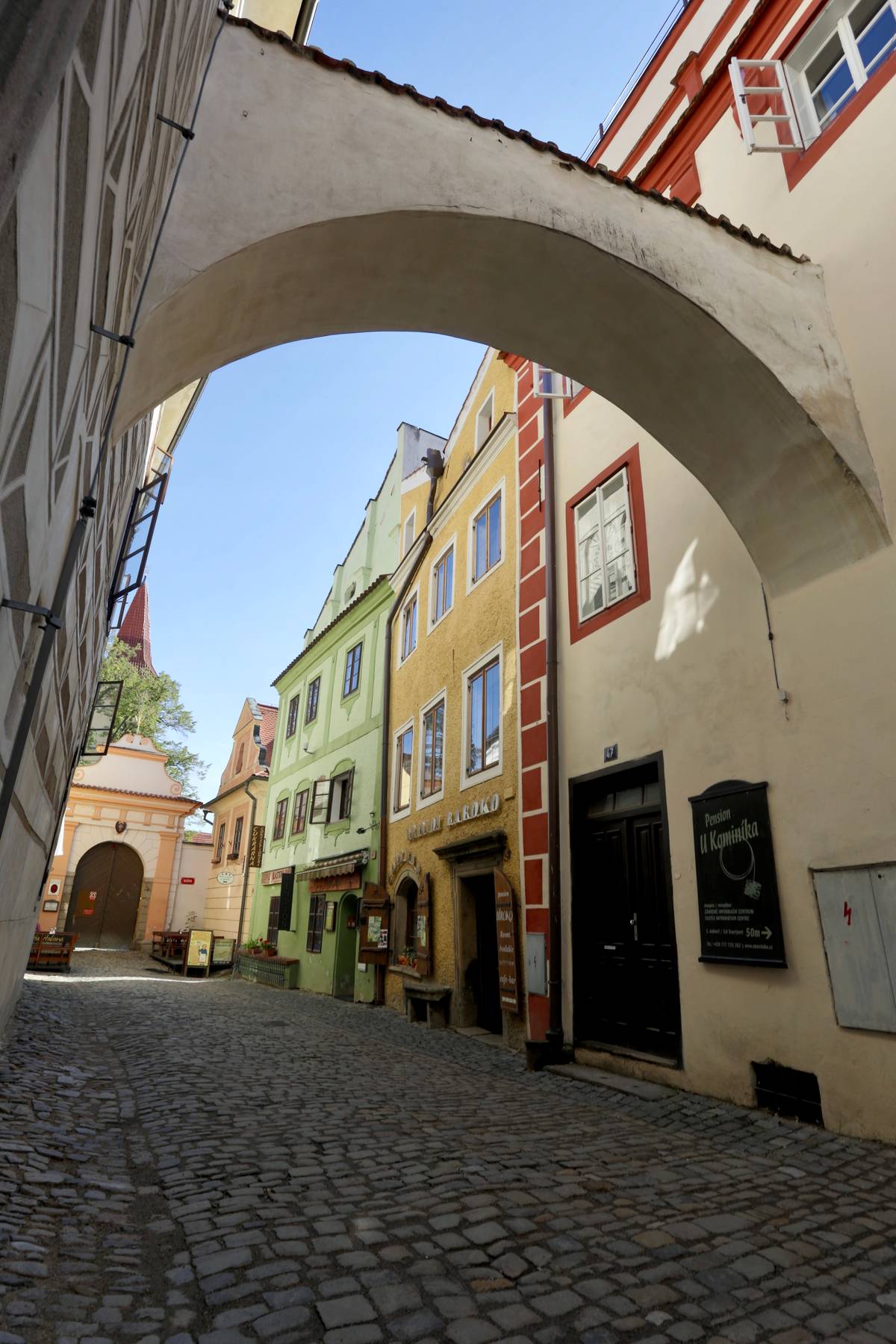
The cobbled narrow lanes are lined with traditional shops housed within the original cottages and structures.
Strolling back in time
Earlier, I plunged into the labyrinth that is Old Town and strayed in the maze of streets and passageways to discover life behind the stone houses adorned with geometric patterns in the style of Czech cubism. From the heart of the town, the famed Old Square with its buskers of string quartets, I ventured off with nary a plan nor itinerary. There was no need for one — the place was small enough to let you find your way back, yet large enough to permit a significant walkabout. Any direction was a good place to start.
Walking around Cesky Krumlov, on its ancient cobbled streets and wooden bridges, is the ultimate throwback. I was always in a constant state of cultural amazement, feeling the splendor of the centuries in the richness of architectural treasures and attractions, both simple or elaborate — gothic facades, graceful colonnades, grand spires or elegant brickwork.
The narrow lanes are lined with traditional shops housed within the original cottages and structures. Gingerbread, glassware, antiques, marionettes, the local stone Moldavite and elixirs are all on display.
I imagined the extensive range of characters who settled here — alchemists, astronomers, artists, artisans — the whole lot.
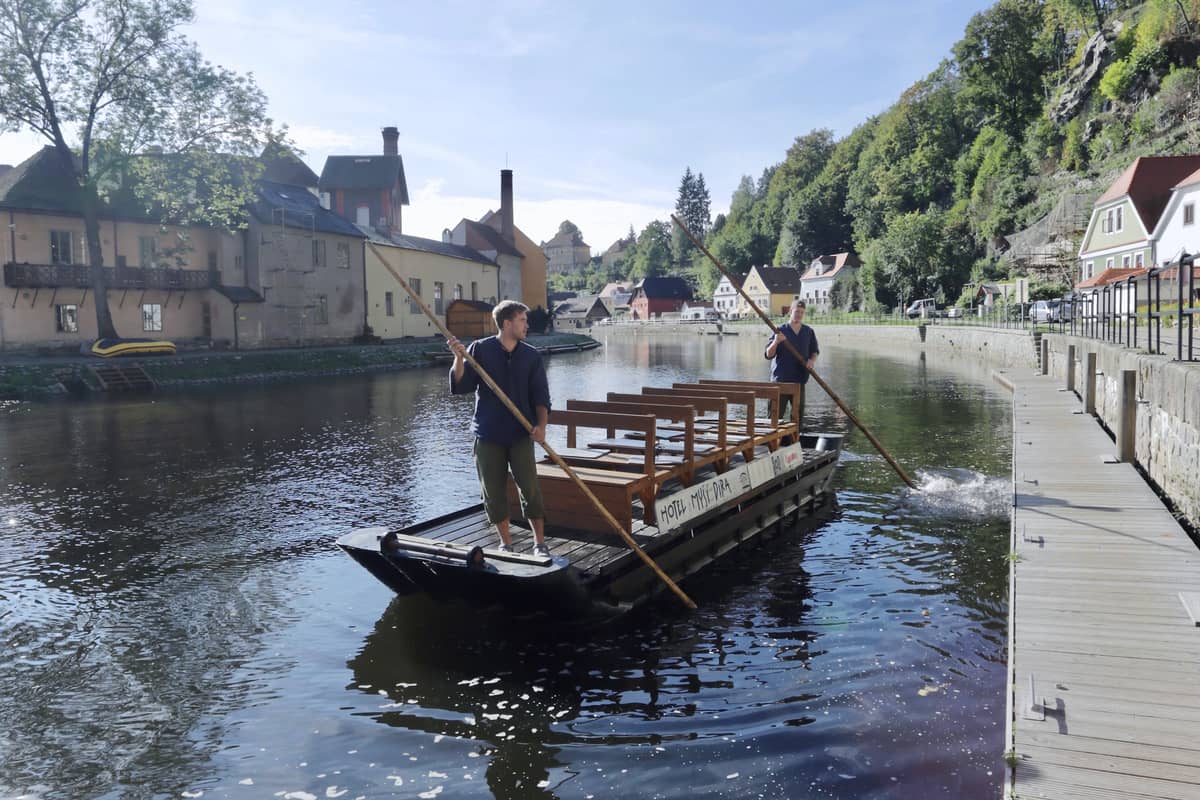
The Vltava River meanders around the village, vital to the transport of goods and enabling trade.
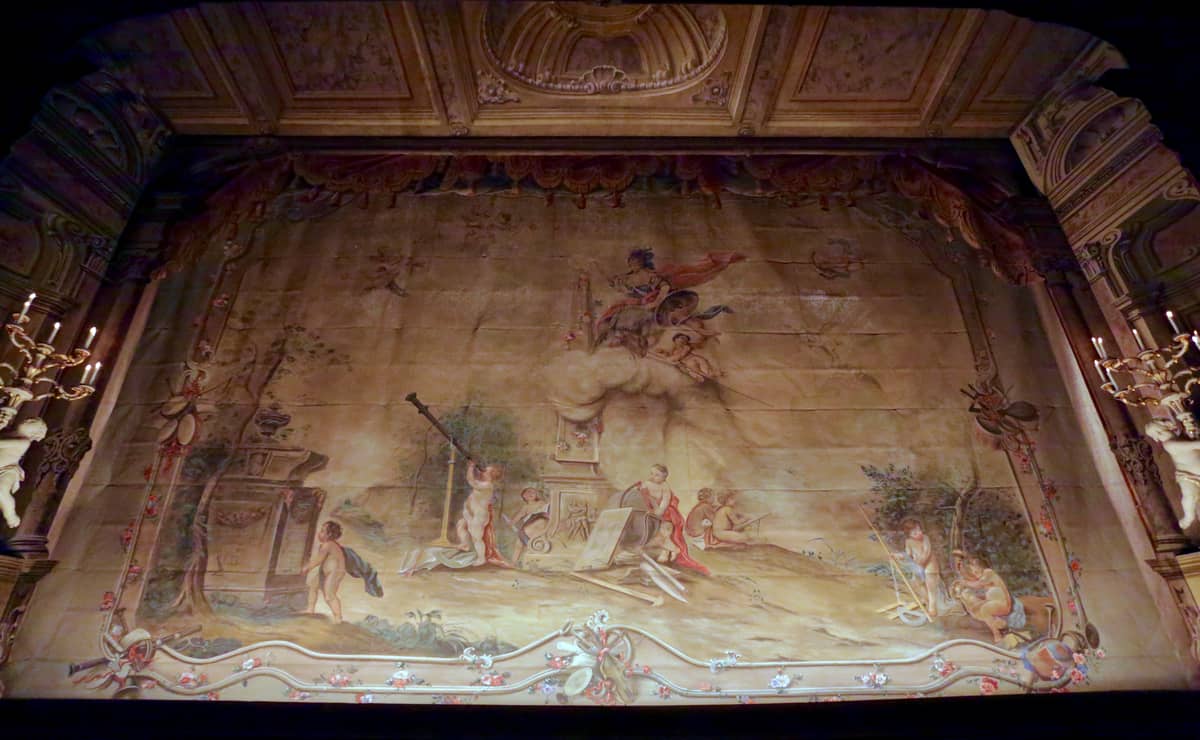
Among the best-preserved baroque theaters worldwide is theČCeskyýKrumlov Baroque Theater.
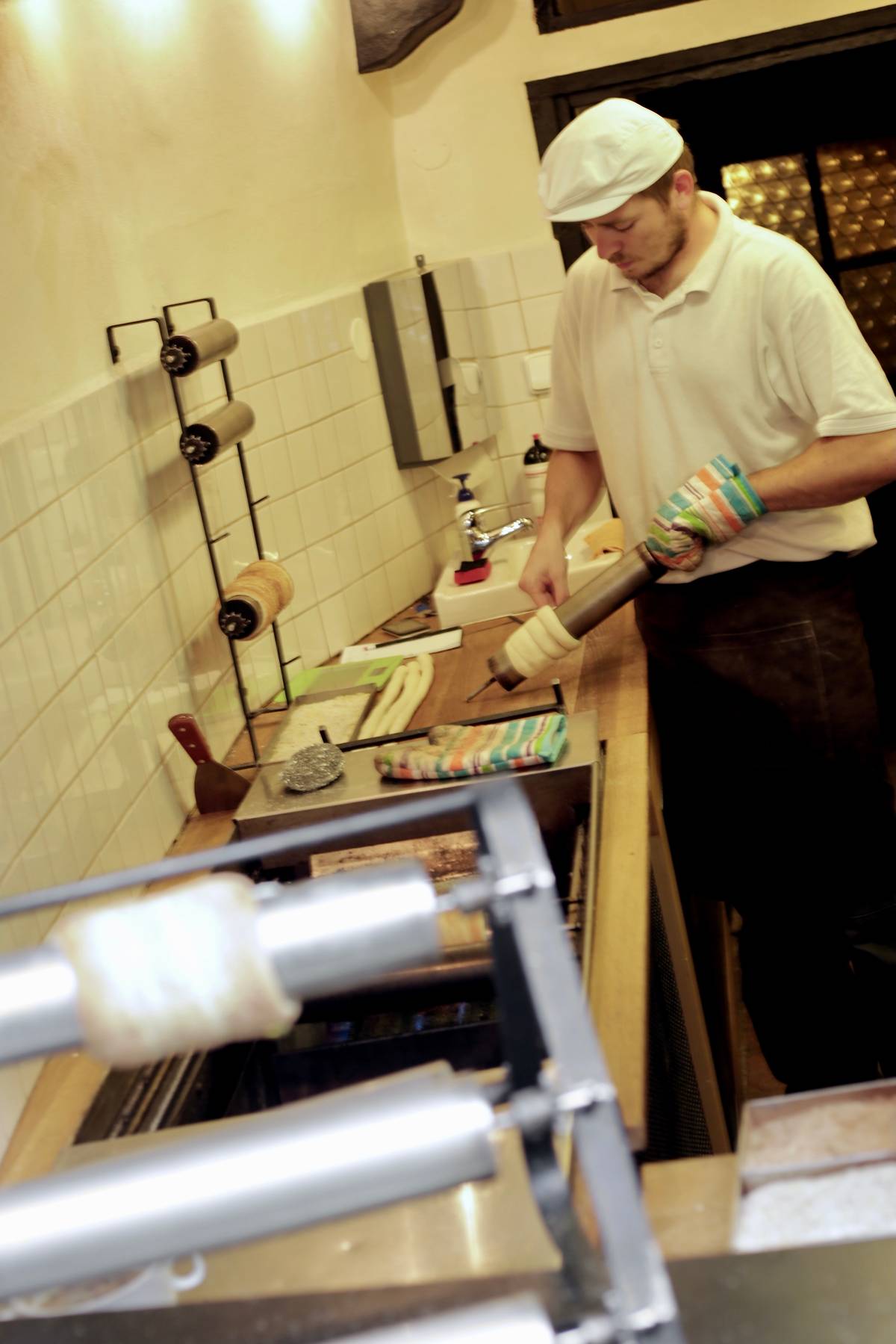
An extensive range of characters who settle in Cesky Krumlov – alchemists, astronomers, artists, artisans – the whole lot.
A meal from old times
For lunch, a tavern hidden in an alley replicated a medieval inn that offered meat grilled from a spit served by costumed waiters was recommended. I devoured an extremely generous serving of roasted pork knees (which was good for at least three people) and washed it down with chilled draught Bohemian beer on tap.
In a relaxing moment mid-afternoon, I settled on the grassy bank of the river under a shaded tree soaking in the serene natural beauty, content to watch people on canoes paddling by and maneuvering the bends. In the distance, a waterwheel turned to the rhythm of the flow. The citadel and its colorful lookout tower lording above was ever present, visible from everywhere; a marker to peg your location.
There was no need to rush. I explored at a leisurely pace, lingering often in forgotten nooks, corners or steps, moving from treasure to treasure, from masterpiece to masterpiece, sipping Moravian wine in a verdant garden terrace taking it all in. This is a place for romance as well, and I felt the stirrings of longing.
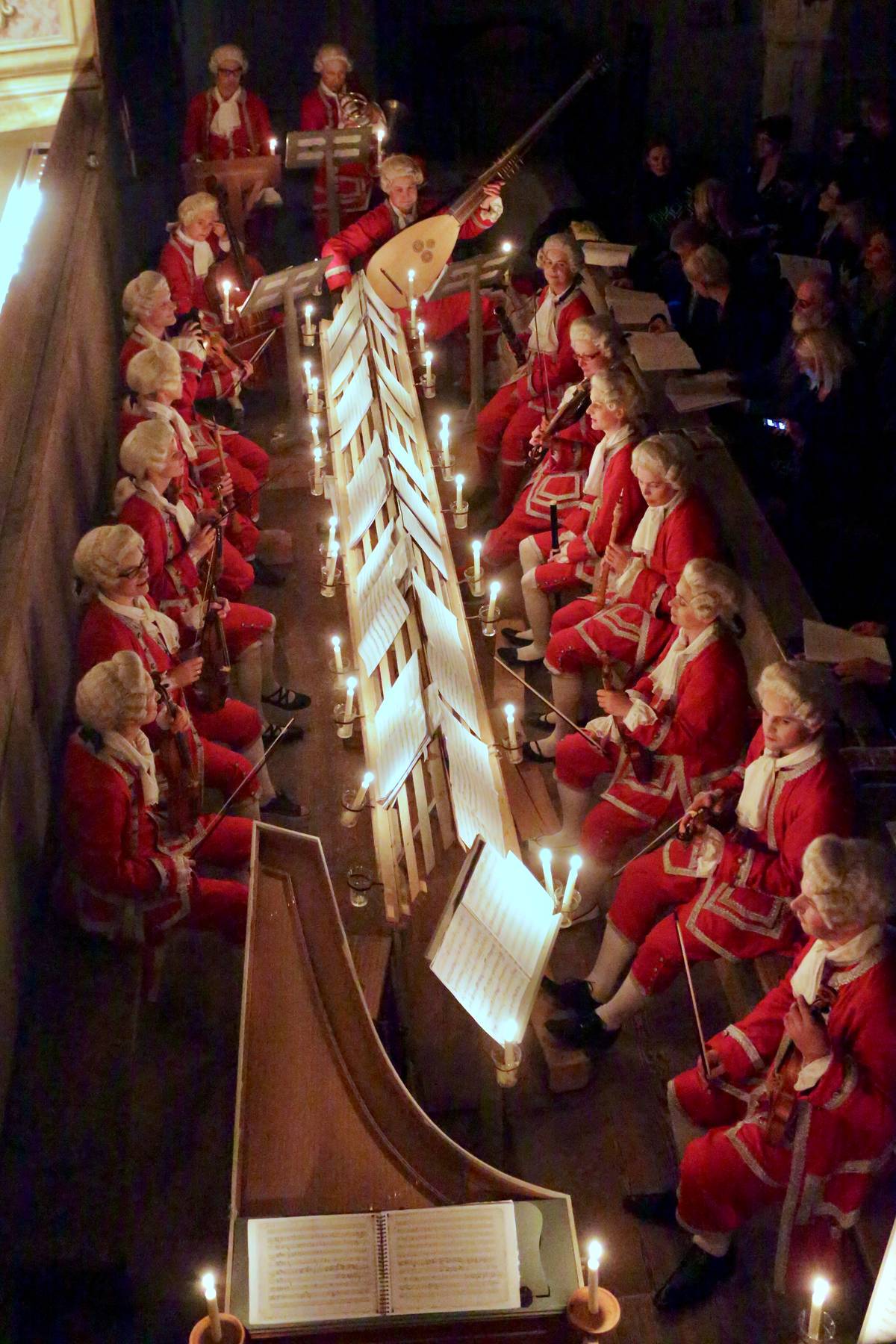
Modern world premieres of baroque opera have been held since Vivaldi’s opera ‘Agrippo’ was found after two centuries and restaged in 2008.
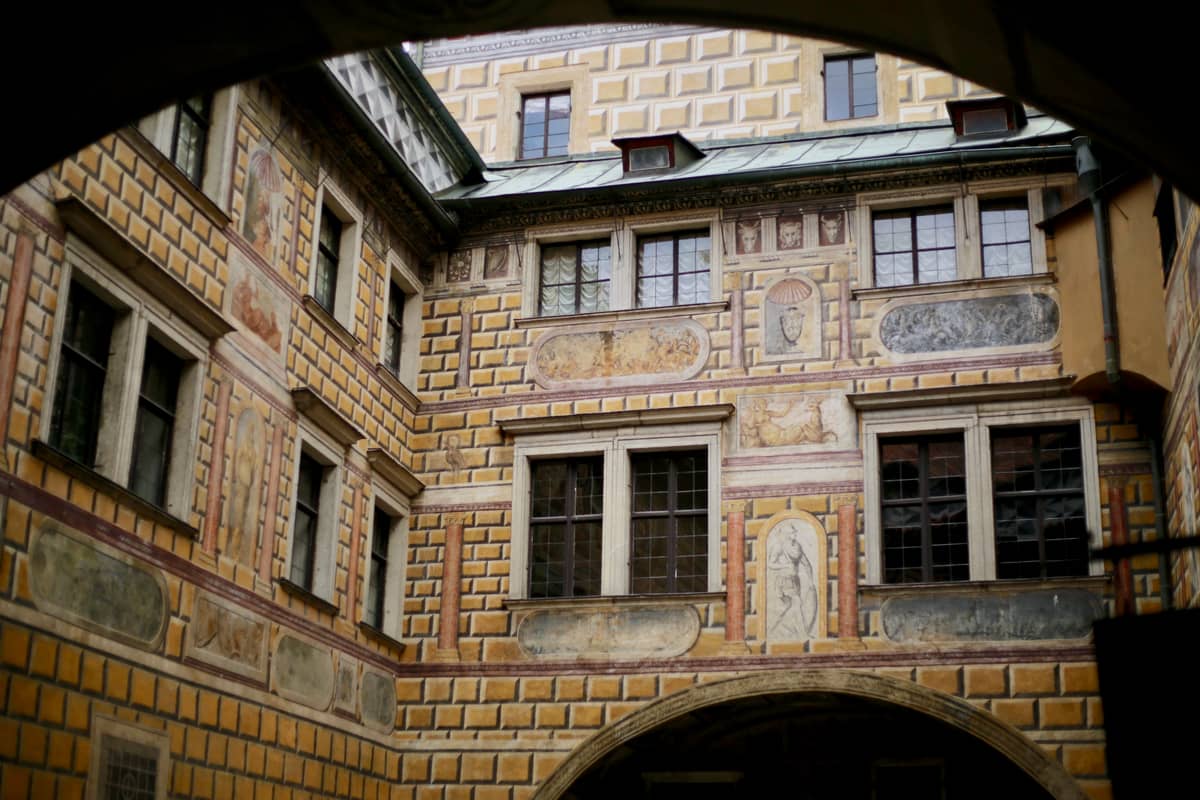
The castle courtyard, with its luxurious Renaissance-style exterior and ornate Gothic windows.
Uncovering musical history
A steep climb was a prerequisite to visit the castle complex with its fabled museum showcasing a scaled model of how it looked in the 16th century. A couple of bears roaming in a contained area are the resident mascots, the certified crowd-drawers. But the Baroque Castle Theatre was my ultimate destination.
In recent years, modern world premieres of baroque opera have been held since Vivaldi’s opera Agrippo was found after two centuries and restaged in 2008. Since then, to celebrate the Festival of Baroque Art held every year, only rediscovered opera are performed at the venue. I was set to watch Antonio Boroni’s L’Amour in Musica which was last seen in 1765.
It was a different kind of time travel.
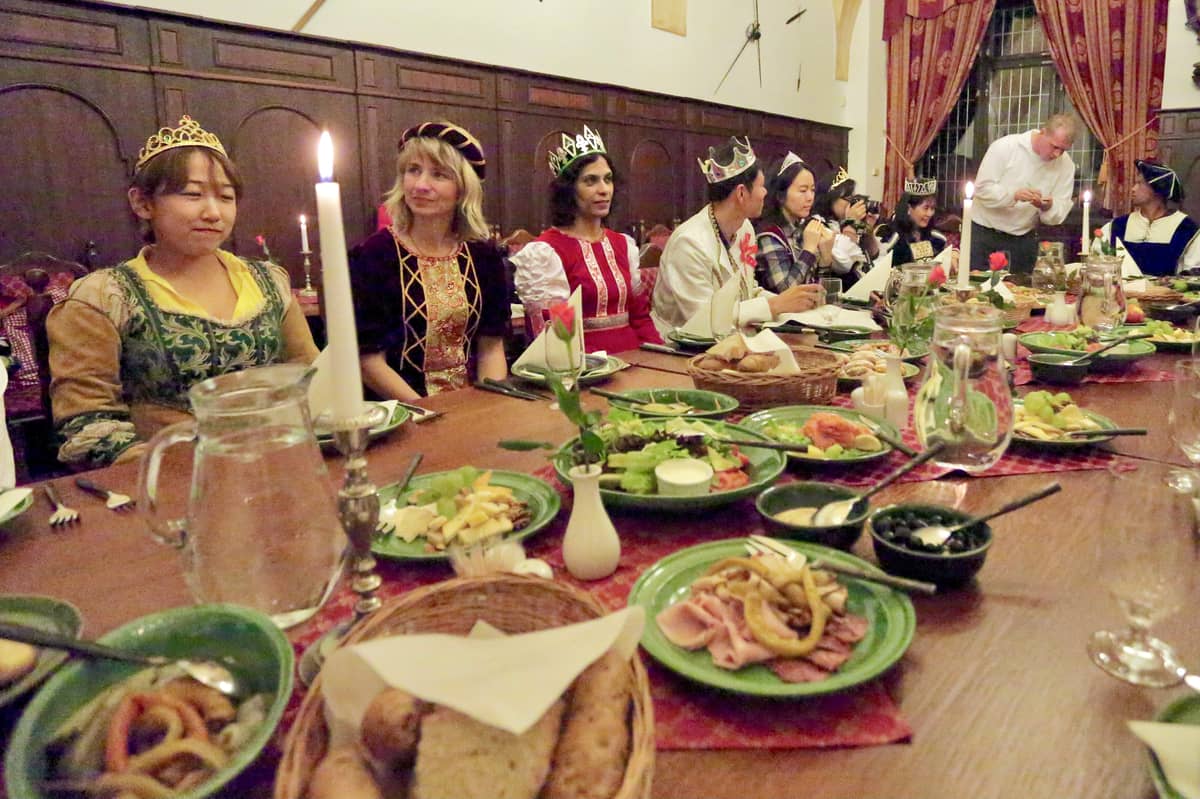
Medieval garb was required for a costume play of sorts over dinner.
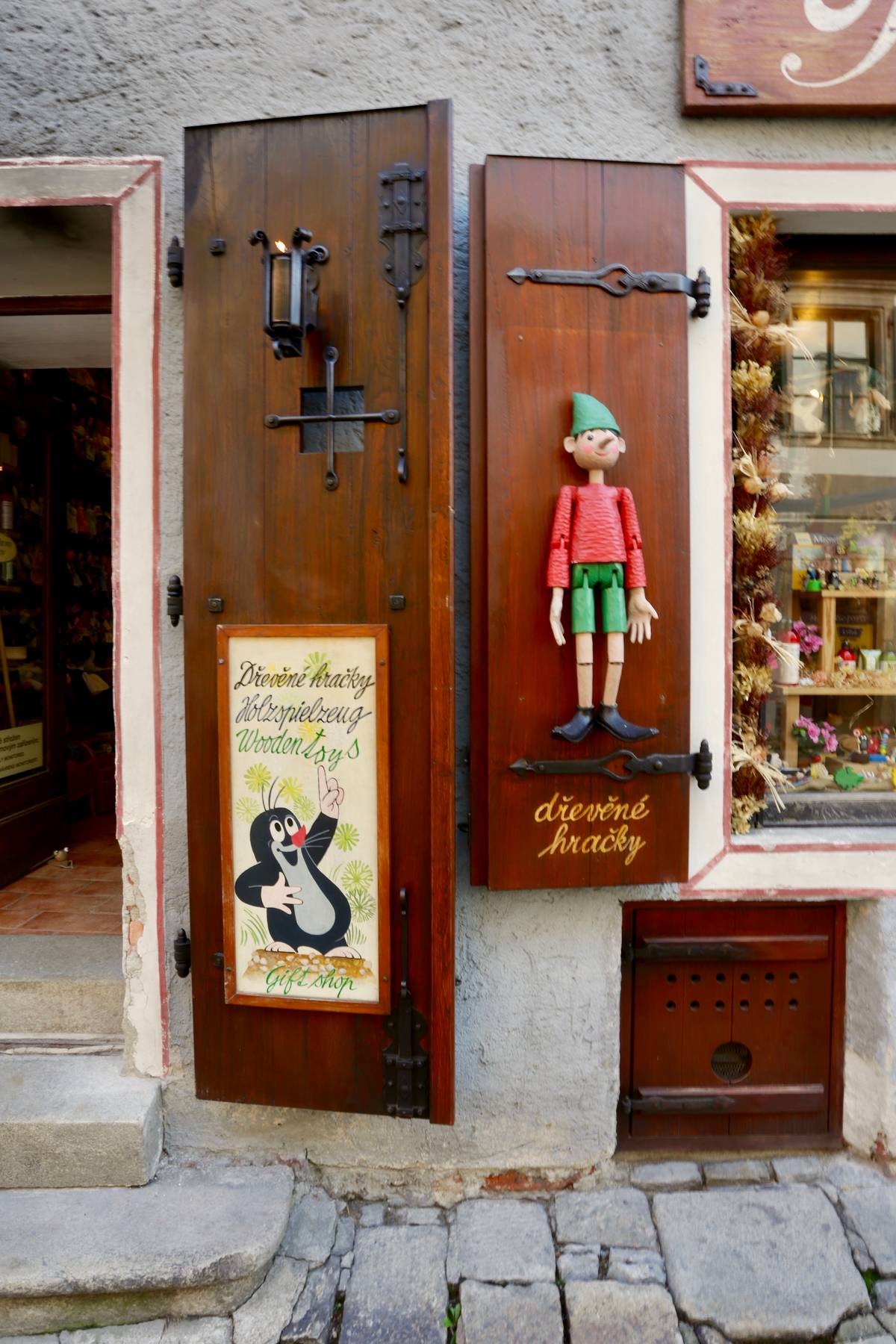
Gingerbread, glassware, antiques, marionettes, the local stone Moldavite, and elixirs are all on display along the historical streets in the Old Town.
A thousand stories
Looking out to the city, I made out Hotel Ruze in the distance, tucked within the night’s hush. The daytime crowds had dissipated and Cesky Krumlov revealed itself anew. I made my way to the hotel for a banquet where medieval garb was required for a costume play of sorts over dinner. In my head, I traced a path to my destination, through the same streets rich with local legends, ghost tales and folklore, of wizards, white ladies and torturing clergymen.
Cesky Krumlov is full of storied streets and walls, of fairy tales and fantasies, of glorious history. You go through a gamut of human emotion — amazement, enchantment, bewilderment — as you catapult yourself back to the past.
The magic never ends.