 Daily Tribune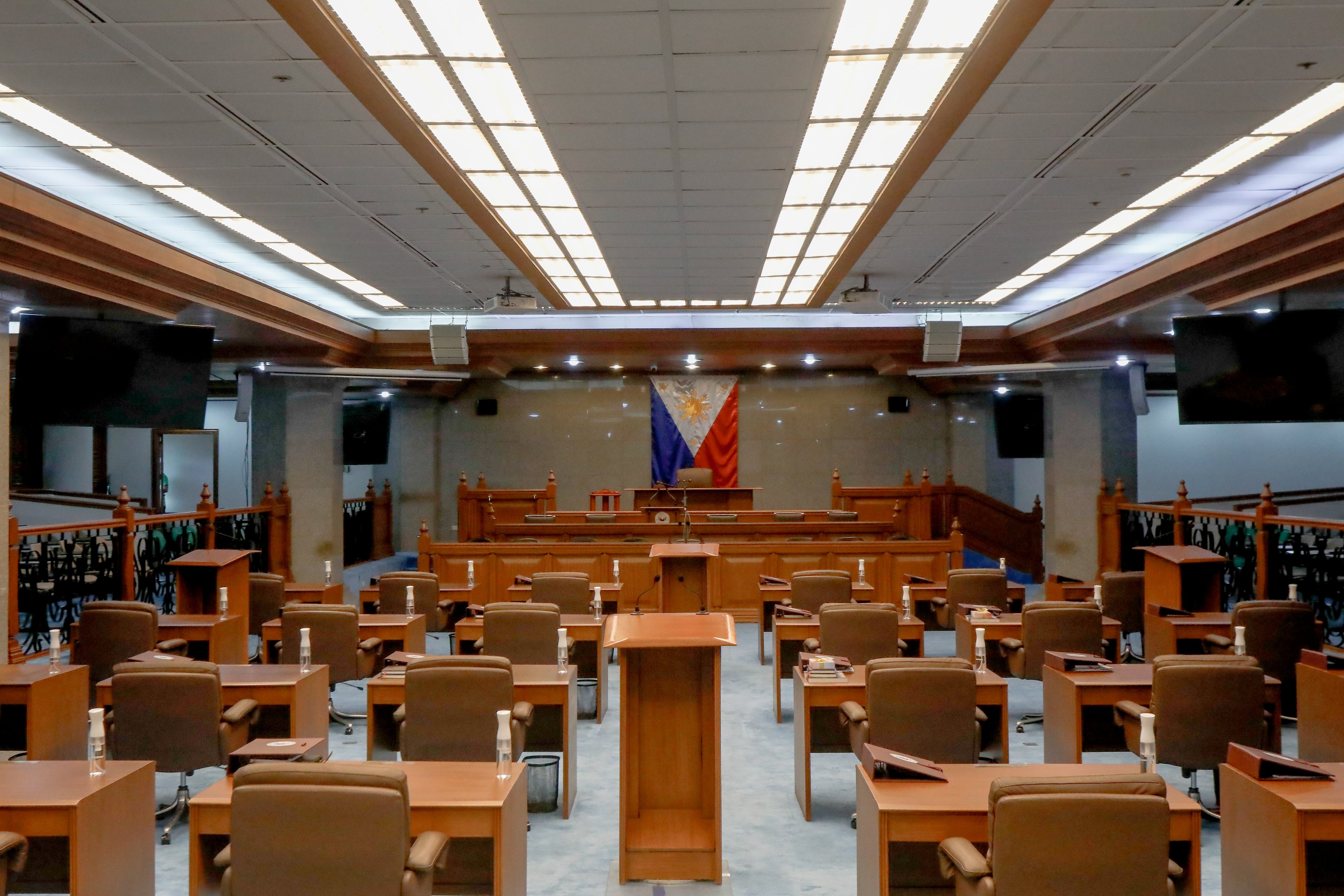
The Senate session hall sits in quiet anticipation days before lawmakers reconvene on 2 June, a date originally set for the start of Vice President Duterte’s impeachment trial.
Photo by Aram Lascano for the DAILY TRIBUNE.
Vice President Sara Duterte was meant to stand trial, at least symbolically, on 2 June.
The Senate was expected to receive the Articles of Impeachment against her, a move that would have shifted its role from legislature to impeachment court.
Instead, the moment was delayed. Again.
What might have been a rare test of institutional resolve became a matter of scheduling.
Citing a backlog of unfinished work, Senate President Chiz Escudero announced the postponement of the presentation to 11 June, just days before the 19th Congress adjourns sine die.
Twelve priority bills remain pending. Among them: the Anti-POGO Act, amendments to the Universal Health Care Act, the Virology Institute Charter, a bill rationalizing fiscal regimes for mining.
Also pending are amendments to the Right-of-Way Act and measures on e-governance and digital infrastructure.
Over 200 presidential appointments, Escudero added, are also awaiting action: three cabinet secretaries, four officials of constitutional commissions, 39 foreign service officers and 277 military promotions.
Escudero insists the delay is procedural, not political.
Critics disagree.
Senate Minority Leader Koko Pimentel argued the move violated Senate rules, which give impeachment matters precedence over legislative work:
“This isn’t just paperwork. This is the Constitution.”
Not all senators share his view. Jinggoy Estrada supported the decision, citing consensus during the Ledac meeting with President Marcos and House Speaker Romualdez.
Senator Win Gatchalian pointed to timing:
“Even if the Senate convenes as an impeachment court on 2 June, it would be impossible to conclude the proceedings by 30 June."
The Vice President remains accused but untried. The Senate, for now, remains a chamber of laws, not judgment.


