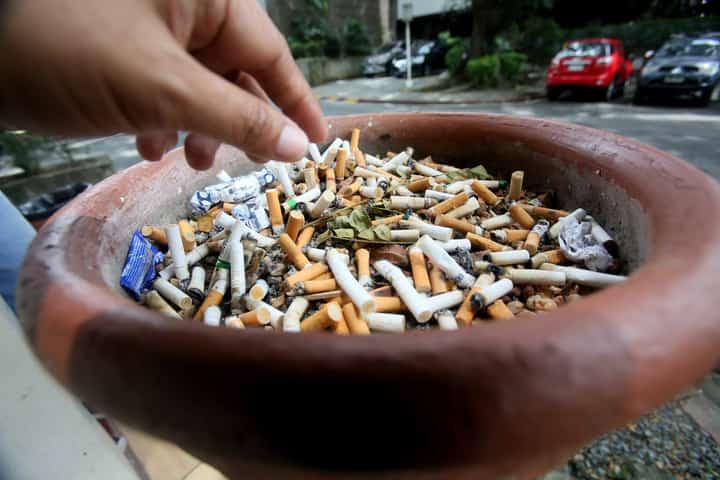
Senator Joseph Victor “JV” Ejercito on Sunday expressed strong opposition to House Bill 11360, also known as the Excise Tax for Tobacco Products, which seeks to reduce excise taxes on tobacco and related products.
Ejercito, the principal author of Republic Act 11223, or the Universal Health Care (UHC) Act, stressed that lowering the excise tax on tobacco products would compromise the funding of the national health insurance program.
“As the principal author of the Universal Health Care Law, we have a duty to defend every policy that protects public health and secures the future of our healthcare system,” he said in a statement.
“That’s why we fully support the position of Senator Win Gatchalian, Chairperson of the Senate Committee on Ways and Means, in his opposition to the proposal to once again lower the taxes on cigarettes, tobacco, heated tobacco products, and vape. Like him, I strongly oppose House Bill No. 11360,” he added.
The UHC Law, signed in 2019, institutionalized the Philippine Health Insurance Corporation (PhilHealth), which receives a portion of excise tax revenue from alcohol and tobacco products, as well as sources such as fuel and luxury goods.
Ejercito explained that he called for the increase of taxes on cigarettes and other tobacco products to generate funding for the UHC law and to reduce smoking rates in the country.
“If we lower these taxes now, we risk undoing the progress we’ve already made,” he said.
“According to health experts, the number of tobacco users in the country could increase by more than 500,000 by 2030. In addition, the funds allocated for Universal Health Care will also decrease,” he added.
He also rejected the claim that reducing taxes would help curb the illicit tobacco trade.
“Although some insist that lowering taxes is the solution to smuggling, this has not yet been proven effective in the last Senate hearing,” he said.
“Revoking the provisions of the UHC — including those on taxation — is turning our backs on the health of every Filipino,” he added.
Representatives Kristine Singson-Meehan, Rufus Rodriguez and Mikaela Suansing, sponsors of the bill, argue that the measure aims to rationalize excise tax rates on tobacco and vape products to address revenue losses caused by illicit trade.
Under the proposed measure, excise tax rates will increase by 2 percent every even-numbered year starting 1 January 2026, and by 4 percent every odd-numbered year from 1 January 2027, until 31 December 2035.
Heated tobacco products will be taxed at P41 per pack, while cigarettes and vape products will carry a P66.15 levy per pack.