
SCUTTLEBUTT


Gates pivot favors Phl
The Bill and Melinda Gates Foundation, which is becoming a pivotal source of financing for developing markets with US President Donald Trump’s marginalization of the United States Agency for International Development, will be setting up an office in Singapore — its first one in Southeast Asia.
The shift will have enormous implications for Philippine projects that will be affected by the sudden US about-face.
The Gates Foundation has already supported initiatives in the Philippines, particularly in health. It has funded programs through partners like the World Health Organization (WHO) and GAVI, the Vaccine Alliance to improve vaccine access for diseases like polio and measles.
It has supported rice research through the International Rice Research Institute (IRRI) based in Los Baños, Laguna, to develop climate-resilient and nutrient-enriched rice varieties, addressing food security and nutrition.
The Singapore office could build on these efforts, using the regional hub to coordinate and scale up existing programs.
The Singapore office could also engage the Philippines in healthcare and vaccine development based on the foundation’s goals and the Philippines’ needs.
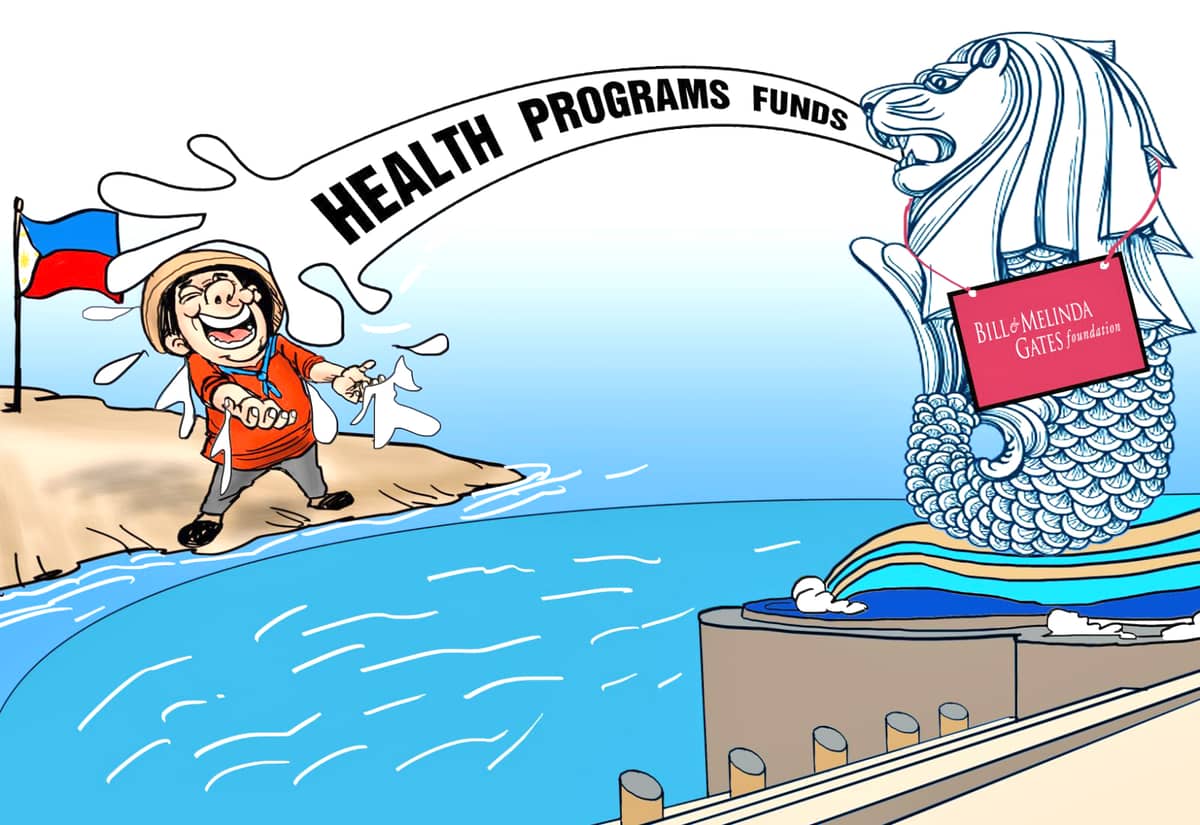
The Philippines has struggled with vaccine hesitancy, partly due to the backlash of the 2016 Dengvaxia controversy and its uneven healthcare infrastructure.
The foundation could partner with the Department of Health and local non-government organizations to improve vaccine distribution, strengthen immunization campaigns, and develop affordable diagnostics for diseases like TB.
Singapore’s expertise in biotech could support clinical trials and health tech innovations tailored to the Philippines, such as AI-driven disease surveillance for dengue outbreaks.
The Philippines has a high mobile penetration rate (over 80 percent of adults own smartphones), making it ripe for fintech solutions. The foundation could collaborate with Singapore-based fintech firms to develop mobile banking or microfinance platforms for rural Filipinos, aligning with its goal of inclusive economic growth.
Programs could target overseas Filipino workers who send billions in remittances annually, to improve financial literacy and access to affordable financial services.
The Philippines is highly vulnerable to climate change, with frequent typhoons and rising sea levels. The foundation’s interest in clean energy, as mentioned by Singapore’s PM Lawrence Wong, could lead to partnerships on renewable energy projects or climate-resilient agriculture.
Building on its IRRI partnership, the foundation could fund further research into sustainable farming practices to boost food security in the Philippines.
The education system faces challenges like overcrowded schools and limited digital infrastructure in rural areas. The foundation could support initiatives to deploy Singapore-developed edtech solutions, such as online learning platforms, to improve access to education.
AI-driven tools could also personalize learning or train teachers in underserved regions.
Singapore’s research ecosystem and leadership in AI, fintech and biotech could provide a platform to develop solutions that can be adapted for the Philippines. For example, Singapore-based institutions could collaborate with Filipino universities or health agencies.
The government has shown an openness to international partnerships, as seen in its collaborations with the WHO and IRRI. The foundation could implement programs with local stakeholders like the Department of Science and Technology and NGOs.
While the foundation’s announcement does not explicitly name the Philippines, its focus on Southeast Asia and its collaboration with regional governments strongly suggests the country will be a priority.
The country’s demographic weight, ongoing health and economic challenges, and prior engagement with the foundation makes it a logical focus. Additionally, the foundation’s statement about advancing sustainable development goals aligns with the Philippines’ national development goals, such as reducing poverty and improving health outcomes.
Singapore’s strategic location and connectivity to Manila, a central regional hub, will facilitate coordinating programs targeting the Philippines.