
Following a stairway to the sky


High in the mountains, deep in a remote area of the Cordilleras away from the cities and crowds is a place of timeless serenity and spirituality, where the air is clean and the people are gentle. In Batad, man is united with nature. While there are other notable rice terraces in Ifugao province, those in Batad are widely regarded as the steepest and the most dramatic.
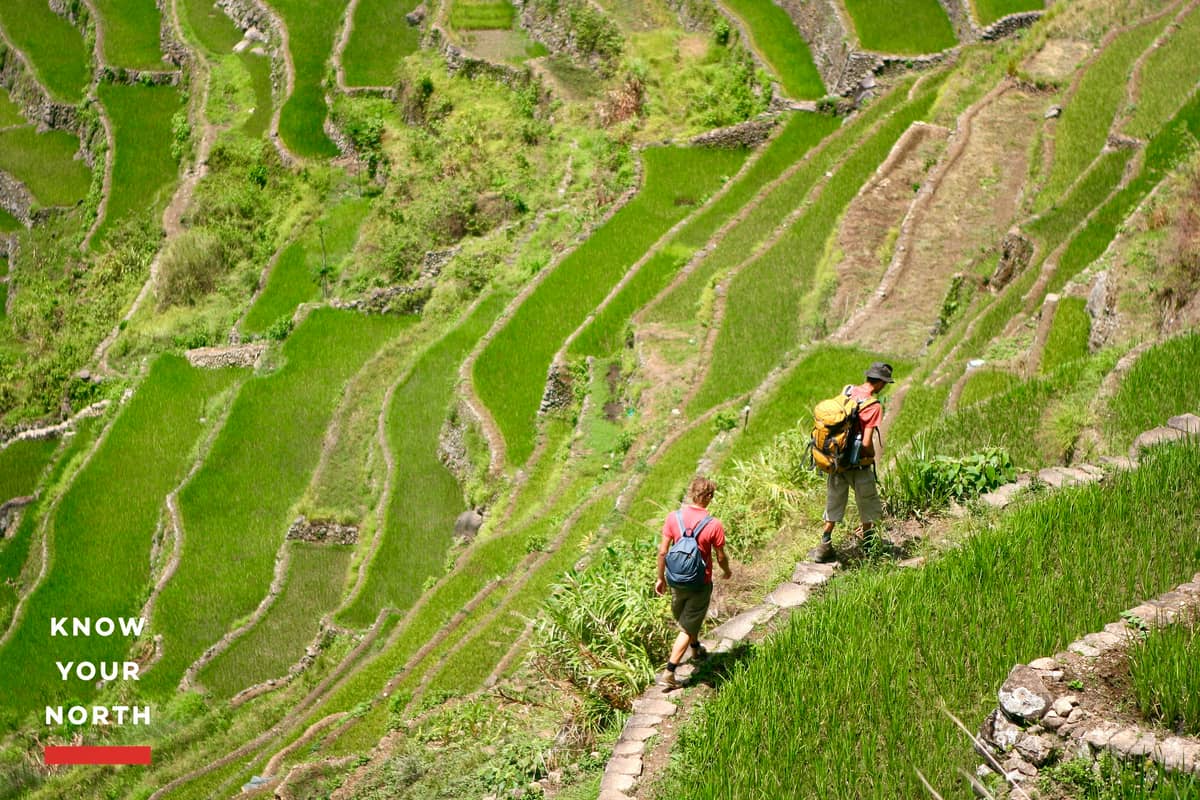
Care is needed when navigating the terraces. A slip could mean a 15-foot fall.
The terraces are majestic and serene when viewed from afar. But to really understand this monumental flight of stairs, I had to walk along the uneven steps and narrow tops of high walls where a slip would have sent me hurtling several meters down to the level below. Only when I balanced on a precarious ledge, heard the gush of flowing water and saw the sky and mountains reflected on innumerable terrace pools descending precipitously to the valley, did I feel the power of the Ifugao’s massive accomplishment.
Life and rice are synonymous in Batad, and the mountainside was reshaped for the purpose of cultivating this crop. As rice is an inflexible produce, sprouting only in flat, submerged paddies, the Ifugao altered nature to suit their needs rather than succumb to it, and imprinted their mark on the slopes. They created levels upon levels of paddies reinforced by hardened mud, clay and stones, and with each layered step, traced the shape of the steep inclines that reached a height of as much as 1,500 meters. The stairways rise magnificently to touch the sky.
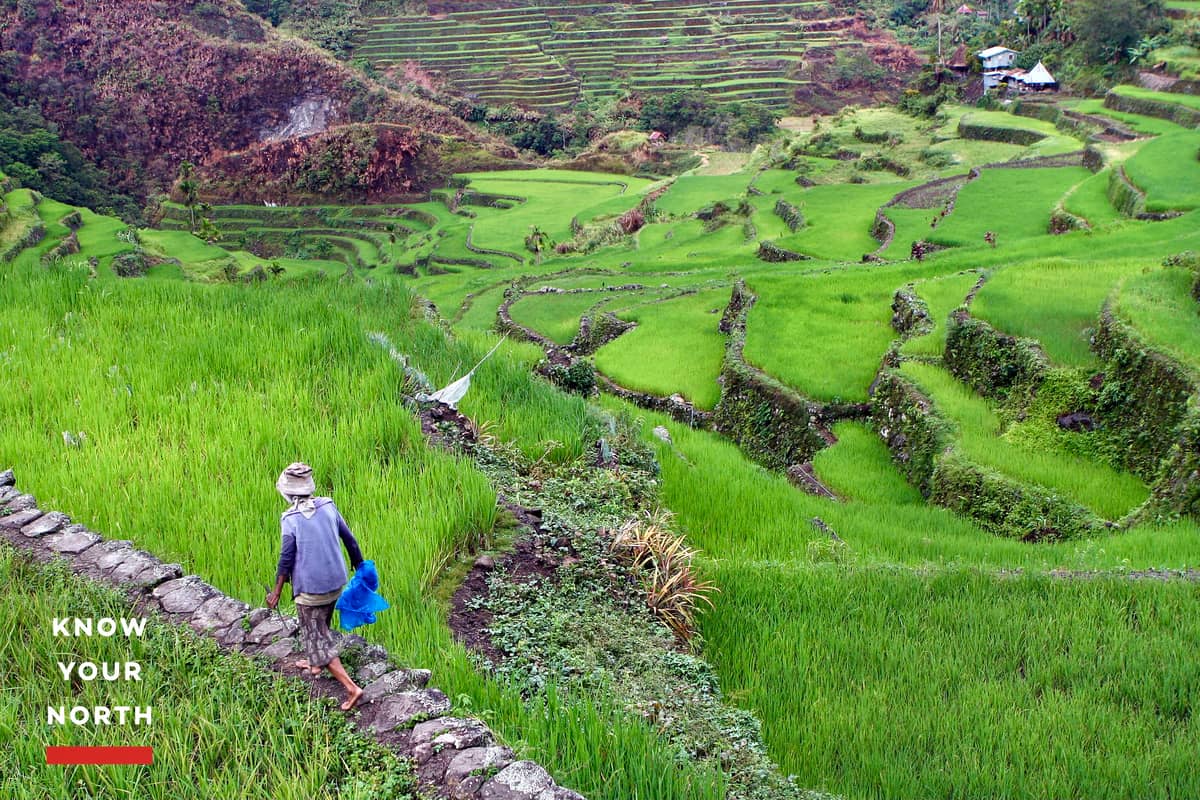
Maintaining the terraces and growing rice entails never-ending attentiveness, massive human effort and backbreaking work without the aid of machinery or beasts of burden.
Photograph courtesy of gab malvar
From the highest point, I had an unobstructed view of the milieu and observed the Ifugao folk at work in their environment, though appearing more like moving shadows from this distance. Life on the terraces is harsh, a contrast to the beautiful aesthetics of the panorama. Maintaining the terraces and growing rice entails never-ending attentiveness, massive human effort and backbreaking work without the aid of machinery or beasts of burden. The repair of stone walls is done with rudimentary tools. Harvested stalks are manually hauled down to the granaries borne over sturdy backs. The Ifugao bear the legacy of the rice culture in their postures from all those years bowed in mud.
Traditional Ifugao huts, with their cogon grass roofs, clustered together in pockets within the landscape, well in harmony with the natural surroundings and performing a variety of functions — a dwelling place, a granary to store harvested rice and more significantly, a place where the mumbaki (shamans) perform rituals.
The Ifugao way of life is integrated with nature and the spirit world. Ceremonies revolve around the agricultural calendar and highlight customs and beliefs. Stages in the rice cycle are marked by different rites — from petitions of bountiful harvest to thanksgiving, all presided over by a mumbaki. The narrative of the terraces cannot be separated from the culture of the Ifugao.
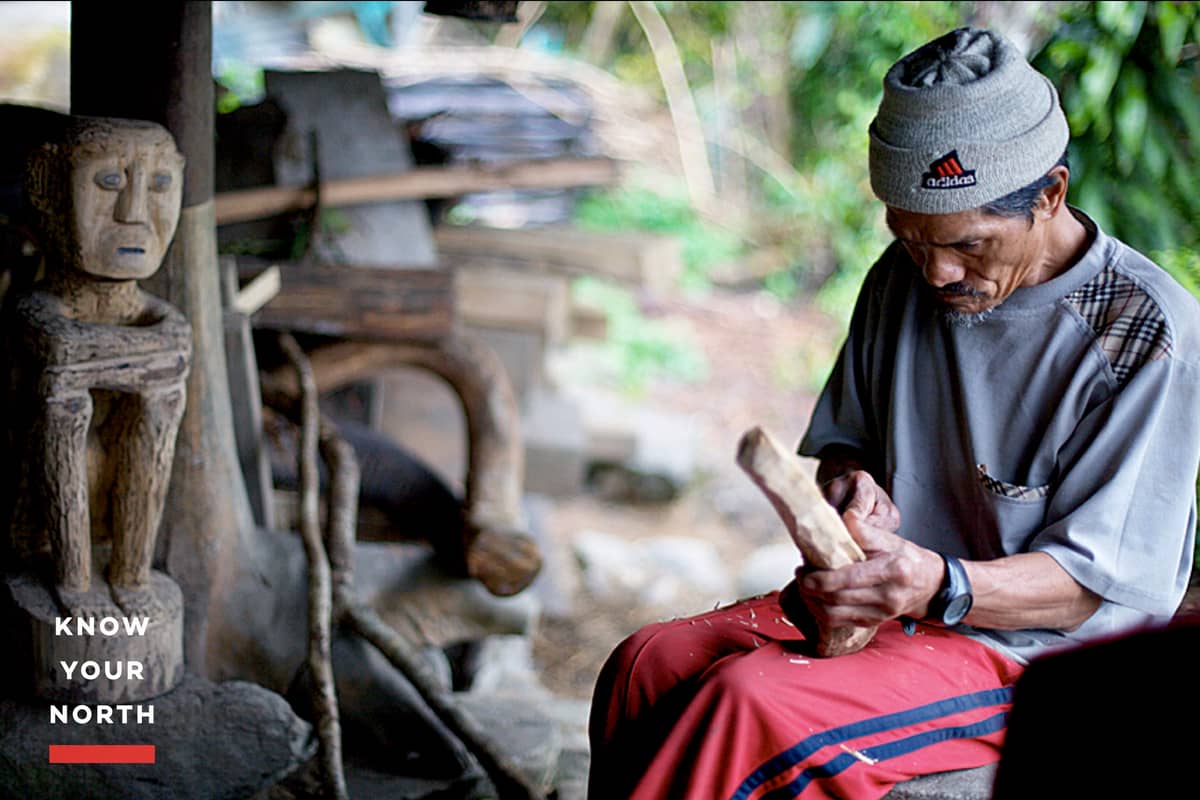
Wood carving is prominent among the Ifugao and the main subject is the bulul or rice god.
I reached out to the bulul dangling from my neck like a pendant, and caressed it with my fingers. A child had offered it to me along the trail. The carved wooden figurine represents a rice deity believed to house the spirits of ancestors. Regarded with the utmost respect, its stature remains undiminished.
Ever-present in rice-cultivation and healing ceremonies, the bulul is constantly in a squatting position with its arms crossed over bent knees and its face, plain and expressionless. It is perfectly poised to watch over the fields, granaries and the people who toil on the mountains, appearing to understand the changing seasons and the passing of centuries. It waits and watches in silence, endlessly and ever patiently, transcending time itself.
What secrets and wisdom would the bulul pass on to me?
The rice terraces are the earth fully alive, the ultimate expression of the noble Ifugao and the embodiment of age-old knowledge, collective perspective and wisdom. Religious beliefs, traditions and the landscape come together in a beautiful and harmonious way. The power of the profound mountains is unmistakable; the high winds bear down and the stalks remain green even under the wall’s long shadows. There is nothing quite like it. My spirit drank deep of the marvel, fully intoxicated with the stillness.
A sophisticated people who came before me declare as I stand before their grand handiwork — a temple of engineering on a scale too great to grasp: “This is what we are capable of. This is who we are.”
I am humbled.
***
Batad is being threatened by modernity despite its isolation in the highlands. Old ways are being abandoned; change is creeping in and altering Batad’s very way of life. Traditional rituals are no longer being practiced with the mumbaki becoming fewer and fewer as generations go by. Rice paddies are no longer being tilled the way they were centuries ago and the terraces are falling into disrepair. The younger generation prefers to take jobs in the lowlands and cities rather than maintain the terraces.
How do we balance change with heritage and tradition? How do we manage progress? What’s in store for the terraces? There are more questions than there are answers. And the divide widens still.
We haven’t figured it out yet.