




Passion for helping others
New Jersey-based Dr. Emmanuel Lat and wife, Dr. Zenda Lat, join medical mission in the Philippines every year for the past 33 years.
Text size
New Jersey-based Dr. Emmanuel Lat and wife, Dr. Zenda Lat, join medical mission in the Philippines every year for the past 33 years.
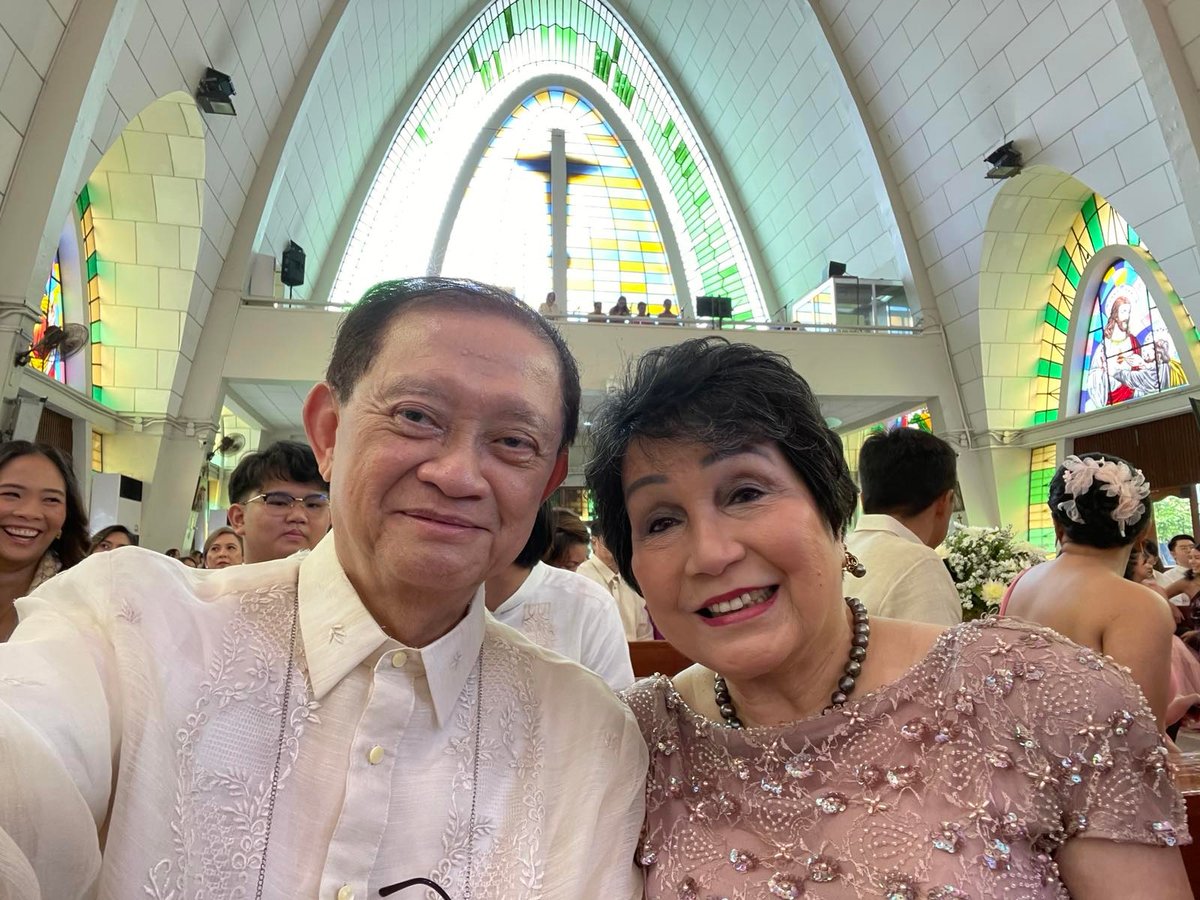
Plastic and hand surgeon Dr. Emmanuel Lat operates on a patient at the Eastern Samar Provincial Hospital during the medical, dental and surgical mission of the University of the Philippines Medical Alumni Society in America and Ugnayan ng Pahinungod in Borongan, Eastern Samar from 17 to 20 February. Dr. Lat and wife Zenda at the wedding of her nephew in Cebu.
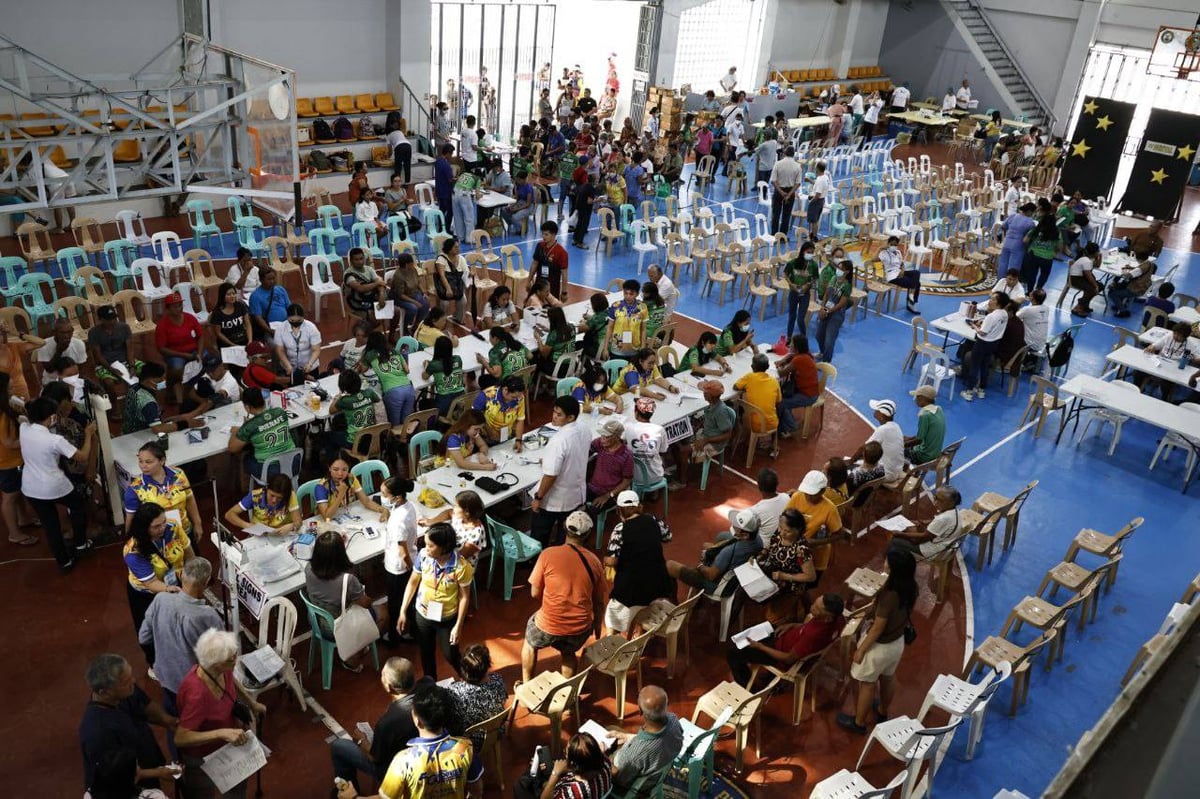
Last 17 to 20 February, mostly Fil-Am volunteers from the University of the Philippines Medical Alumni Society in America (UPMASA) and Ugnayan ng Pahinungod, the volunteer service program of UP, conducted their annual medical, dental and surgical mission in Borongan, Eastern Samar.
The free medical services of the two groups — conducted in collaboration with the provincial government under the leadership of Gov. Ben P. Evardone, Eastern Samar Provincial Health Office and Eastern Samar Provincial Hospital — saw 70 UPMASA doctors and 37 Ugnayan volunteers treat 2,623 Estehanon patients at the Capitol gymnasium and the Eastern Samar Provincial Hospital. The mission included 65 major operations on thyroid tumors, 97 cataract and 26 ptyregium surgeries, 461 dental extractions and 106 minor surgeries, according to the mission.
Among the volunteer doctors was 76-year-old plastic and hand surgeon Dr. Emmanuel Lat, a UP Medicine graduate residing in New Jersey, United States (US) since 1974.
A past president of UPMASA, Lat and his wife Zenda, a family physician, started joining medical missions in the Philippines in 1992, as many as three times in a year. They then organized the annual UPMASA medical mission in the Philippines starting 1995 “to help where help is needed.”
“I just feel that it is my duty to help my compatriots,” Lat tells the DAILY TRIBUNE why he loves doing medical missions.
“I repair cleft lips since I am a certified plastic surgeon. I operate on patients with hand problems since I am also a certified hand surgeon,” he says.
Through the couple’s Handog Ngiti Gift of Smile Foundation Inc., which was registered in the US in 2007, Lat has repaired more than a thousand cleft lips in the Philippines for free. Happy patients were his consolation.
“I feel honored that my patients trust me to operate on them. The patients are very grateful and that makes me very happy,” he says.
Lat and his UPMASA colleagues do not only provide their expertise pro bono every medical missions. They also shoulder its cost.
“UPMASA volunteers pay for their own transportation and housing and food except when they are still in the hospital working, in which case the hospital will provide food. UPMASA pays for the transportation and housing of the Ugnayan ng Pahinungod volunteers,” according to Lat.
“Aside from paying our hotel expenses of $300 for the week and our own transportation expenses from Manila to Borongan, we donated another $500 for that medical mission. Many of those 60 to 70 UPMASA volunteers made that same additional donation,” he says.
Preparations for a UPMASA medical mission is usually done one year or longer before the event, including a site visit by the chair of the group’s medical mission committee to determine the number of patients to be served, the number of volunteer doctors to be recruited, and the location of the service.
Helping to cover the cost are UPMASA’s endowment fund of about $10 million, which Lat says come from earnings from that fund and direct individual donations.
“Some places have very small hospitals and UPMASA had to send money to improve the size of the hospital,” Lat adds.
Lat is a member of the Phi Kappa Mu Fraternity of the UP College of Medicine. The fraternity started the telemedicine service Medical Assist Program (MAP) in the 1980s to help sick Filipinos.
Explaining the program, Lat says, “Filipinos send an email or text detailing their concern. Their case is then referred to one of many MD volunteers specialized in that particular condition. There will then be one-on-one communication between them. The assistance could be in the form of a diagnosis, suggested treatment and list of possible doctors available in the patient’s area who can render the specific treatment, etc.”
MAP runs by itself through the fraternity’s email loop, with an assigned monitor.
Lat duplicated the MAP for his other fraternity, Upsilon Sigma Phi, two years ago and it has been very successful. For that, he received the highest Upsilon honor called UNO (Upsilonian Noble and Outstanding) award.
The doctor reveals that he will propose the unification of the MAPs separately operated by the two fraternities.
UPMASA and Lat’s frat brothers and sorority sisters from UP also help hospitals through “philanthropic entrepreneurship.”
The Phi House Foundation Inc., which Lat co-founded in the country, built the Phi House-UP Manila Dormitory in 2014. The P32 million cost of the project was raised through naming rights.
“Donors were promised that their names would forever (as long as building exists) be recognized on a touch screen computer in the lobby of the dormitory,” Lat explains.
Most of the donors were members of the Phi Kappa Mu Fraternity and Phi Lambda Delta Sorority of the UPCM, but all donors were welcome, including members of the rival fraternity and sorority, the Mu Sigma Phi Fraternity and Sorority, he says.
The memorandum of agreement signed on 12 December 2012 by the president of the UP Systems and the donors says that UP will not run the dormitory.
“UP employees are too busy and may not be knowledgeable about running a dormitory according to first world standards. Third party property managers will run it. But all net income if any, will continue to be donated back to PGH (Philippine General Hospital) and the UP College of Medicine,” Lat says.
Meanwhile, next year’s UPMASA medical mission is under preparation now and three sites are being considered: Antique, Romblon or Marinduque.
Whichever is chosen, Lat and his wife would be there volunteering again, he assures.
“If we all help somebody less fortunate than us, this will be a better world. And no matter how bad we think our situation is, there is always somebody we can help,” Lat says.
