
US Peace Corps hosts climate leadership training for Pisay students

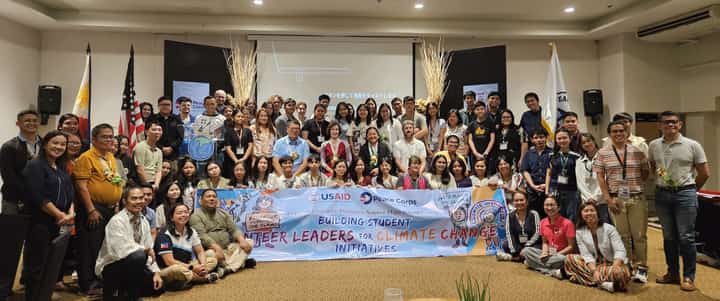
Students and faculty from Philippine Science High School campuses across the country gather at a U.S. Peace Corps-sponsored training in Iloilo City to design and implement climate change solutions for their communities.
From 18 to 22 November in Iloilo City, the U.S. Peace Corps held a workshop that trained students from the Philippine Science High School System (PSHS System) to plan and implement science-based, sustainable climate solutions in their schools and communities.
The workshop, titled “Building Student Volunteer Leaders for Climate Change Initiatives,” brought together 36 students from PSHS campuses nationwide to focus on conceptualizing, planning, and prototyping climate change solutions. The students are expected to implement these projects after consulting with their local communities, showcasing the role of youth in addressing climate change.
The training, funded by the U.S. Agency for International Development and co-facilitated by climate change experts from SEED4COM, is part of the U.S. Peace Corps’ broader commitment to tackling global climate challenges. The initiative works with local partners and integrates climate change adaptation into its programs and training activities.
“We are partnering with the PSHS System to tap the potential of STEM education in climate action,” said Peace Corps Country Director Marguerite Roy. “I’m excited to see how these students will apply their training, bring their projects to life, and inspire others to become agents of change.”
Alongside the student participants, 16 PSHS faculty members and eight Peace Corps Volunteers and their partners attended discussions and field visits to local climate resilience projects, including the Leganes Integrated Katunggan EcoPark, the Climate Field School, and Orchard Valley Farm. These activities aimed to deepen participants' knowledge of climate change, biodiversity conservation, disaster risk reduction, and volunteerism.
“This program provides a structured framework for advocacy, which we’ll incorporate into our climate action plan for the PSHS System,” said PSHS System Executive Director Ronnalee Orteza.
The Peace Corps-sponsored training supports Project Planet Lemniscate, an initiative within the PSHS System that uses project-based learning and design thinking to empower students to develop innovative solutions for climate change.
“The involvement of our youth is crucial. We cannot afford to wait until it’s too late,” Orteza added.
The workshop also allowed students to collaborate with experts and fellow volunteers, receive feedback on their proposals, and refine their project prototypes.