




Marcos: Gov’t committed to reliable, fully modernized Phl transport system

Text size
President Ferdinand "Bongbong" R. Marcos Jr. said the government will continue pushing for a more seamless and modernized transport system in the country.
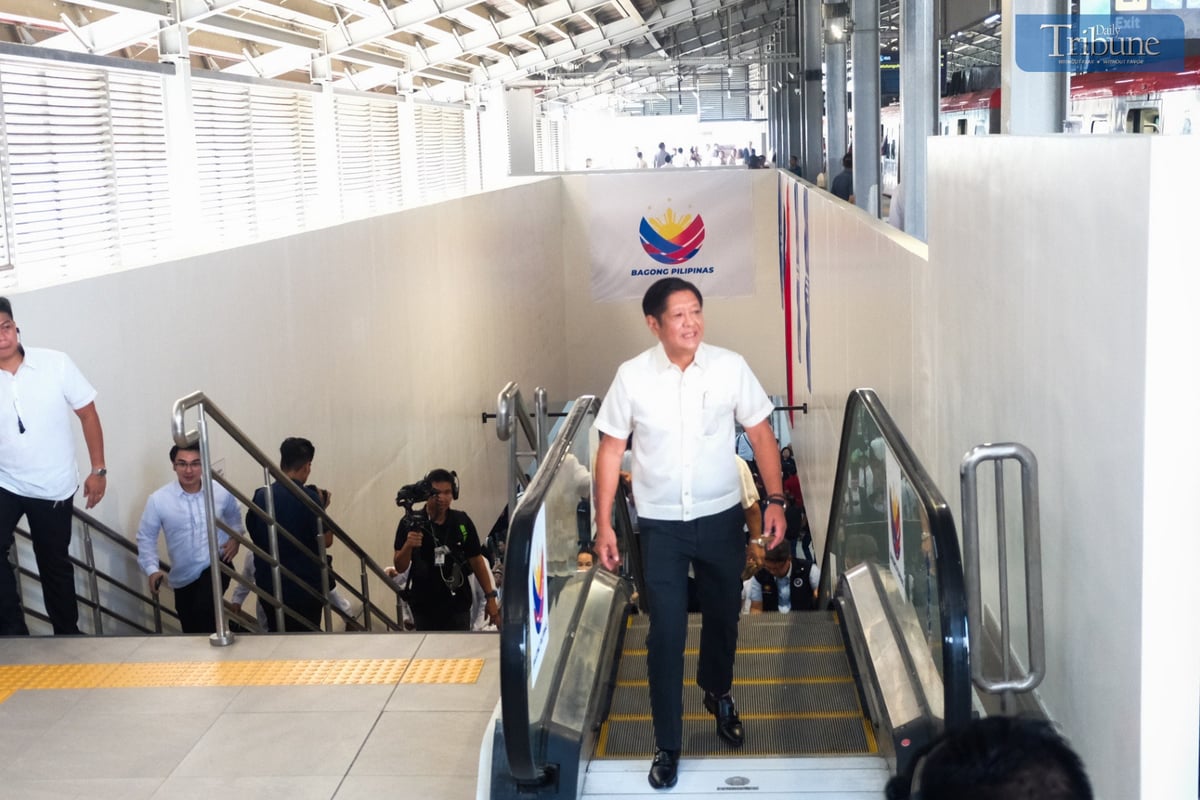
In gracing the inauguration of the Light Rail Transit 1 (LRT-1) Cavite Extension Project Phase 1 in Parañaque City on Friday, Marcos said his administration remains committed to providing Filipino commuters with "smoother and more reliable” transportation.
“Our journey towards a more seamless and modernized public transportation system does not end here. We are committed to building station after station, reaching as far and as fast as our people’s needs dictate,” Marcos said.
L1CE Phase 1 is the first railway project to be completed under the Marcos administration through a public-private partnership (PPP).
It will reduce travel time from Parañaque City to Quezon City by almost an hour while servicing an additional 80,000 passengers to LRT-1's daily ridership of 323,000.
Once fully operational, the travel time between the entire stretch of the LRT-1 Cavite Extension Project Baclaran in Parañaque and Bacoor, Cavite, will be reduced from one hour and 10 minutes to 25 minutes.
Phase 1 connects Baclaran Station in Pasay City to the Dr. Santos Station in Parañaque City through five new stations, including Redemptorist-ASEANA Station, MIA Road Station, Parañaque Integrated Terminal Exchange (PITX) Station, Ninoy Aquino Avenue Station, and Dr. Santos Station.
These stations will add 6 km. to the transit line, extending the total alignment LRT-1 to 26 km. from the current 20 km.
In September 1984, Marcos' father and namesake, former president Ferdinand E. Marcos Sr., inaugurated the LRT-1's United Nations (UN) to Baclaran stations.
In his remarks, Marcos acknowledged his father’s efforts in initiating the construction of Metro Manila’s first urban rail transit system.
He cited the initiative grew into a larger rail transit system that serves the metropolis.
“On this day, no one is happier than his son in seeing that his father’s foresight is being validated by another work that expands mass transit that he had built for the people that he loved,” he said.
“The L1CE Project has been a long time in the making – spanning five administrations, starting with President (Joseph) Estrada, to President (Gloria) Arroyo, President (Noynoy) Aquino, President (Rodrigo) Duterte, and now, to mine.”
The project targets to alleviate traffic conditions in the cities of Parañaque, Las Piñas, and Bacoor, Cavite.
Shortly after the ceremony, Marcos boarded the train and returned to the Dr. Santos Station.
Marcos noted various key railway projects are currently being undertaken by the government.
These include the Unified Grand Central Station, the Metro Manila Subway Project, the MRT-7, the North-South Commuter Railway, the MRT-4, and the Philippine National Railways South Long Haul.
The President likewise said some of the ongoing transport projects may not be completed within his term as these long-term endeavors extend beyond administrations.
“This is the nature of railway development and of any large-scale development: this is not a short-term endeavor. It requires patience, persistence, and passion and commitment that extends beyond immediate timelines,” he stressed.
Housing is probably the biggest issue affecting people the world over.
Malacañang on Monday called for a more thorough investigation into the questioned flood control projects in Taguig…
The defense on Monday backed the move by senator-judges to exclude a prosecution witness who testified on the firearms…
