
Say no to fragile bones
While osteoporosis is diagnosed more frequently in older persons, it is not a natural part of aging.

“Osteoporosis” means porous bones, a condition where bones are weak and prone to fracture. A silent disease, there are no signs and symptoms until you break a bone. As people live longer, osteoporosis cases are increasing. Right now, one fracture due to osteoporosis occurs every three seconds. After 50 years of age, one in three women and one in five men will suffer a fracture in their remaining lifetime. Having a fracture can lead to complications and even death.
That is why highlighting this condition and increasing awareness is imperative. The earlier we learn about the disease, the better we can prevent and manage it. October is dedicated to this, with the second week proclaimed National Osteoporosis Awareness Week in the Philippines, and World Osteoporosis Day celebrated every year on 20 October.
While osteoporosis is diagnosed more frequently in older persons, it is not a natural part of aging. And while it is more common in post-menopausal women, it is not a given that every woman who undergoes menopause will develop osteoporosis. It can also occur at a younger age and in men.
Risk factors for osteoporosis include being Asian or Caucasian, a family history of osteoporosis, being underweight, smoking, excessive alcohol intake, lack of exercise and a diet low in calcium and vitamin D, which are essential nutrients for building strong bones.
Osteoporosis should be suspected if fractures occur easily with minimal trauma, such as tripping or falling from a standing height. Although falls are the most common cause, fractures can also be caused by bending over, sudden twisting of the torso, or even forceful coughing.
Other signs include a loss of height over time, a stooped posture, or the sudden onset of back pain, as a result of a compression fracture of the vertebrae, the bones that protect the spinal column.
The best way to avoid osteoporosis begins in childhood. With proper nutrition and exercise, children develop sturdier bones and can get their bones to be as strong as they can be by the early twenties. As we age our bones slowly weaken, but the stronger our bones in our youth, the less likely it is to develop osteoporosis.
Here are some other measures to take to maintain healthy bones.
1. Get enough calcium, a key nutrient for bone health. Adults need about 1,000 milligrams a day, and women over 50 or men over 70 need even more — about 1,200 milligrams daily. Dairy products, leafy green vegetables and calcium-fortified foods are great sources.
2. Increase your vitamin D, which assists with the absorption of calcium. While sunlight serves as one of the best sources of vitamin D, it is also present in fortified foods and fatty fish.
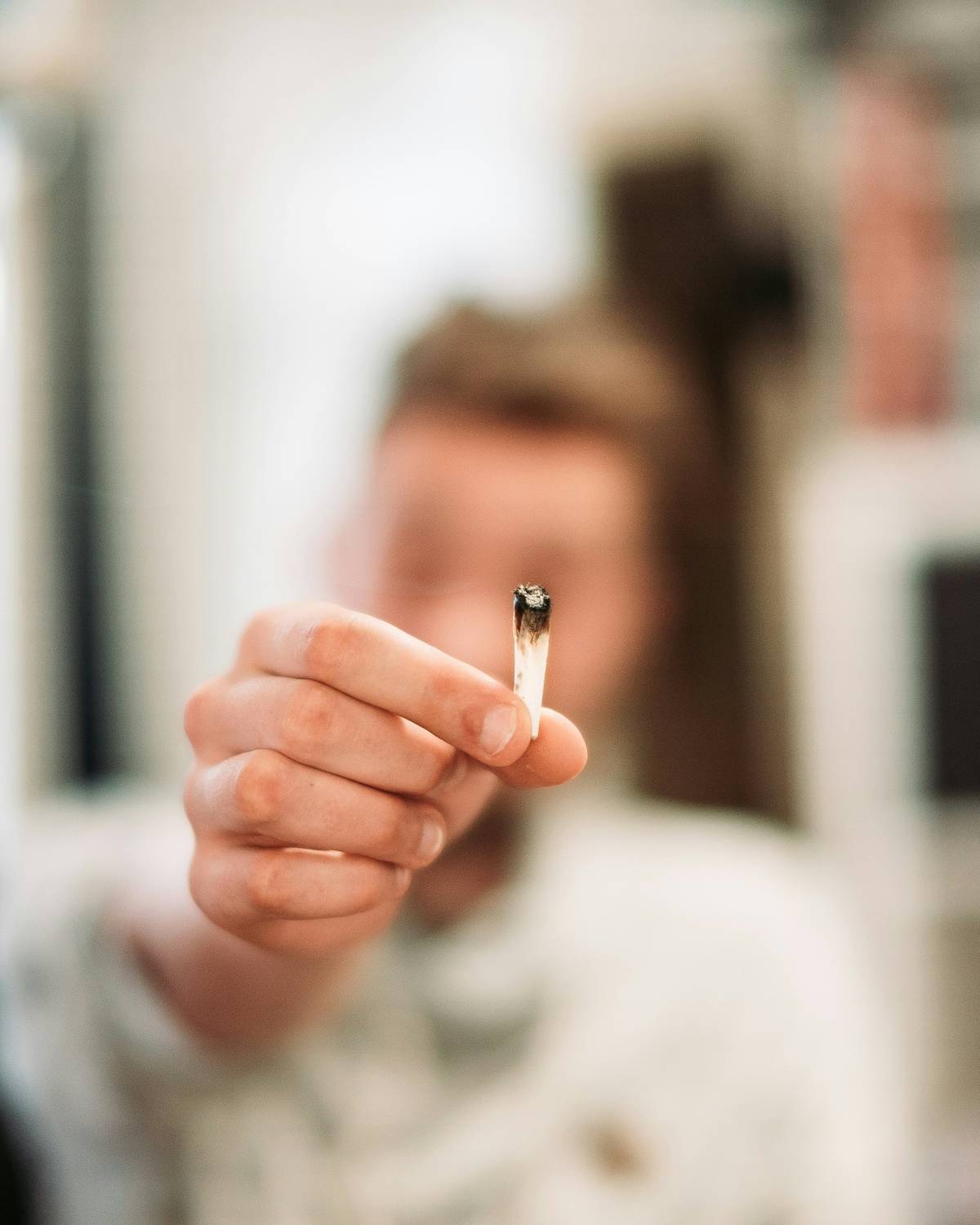
Give up smoking.
PHOTOGRAPH COURTESY OF UNSPLASH/GRAS GUN
3. If you smoke and/or drink, try to quit, give up smoking and moderate your alcohol intake. Smoking and heavy alcohol use both contribute to bone loss.
4. Staying active is vital for strong bones. Walking, dancing, or weight-bearing exercises that force you to work against gravity are helpful. Aim to exercise three to five days a week for 30 minutes each day. If you already have osteoporosis and use weights these should be less than 10 pounds per weight. Always do these activities with caution and take care to not fall.
5. Avoid falling, which can lead to fractures — so it is essential to “fall-proof” your home by clearing all tripping hazards, using non-skid mats and grab bars in the bathroom, and having good lighting throughout your home.
Screening for osteoporosis is done with a bone mineral density test using a dual-energy X-ray absorptiometry (DXA) machine at 65, or earlier if with risk factors and unusual fractures. These are done once a year and should be done on the same machine so that results from year to year can be accurately compared.
If you suspect that you might be at risk for osteoporosis, or that you may already have osteoporosis, talk to your doctor. Your doctor can prescribe medication that can prevent your bones from getting weaker or even build them up to become stronger.
Say no to fragile bones and take steps towards better bone health today.
*The Osteoporosis Society of the Philippines Foundation, Inc. (OSPFI) will hold its 26th Annual Convention, “The UnUsual Suspects: OSPFI — Osteoporosis Special Population on Fracture Imminence,” on 19 October (Saturday) at SEDA Hotel Ayala Center, Cebu City.