
Is Alice Guo an agent of the China Ministry of State Security?
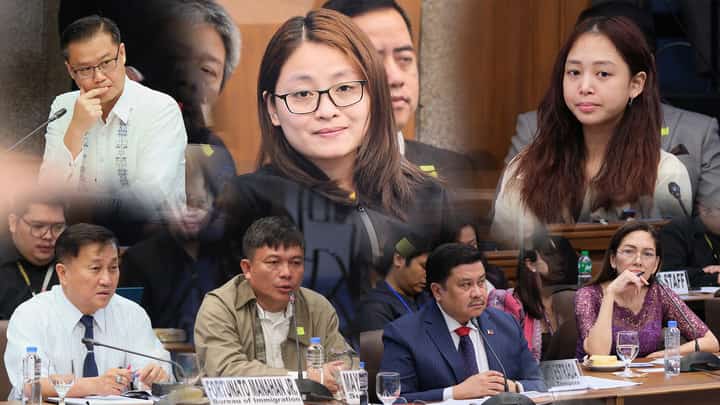
Senate probe Senators resumed their investigation into the illicit operations of Philippine Offshore Gaming Operators in the country on Tuesday, 17 September. The investigation, led by Senator Risa Hontiveros, chair of the Committee on Women, Children, Family Relations and Gender Equality, along with other senators Jinggoy Ejercito Estrada, Francis Tolentino and Win Gatchalian, interrogated dismissed Bamban, Tarlac Mayor Alice Guo and other personalities such as Cassandra Li Ong and Sual Mayor Dong Calugay as being linked to the said issue.
King Rodriguez
Dismissed Bamban, Tarlac Mayor Alice Guo, also known as Guo Hua Ping stands accused of being a member of the China Ministry of State Security and deployed to the Philippines to gather intelligence.
This revelation came during Tuesday’s resumption of the Senate Committee on Women, Children, Family Relations, and Gender Equality, along with Migrant Workers and Public Order and Dangerous Drugs, in its inquiry into Philippine Offshore Gaming Operations (POGOs) in Bamban and Guo's alleged ties to these operations.
Senator Risa Hontiveros, who led the hearing, presented a recorded interview with Wang Fugui, a former cellmate of She Zhijiang. She had earlier disclosed alleged espionage activities of China in the Philippines during an interview with Al Jazeera.
Wang confirmed She’s claims, stating that Guo Hua Ping, the former local chief executive’s alleged real name, was mentioned in She’s files.
“I was his (She's) cellmate, we were good friends who trusted each other and lived in prison for 1.5 years. After my release, he entrusted me to handle some of his declassified file matters,” Wang said in Chinese, which was translated into English.
“The content of the declassified file kept by Mr. She is large, and I only have declassified a portion under his authorization. Guo Hua Ping was a spy but not a special one,” Wang added.
He continued: “It just so happens there is a copy of her state security background there. And her situation with Mr. She has a lot of similarities. That's all I can say, because I'm not Mr. She himself, and according to my agreement with him, I can only reveal so much, sorry.”
Wang further explained that “field agents” recruited by China’s Ministry of State Security have “very detailed background information investigated, and there are also special hacking teams and hometown associations and chambers of commerce in charge of overseas information collection, including the secrets and weaknesses of some people that will be held in the background information.”
“This is the main method of controlling the field agents overseas by State Security. For example, Guo Hua Ping's fake Filipino identity is such a secret and weakness that she can only listen to State Security. Mr. She's experience is similar,” Wang noted.
The Ministry of State Security is the primary civilian intelligence, security, and secret police agency of the People's Republic of China.
POGO, Scamming Linked to China’s Belt and Road Initiative
Wang also claimed that illegal gambling operations and scamming businesses are “totally connected” to China’s Belt and Road Initiative (BRI), a massive China-led infrastructure project aimed at global expansion.
“Of course, there is a correlation, it has a lot to do with the Chinese government's exuberant intelligence. There's also the fact that all of this is totally connected to the Belt and Road, which is also just part of a huge united front and intelligence strategic plan for the whole world, including foreign colonization tactics,” he said.
Last year, the Philippines, under President Ferdinand Marcos Jr.’s administration, distanced itself from the BRI, following several confrontations between Philippine vessels and the China Coast Guard in the West Philippine Sea.
Transport Secretary Jaime Bautista announced that the Philippines was dropping China as the funding source for three major railway projects – the Laguna-Bicol railway project, the Subic-Clark railway project, and the first phase of the Mindanao Railway Project.
Beijing had initially pledged almost $5 billion to build the three railways across the country. Bautista attributed the cancellation to China’s apparent disinterest in pursuing the projects, which coincided with increasing tensions between Manila and Beijing in the West Philippine Sea.