 Daily Tribune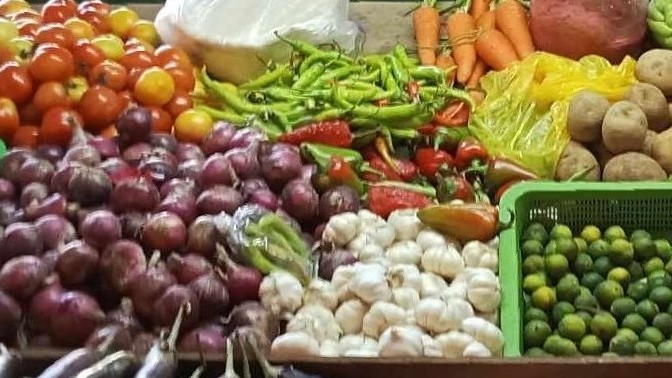
(FILES) Vegetables for sale at Metro Taguig Wet and Dry Market
Photo courtesy of AJ San Esteban
The Food and Nutrition Research Institute (FNRI) pushed for food fortification to address the country's problem of nutritional deficiency.
Trinidad II Arcangel, supervising science research specialist of FNRI’s Nutrition and Food Research and Development (R&D) Division, explained food fortification as the adding of micronutrients to food to have more micronutrients.
“The goal of food fortification is to address micronutrient deficiencies in our country. When we say micronutrient deficiency, we mean vitamin A deficiency and iodine deficiency because there are many deficiencies,” she said in an interview with DAILY TRIBUNE.
She explained that this process, especially when done with commonly consumed foods such as rice, oil, and flour, is an easy way to increase one's micronutrient intake.
Under the 2000-enacted Republic Act 8976, or the Food Fortification Law of 2000, the fortification of flour with vitamin A and iron, sugar with vitamin A, cooking oil with vitamin A, and rice with iron is mandated.
“It's mandated that we do this because this is the fastest way to get a person whose micronutrients are deficient through cheap food,” Arcangel said.
Challenges
The Philippines currently has a triple burden of malnutrition.
“It means that we don't have enough nutrition or micronutrients, and then we also address overweight and obesity. So, overnutrition. we need to address all of that,” Arcangel said, citing micronutrient malnutrition as one form of malnutrition.
She also noted that the majority of the food manufacturers in the Philippines had fortified their cooking oil with Vitmain A, as well as their flour with iron and Vitmain A.
Thus, Arcangel encouraged the parents to use fortified products in cooking to increase the micronutrient intake of their children, including fortified oil, iron-fortified rice, and flour.
Unilver-fortified products
Among the manufacturers that fortify their foods and beverages is British multinational consumer goods giant Unilever.
Hannah Laurel-Villaroman, Knorr brand manager, said that on top of ensuring top-notch quality, their company ensures their roadmap to produce healthier products, promoting foods to be delicious and nutritious.
“It has been a very rigorous process with our R&D team to ensure that our products now contain the vitamins and minerals that our consumers need. [I] am proud to share that since 2022, our range now has the critical micronutrients that are deficient in the Filipino diet,” she said at a company event Thursday in Taguig City.
She cited examples of their Sinigang mix as a source of vitamin C, gata as a source of calcium, and Knorr cubes as a source of iron.
Unilever delivered more than 125 billion servings of fortified products in developed and developing countries with at least one of the critical micronutrients in 2020. This includes Knorr and Royco bouillons with iron, some of its savory products containing iodized salt, and Maizena and Horlicks with multiple micronutrients.


