




Marcos vetoes PNP Reform Act
The measure is seeing creating pay and organizational problems across the bureaucracy

Text size
The measure is seeing creating pay and organizational problems across the bureaucracy
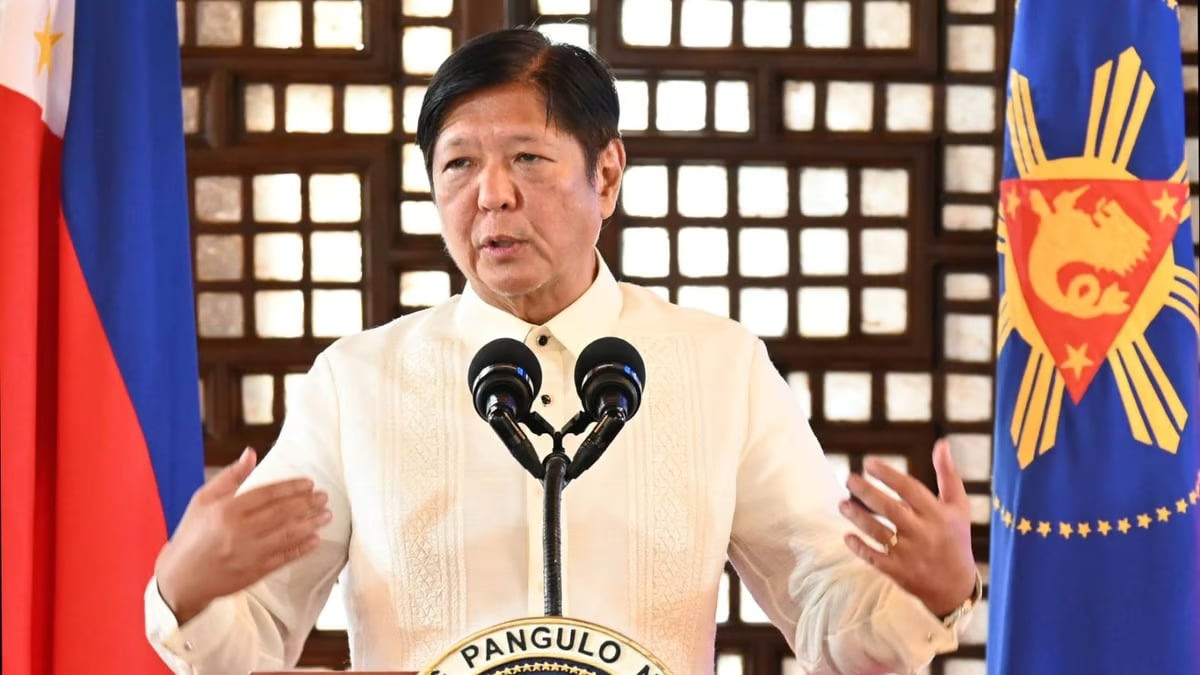
President Ferdinand Marcos Jr. has vetoed the proposed Philippine National Police (PNP) Organizational Reforms Act for being misaligned with its policy objectives.
In his veto message addressed to Senate President Francis Escudero dated 5 July but was only shared with the media on Thursday, Marcos cited several issues in the bill that led to his decision.
“While this administration recognizes the laudable objectives of the bill, I cannot approve it because the provisions run counter to administrative policy and efficiency,” Marcos said.
“In addition, the bill must be supportive of the programs and policy aspirations of the present and future administrations, among which is the proposed National Government Rightsizing Program,” Marcos added.
The vetoed bill aimed to amend the 1990 Department of the Interior and Local Government Act and the 1998 Philippine National Police Reform Act to improve the PNP’s operational efficiency and effectiveness.
One of its major provisions was to elevate the status of Philippine National Police Academy (PNPA) cadets to Police Cadets with a starting pay of Salary Grade 21.
However, Marcos argued that this adjustment would cause pay distortions and create a disparity within the hierarchy of government positions due to the initiative to promote the status of PNPA cadets to that of police cadets with entry-level remuneration.
“The grant of remuneration to a particular class of government personnel should not cause a pay distortion and disparity in relation to equivalent counterparts. Nor should the grant introduce a disproportion in the hierarchy of remuneration within the organization,” Marcos said.
“Indeed, the grant of Salary Grade 21 to PNPA cadets will distort the base pay schedule of the Military and Uniformed Personnel by creating disparity among the several government cadetship programs,” Marcos added.
The Chief Executive also said the establishment of Directorial Staffs, Area Police Commands, Special Offices, and Support Units might lead to redundancy and bureaucratic inefficiencies.
Despite the government’s rightsizing strategy to eliminate overlapping activities and redundancies, Marcos pointed out that the measure institutionalizes offices without taking functional relationships into account or making reporting boundaries clear.
“Different offices performing the same or related functions, all headed by high-ranking officials, will definitely be counterproductive and will defeat the purpose of enhancing the span of supervision and administrative control of the PNP Chief,” Marcos said.
“We cannot allow the organization to be bloated and overstaffed with the creation of redundant, overlapping, and ambiguous offices,” he added.
The bill also proposed creating two new liaison offices — each to be led by a police brigadier general — that is “plainly unwarranted,” Marcos said, as it might compromise security and lead to unnecessary bureaucratic layers.
Marcos also explained that establishing these offices could reduce the direct communication channels between the President, the Interior and Local Government Secretary, and the PNP Chief.
Meanwhile, other issues concerning its independence may arise from its placement under the Integrity Monitoring and Enforcement Group’s National Operational Support Units, which are meant to pursue personnel involved in unlawful activity.
According to Marcos, the law did not include any noteworthy provisions that would have improved the PNP leadership’s capacity to uphold accountability and integrity.
“There can be no true reform if these issues are not prioritized,” he said.
Additionally, the President brought attention to the potential for the National Police Commission to usurp the duties of the Civil Service Commission (CSC) in light of the bill.
He said it was unclear how the PNP, Interior Department, and CSC interacted administratively, especially how disciplinary actions were to be taken.
Lastly, the President took issue with the bill’s retroactive application clause, saying it was unclear and undefined.
“It needs clarifications and omits comprehensible standards. For instance, what are the rights and benefits contemplated and how can the rights and benefits be retroactively applied to individuals who had already been separated from the service? The provision may breed confusion,” Marcos said.
“With all due respect to Congress, this bill should not be a missed opportunity to implement genuine transformative reforms that will allow the PNP to be more effective and efficient in the performance of its mandate to maintain peace and order, protect lives, and ensure public safety. In view of these considerations, I am constrained to veto the above-mentioned enrolled bill,” the President said.
Housing is probably the biggest issue affecting people the world over.
Malacañang on Monday called for a more thorough investigation into the questioned flood control projects in Taguig…
The defense on Monday backed the move by senator-judges to exclude a prosecution witness who testified on the firearms…
