Birds and trees
Similarly, birds have a symbiotic relationship with trees. Most build their nests in trees as strong branches and dense canopies can keep their eggs and themselves safe from predators and other external threats. Barks are also adequate materials for building nests.
When it comes to food, flowers and leaves attract insects which are critical to a bird’s diet. Trees also provide other varieties of food, including sap, nuts, and fruit, as well as water that collects on its leaves, which birds use for drinking and bathing.
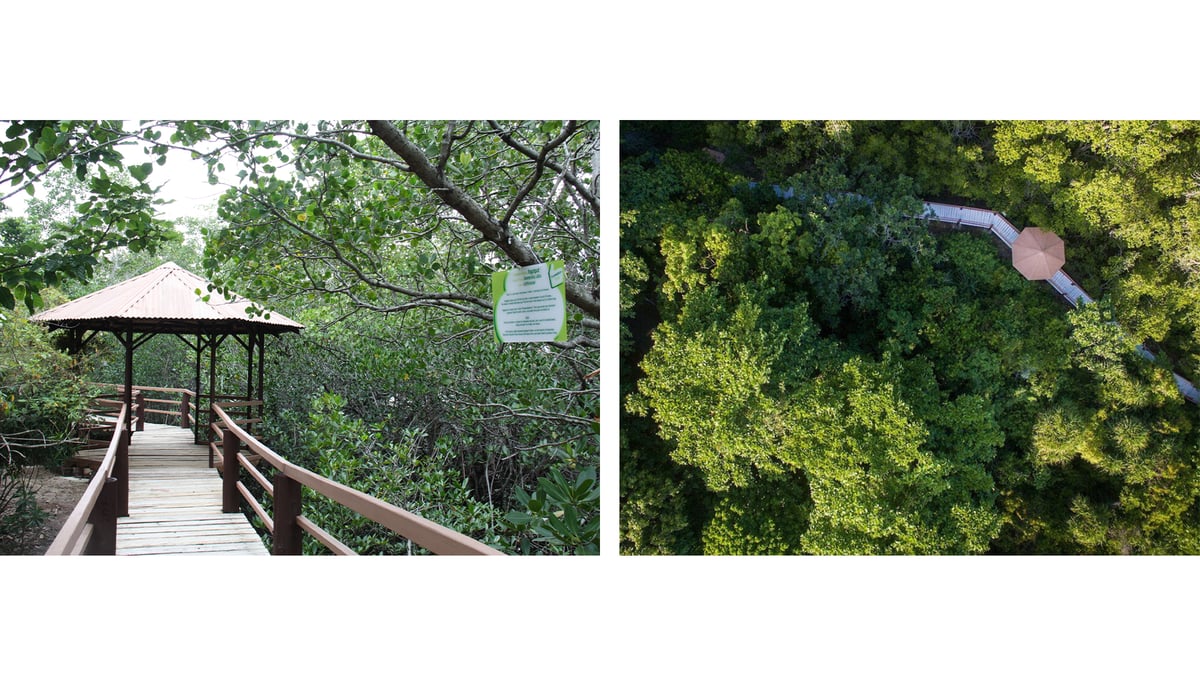
Aside from the mangrove reforestation site, the eight-hectare Aboitiz Cleanergy Park also propagates multiple native tree species. Consequently, many species of birds — from migrants, residents, to localized endemics — consider it their home.
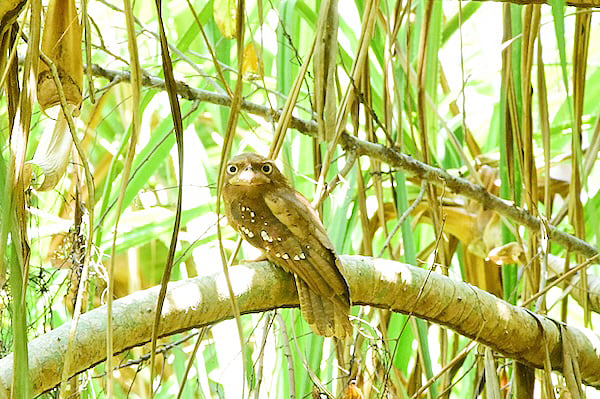
An absolute hoot. The nocturnal gould’s frogmouth, a near threatened species solely found in Southeast Asia, rests on a tree branch at the Aboitiz Cleanergy Park. Photo is courtesy of Davao Light.
Following a recommendation by the University of the Philippines Mindanao and the University of Southeastern Philippines back in 2013, the park steadily propagated trees in the area through years of joint efforts from the public and private sectors, enabling an increase in the number of bird species residing there — rising from just five in 2015 to 108 in 2024.
As observed by birdists who frequent the park, more trees meant more food and shelter that accommodated the influx of more bird species. This growth was further sustained by habitat conservation activities and proper biodiversity management which made it a safer reserve for the birds, especially as too few people move around the area.
In other parts of the country, other AboitizPower business units in Luzon, Visayas, and Mindanao also consistently champion initiatives throughout the past few years to plant more trees and mangroves and produce carbon sinks within their host communities.
With its efforts, Aboitiz Cleanergy Park continues to be a model of habitat conservation and biodiversity management in an urban setting. It affirms the collective vision of various stakeholders — AboitizPower and the rest of the Aboitiz Group, the local and national government, the academe, and other friends and volunteers — to create a positive impact by preserving the environment and nurturing wildlife.
Golden. (L-R) The golden-bellied gerygone likes to stay in subtropical or tropical moist lowland or mangrove forests, while the golden-headed cisticola prefers grassy areas like rivers and wetlands. Pictures were taken by Peter Simpson at the Aboitiz Cleanergy Park.