




N. Korea tests cruise missiles warhead
Analysts suspect the weapons are for export to Russia.
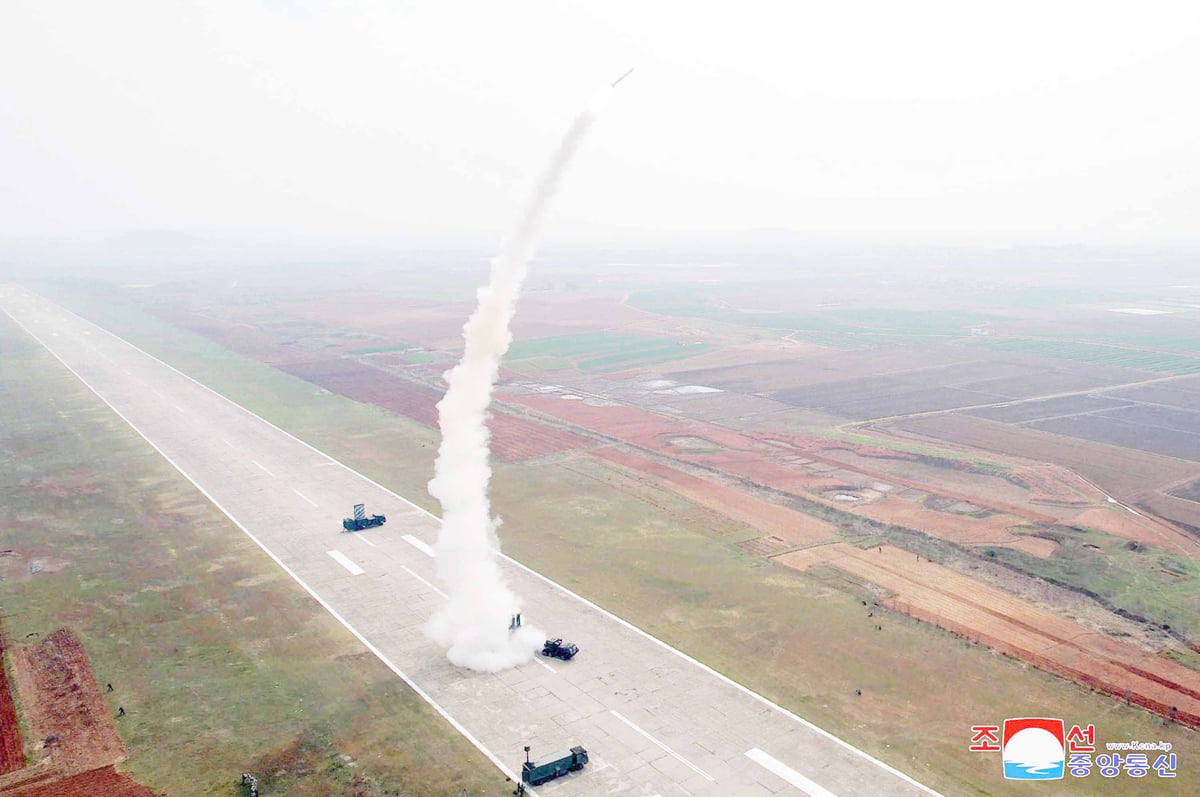
Analysts suspect the weapons are for export to Russia.
North Korea has tested a “super-large warhead” designed for a strategic cruise missile in what analysts believe could be for export to Russia.
“The DPRK Missile Administration has conducted a power test of a super-large warhead designed for ‘Hwasal-1 Ra-3’ strategic cruise missile,” KCNA news agency said Saturday, referring to North Korea by an abbreviation for its official name.
North Korea also carried out a test launch of a “’Pyoljji-1-2’ new-type anti-aircraft missile in the West Sea of Korea,” KCNA said, adding that both tests were carried out on Friday afternoon.
Seoul’s military said Saturday it detected “several cruise missiles and surface-to-air missiles” fired toward the same body of water, also known as the Yellow Sea, at around 3:30 p.m. Friday.
It added that it was “closely watching” the North’s military activities, and if Pyongyang “commits a provocation, we will punish it overwhelmingly and resolutely.”
Unlike their ballistic counterparts, the testing of cruise missiles is not banned under current United Nations (UN) sanctions on North Korea.
Cruise missiles tend to be jet-propelled and fly at a lower altitude than more sophisticated ballistic missiles, making them harder to detect and intercept.
Russia in March used its UN Security Council veto to effectively end UN monitoring of violations of the raft of sanctions on Kim Jong Un’s government for its nuclear and weapons program.
Ahn Chan-il, a defector-turned-researcher who runs the World Institute for North Korea Studies, told Agence France-Presse that the test announced Saturday appears to involve “a new type of solid fuel, and it seems to be part of the production of exports in response to Russian demand.”
Pyongyang said Saturday the tests were “part of the regular activities” of the country’s missile administration and had “nothing to do with the surrounding situation.”
A “certain goal was attained” through the tests, it added, without giving further details.
Housing is probably the biggest issue affecting people the world over.
Malacañang on Monday called for a more thorough investigation into the questioned flood control projects in Taguig…
The defense on Monday backed the move by senator-judges to exclude a prosecution witness who testified on the firearms…
