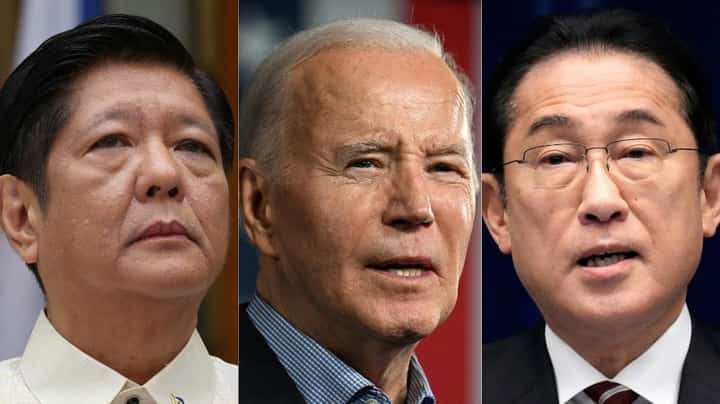
The Philippines will soon be collaborating with the United States and Japan to train Filipino students in critical semiconductor manufacturing in a move to strengthen regional supply chains and technological independence.
The initiative, outlined in a joint vision statement released by the leaders of the three nations as posted on the White House website, aims to address global chip shortages and bolster domestic expertise.
"We intend to pursue a new semiconductor workforce development initiative, through which students from the Philippines will receive world-class training at leading American and Japanese universities, to help secure our nations’ semiconductor supply chains," the joint vision statement read
"This initiative complements the expansion of semiconductor investments in the Philippines that would strengthen supply chain resiliency among our three nations," it added.
The Philippine Statistics Authority (PSA) said that the country's major exports are still semiconductors and electronics at $1.92 billion or a share of 20.1 percent of the country's total imports as of February.
President Ferdinand Marcos Jr. had said earlier that he wanted to build assembly lines in the Philippines so that high-value electronics could be put together there instead of just getting parts for them from other countries.
Beyond semiconductors: Collaboration on clean energy
The Philippines is also set to explore the potential of civil nuclear energy as a clean and sustainable power source, following a commitment from the United States and Japan to expand their partnership in this area.
The collaborative effort acknowledges the Philippines' request for further training and aims to equip Filipino scientists, engineers, and policymakers with the necessary knowledge and skills for responsible nuclear energy utilization.
"Our three nations seek to expand trilateral cooperation in the Philippines on the deployment of clean energy technologies, including renewable energy projects… to support energy requirements in the Philippines and help ensure a just energy transition,"the three countries said.
"We also plan to deepen trilateral cooperation on civilian nuclear workforce development through a trilateral dialogue this year, to advance the Philippines' civil nuclear energy program," it added.
The US said that some people from Japan and the Philippines would be able to take a course in "managing a clean energy supply chain" as part of its International Visitor Leadership Programme.
Marcos Jr. has been working to make renewable energy a bigger part of the Philippines' energy mix.
This is because the Renewable Energy Act of 2008 says that by 2030, the country must have 35% of its power come from green sources.
Data from the Department of Energy (DOE) show that about 34% of the Philippines' power came from green sources in 2008.
Data showed that it dropped to 21% in 2021.