
- NEWS
- the EDIT
- COMMENTARY
- BUSINESS
- LIFE
- SHOW
- ACTION
- GLOBAL GOALS
- SNAPS
- DYARYO TIRADA
- MORE
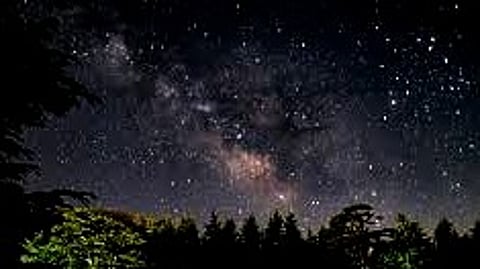
PARIS, France (AFP) — Sometime between now and September, a massive explosion 3,000 light years from Earth will flare up in the night sky, giving amateur astronomers a once-in-a-lifetime chance to witness this space oddity.
The binary star system in the constellation Corona Borealis — “northern crown” — is normally too dim to see with the naked eye.
But every 80 years or so, exchanges between its two stars, which are locked in a deadly embrace, spark a runaway nuclear explosion.
The light from the blast travels through the cosmos and makes it appear as if a new star -- as bright as the North Star, according to the United States space agency NASA — has suddenly just popped up in our night sky for a few days.
It will be at least the third time that humans have witnessed this event, which was first discovered by Irish polymath John Birmingham in 1866, then reappeared in 1946.
Dying star
Sumner Starrfield, an astronomer at Arizona State University, told Agence France-Presse the white dwarf and red giant repeat their outbursts on a human timeline because of a peculiar relationship.
One is a cool dying star called a red giant, which has burnt through its hydrogen and has hugely expanded — a fate that is awaiting our own Sun in around five billion years.
The other is a white dwarf, a later stage in the death of a star, after all the atmosphere has blown away and only the incredibly dense core remains.
Their size disparity is so huge that it takes T Coronae Borealis’s white dwarf 227 days to orbit its red giant, Starrfield said.
The two are so close that matter being ejected by the red giant collects near the surface of the white dwarf.
Once the mass roughly of Earth has built up on the white dwarf — which takes around 80 years — it heats up enough to kickstart a runaway thermonuclear reaction, Starrfield said.

