
Marcos: Phl to respond on actual WPS situation

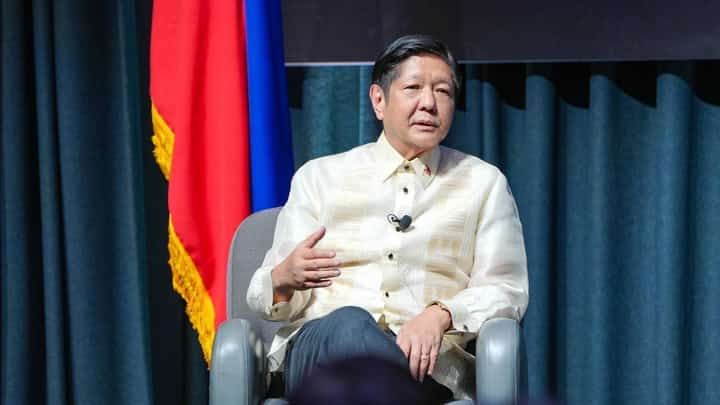
President Ferdinand Marcos Jr. said the Philippines cannot just ignore what is happening in the West Philippine Sea (WPS) as the country will still respond to the actual situation on the ground.
During the courtesy call of the newly appointed Japanese Ambassador to the Philippines Endo Kazuya in Malacañang earlier this week, Marcos underscored the need to maintain peace in the region while addressing the current circumstances in the disputed waters.
"When it comes to foreign policy and that we analyze geopolitics, this is the most important thing that we must find a way to keep (WPS) at peace. That is what the Philippines will always work for," Marcos said.
"However, we also have to respond to the actual situation on the ground. They cannot cover our eyes and pretend that nothing happened," he added.
China continues to harass and interfere with the Philippines' routine rotation and resupply operations, notably in Ayungin Shoal where the BRP Sierra Madre was intentionally grounded to assert sovereignty in the region.
In a recent incident, Chinese vessels attacked Philippine ships with water cannons, leading to injuries to three navy personnel and significant damage to the Filipino vessel.
China has consistently upheld its sovereign rights in the West Philippine Sea (South China Sea), refusing to acknowledge an arbitral ruling that declares its claims invalid.
Marcos then thanked Japan for its support, highlighting not only the provision of equipment but also the significance of training, which he deemed "very important."
He emphasized that the Philippine-Japan relationship has expanded to include security and defense, underscoring the necessity to adapt the approach to bilateral cooperation between the two nations.
Marcos also expressed his confidence that the partnership would reach new heights through close collaboration under Ambassador Endo's leadership.
Endo, for his part, conveyed his eagerness to enhance the strategic partnership by advancing cooperation across various domains such as security, economy, and people-to-people exchanges.