 Daily Tribune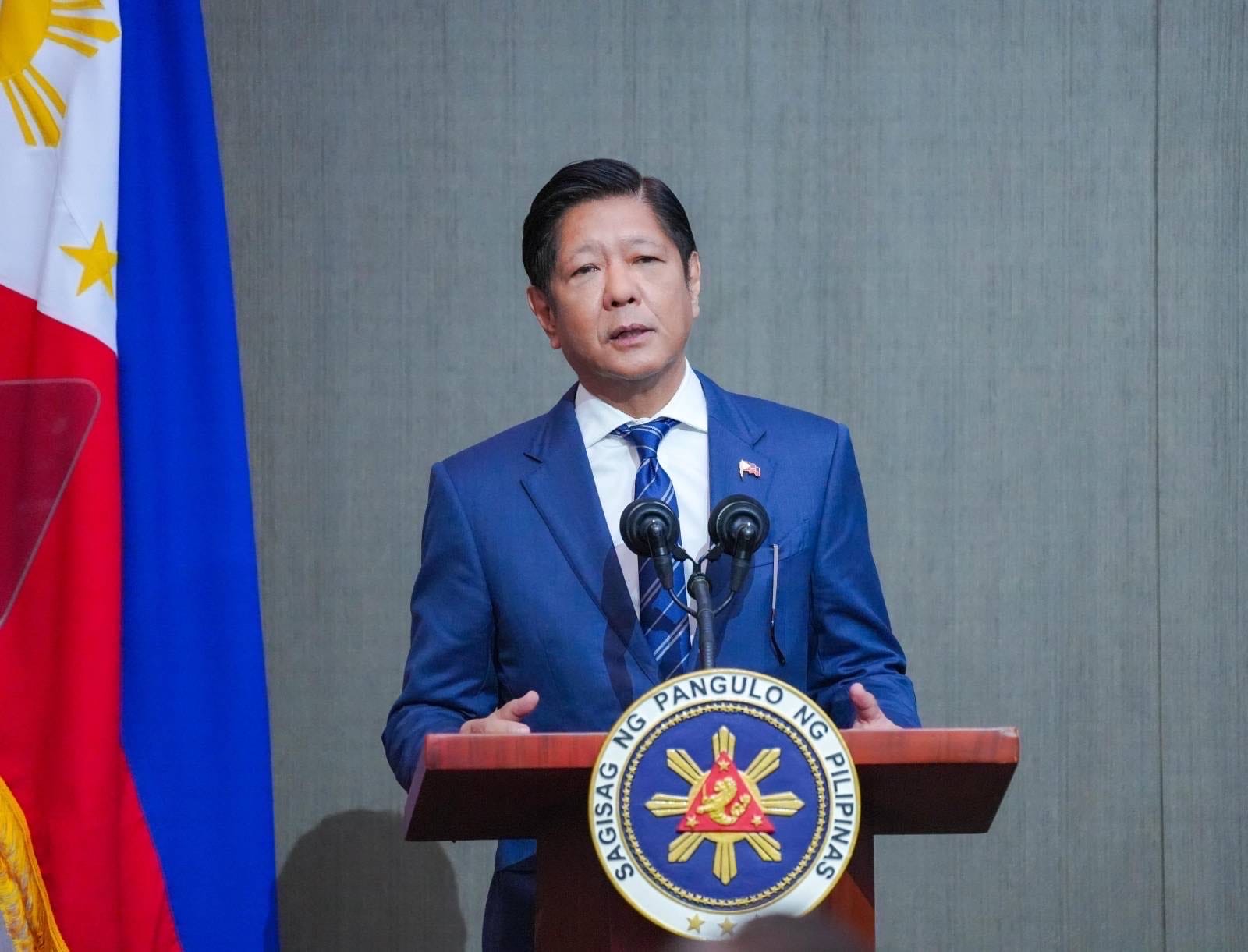
President Ferdinand Marcos Jr.
(Photo from Bongbong Marcos Facebook page)
President Ferdinand Marcos Jr. said the Philippines’ actions to assert its sovereignty over the disputed areas in the South China Sea do not mean “poking the bear.”
Asked about the United States’ willingness to go to war with China over the disputed reefs, Marcos said the Philippines is not taking action under the direction of the US to address the escalating danger posed by China’s expansive territorial assertions in the South China Sea.
“We want to do everything we possibly can together with our partners and our allies to avoid that situation. This is not poking the bear, as it were. We are trying to do quite the opposite,” Marcos said in a recent television interview.
He added: “We are trying to keep things at a manageable level, to continue the dialogues, whatever they are, at every level. And we have initiated many of those dialogues; we have dialogues at the sub-ministerial level, at the ministerial level, and at the executive level.”
The maritime dispute between the Philippines and Beijing over contested reefs and islands is a critical flashpoint in the region.
Since Marcos took his oath as President in 2022, the Philippine military and coast guard have increased operations to supply troops at a remote outpost and escort fishermen who have depended on the waters “for generations.”
“We have not instigated any kind of conflict. We have not instigated any kind of confrontation. We are just trying to feed our people,” Marcos said.
He said the Philippines cannot recognize Beijing’s expansive claims, which are based on a “10-dash line” covering most of the South China Sea.
A United Nations tribunal dismissed Beijing’s claims in 2016, a decision China rejected.
Marcos said he has continued conversations with Beijing despite the impasse and does not want to be in a position where he has to use the mutual defense treaty that the Philippines has had with the US for many years.
When asked what would cause him to use the defense agreement, Marcos said there would need to be an “existential threat.”
“I hope the time never comes that we have to answer that question,” he said. “When you talk about the mutual defense treaty, to invoke that actual outright violent conflict, then this is a very, very dangerous, very, very slippery road to go down.”
The MDT, a defense pact that enjoins the two allies to defend each other, was signed by the US and the Philippines in 1951.
‘We don’t care’
The Philippine Navy said the country would not heed any terms imposed by China on the West Philippine Sea.
In a press conference in Camp Aguinaldo on Wednesday, Philippine Navy spokesperson for the WPS, Commodore Roy Trinidad, refuted China’s claim that the Philippines is provoking tensions in the WPS by conducting combat drills with the United States.
Trinidad said the Armed Forces of the Philippines is more concerned about fulfilling its mandate to protect the country’s sovereignty, which includes securing its territorial waters in the WPS.
He said the AFP would not be deterred from fulfilling its mandate in the WPS despite China’s increasing aggression in the area.
“We do not care about China’s behavior. The Navy and the AFP are concerned about our mandate to protect the integrity of the national territory, our sovereignty, and the Filipino people,” he said.
“No country can change international laws unilaterally,” he added.
China recently bared its terms on Ayungin Shoal — which it illegally claims — saying that it would allow only one Philippine resupply boat to sail in the area, implying that other vessels would be subject to attack.
“There is no such agreement on the part of the AFP. These are narratives from China which they would try to back up with their actions on the ground, so the narrative would support the action [and] the action would support the narrative, thereby giving legitimacy to their claim that they own Ayungin Shoal” Trinidad said.
He said the AFP and the Navy will continue the resupply missions to Ayungin and other detachments.
Asked how they would react if China officially communicated its terms on the WPS, Trinidad said, “We don’t care; we are the rightful occupants. It is a low-tide elevation within our exclusive economic zone. The AFP is prepared for any eventuality.”
Trinidad noted that the AFP will continue implementing its paradigm shift to external territorial defense amid China’s reactions.
“We don’t care what China will do so long as what is ours will remain ours. We will have access to our detachments, we will have access to the northern islands, we would have the capability to protect and to secure Benham Rise, all the way, all around the country,” he said.
On the international level, Trinidad said the Philippines is responsible for following the rules-based order as it is doing.
“The international rules-based order will remain that no one country can change the rules-based international order unilaterally. That’s why we see a lot of foreign navies coming here to support the Philippine Navy,” he said.
Trinidad lamented that the country geographically serves as “the frontline of the expansionist ambitions of China.”
China junks Blinken’s ‘threat’
Meanwhile, China has hit back at the US over what it described as a “thinly veiled threat” to invoke its Mutual Defense Treaty with the Philippines amid the tension in the South China Sea.
Counselor Ji Linpeng, spokesperson of the Chinese Embassy in Manila, addressed Washington’s pronouncements that Beijing’s “provocative actions” threaten the region’s peace and stability.
“China is not the one that provoked the recent tense situation in the South China Sea, and thus, the responsibility for the recent situation does not lie with China,” Ji said in a statement on Wednesday.
He added: “China was made to take necessary steps to safeguard its territorial sovereignty and maritime rights and interests in the face of the infringement of our rights and interests and provocation.”
During his recent visit to the Philippines, US Secretary of State Antony Blinken said that Washington is ready to invoke its defense pact with the Philippines in the face of Beijing’s increasing aggression in the West Philippine Sea.
“We have a shared concern about the PRC actions that threaten our common vision for a free open Indo-Pacific, including in the South China Sea and the Philippines’ exclusive economic zone,” Blinken said.
He specifically pointed out the aggressive actions of the China Coast Guard against Philippine vessels engaged in regular rotational and resupply missions to Ayungin or Second Thomas Shoal.
These actions include the use of water cannons, close shadowing, blocking, and other dangerous maneuvers.
“These waterways are critical to the Philippines, to its security and economy, but they’re also critical to the interests of the region, the United States, and the world,” Blinken said.
“It’s why we stand with the Philippines and stand by our ironclad defense commitments, including under the Mutual Defense Treaty,” he added.
Citing Article IV of the MDT, Blinken reiterated that “any attack on Filipino aircraft, vessels, or armed forces will invoke” the defense pact with the Philippines.


