




Digital banks slow in lending
Text size
Digital banks are still struggling to offer loans while their deposit accounts have continued to rise, Bangko Sentral ng Pilipinas, or BSP, said on Thursday.
"It seems to be very hard to make loans online and collect on loans online. In the Philippines, it seems that you still need a human being," BSP Governor Eli Remolona Jr. said in a talk at a meeting of the Rotary Club of Manila in Manila Polo Club, Makati City.
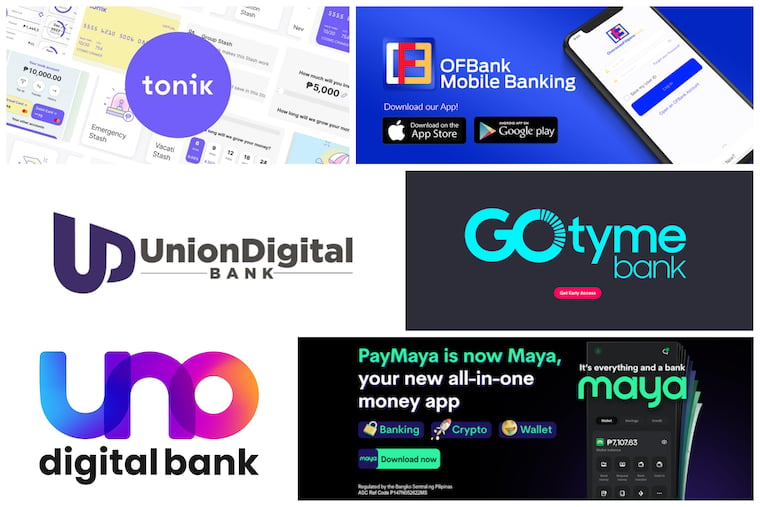
According to global business consultancy McKinsey & Company, three out of the six digital banks in the Philippines attracted much higher transactions between January 2021 and January 2023. They were GoTyme, UnionDigital Bank and UNO Bank.
McKinsey & Company reported their combined market value reached $3 billion, higher than the traditional banks' $2.2 billion during that period. "Six digital banks have recently launched operations in the Philippines, but none are currently lending at scale," the global firm stressed.
"Digital banks have been very successful in raising deposits online," Remolona agreed.
Housing is probably the biggest issue affecting people the world over.
Malacañang on Monday called for a more thorough investigation into the questioned flood control projects in Taguig…
The defense on Monday backed the move by senator-judges to exclude a prosecution witness who testified on the firearms…
To spark ways for sustainable lending of digital banks and ensure they follow central bank's regulations, Remolona said the BSP continues to implement its regulatory sandbox where a BSP regulator is assigned to a financial technology firm to monitor the application of its business idea.
"It can test, discuss the proof of concept and pilot your idea. Next is the regulator can tell you what are the regulatory consequences of bringing your idea to the market," Remolona explained.
In this way, he said the BSP can protect the integrity and maintain trust of the public in the Philippine banking industry while helping ensure all Filipinos can have access to financial services.
"It's not really about judging whether your idea will succeed; it's about minimizing regulatory uncertainty," Remolona said.
The slow lending of digital banks is one reason he said the BSP still limits application of new licenses to operate digital banks in the Philippines. However, the BSP chief is hopeful the digital banks can gain traction in loans.
"But maybe there is a way to overcome that. Some banks here are more successful than others and in other countries where digital banks have been successful in making loans," Remolona said.
Union Digital Bank, the digital arm of Union Bank of the Philippines, said lenders can maximize artificial intelligence or AI to target capable but underserved customers and make lending less risky.
Train employees to be agile
"The good thing about AI is you can experiment, lend a small amount and see how the customer is doing and then scale it up," Union Digital president Henry Aguda said.
"Out of around 400 digital banks in the world, only 20 percent of them earn profits within two years and a half on the average. However, an Indonesian bank was able to achieve that faster in one year and a half," he added.
Maya president Angelo Madrid suggested employees of digital banks must also be trained to become more agile to serve the customer needs quickly and gain their trust.
"Another challenge is the culture. Most are accustomed to the ways of larger organizations which are less nimble because the larger the organization, the more to lose," he said.
