




Xmas caroling in Phl, through the years
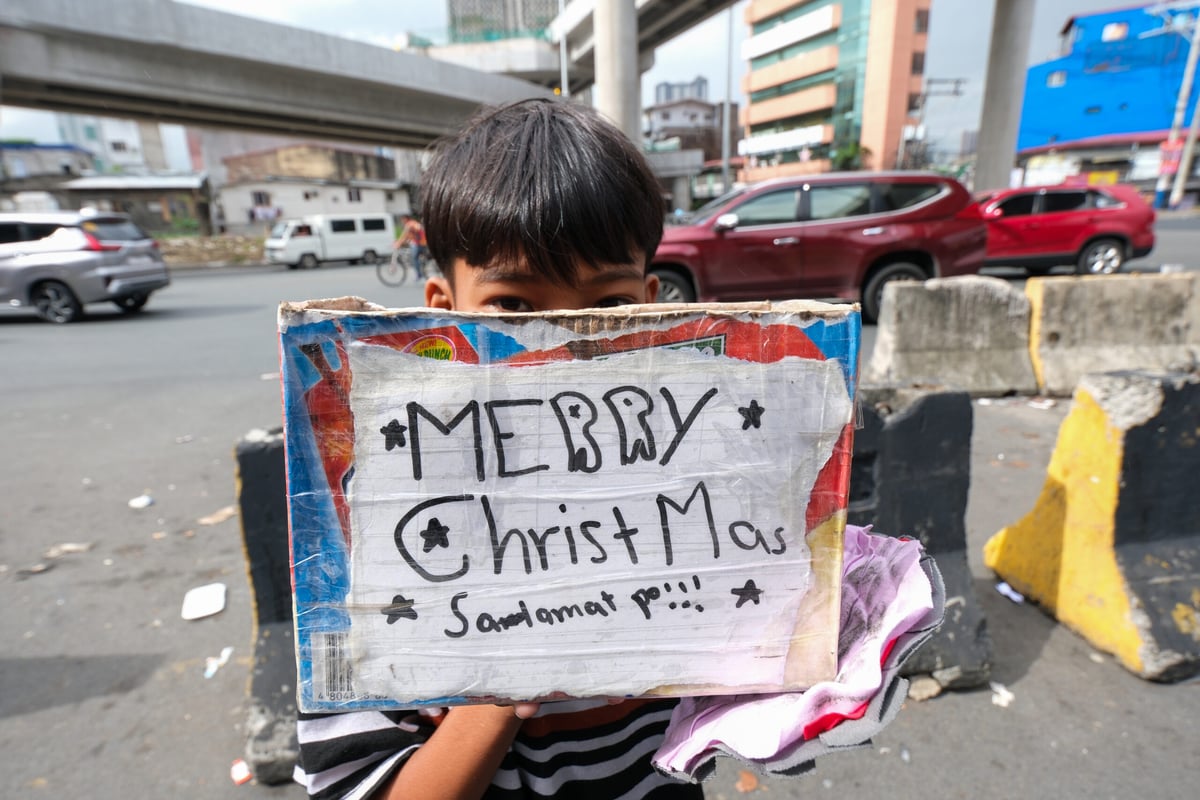
Share sunshine Tyke ingenuously brandishes a box with his uniquely designed greeting to convince passersby to fork out an aguinaldo. | PHOTOGRAPH BY KING RODRIGUEZ FOR THE DAILY TRIBUNE
Text size
Share sunshine Tyke ingenuously brandishes a box with his uniquely designed greeting to convince passersby to fork out an aguinaldo. | PHOTOGRAPH BY KING RODRIGUEZ FOR THE DAILY TRIBUNE
"Sa may bahay, ang aming bati. Merry Christmas na maluwalhati. Ang pag-ibig ang siyang naghari. Araw-araw ay magiging Paskong lagi (To our neighbors go our greetings. Have a glorious Merry Christmas. Love reigns. May everyday be Christmas)."
You know Christmas is around the corner once you hear this classic Christmas caroling tune from groups of children serenading people door-to-door or car-to-car with improvised musical instruments.
Receiving an "aguinaldo" (Christmas gifts) from generous adults in exchange for belting out Christmas tunes is the aim of the practice, which frequently devolves into competition among peers.
These kids need not spend money on musical instruments since their backyards have everything they need to go caroling.
To make tambourines, they only need "tansan" or bottle caps, which they can get from sari-sari (mini) stores around the neighborhood. They flatten them and pierce them through with wire in a circle shape.
Three decades after the Marcopper mining disaster devastated Marinduque’s waterways, the province is again pressing the…
Housing is probably the biggest issue affecting people the world over.
Malacañang on Monday called for a more thorough investigation into the questioned flood control projects in Taguig…
The defense on Monday backed the move by senator-judges to exclude a prosecution witness who testified on the firearms…
Empty sardine cans filled with pebbles create do-it-yourself maracas.
Likewise, improvised drums can be made from empty milk cans, the open end over which squares of plastic or rubber are stretched tight with rubber bands. Drumsticks are not a problem — barbecue sticks or chopsticks with rubber bands twirled on their ends will do very well.
That being said, are you curious about the origins of this Filipino custom?
As everyone knows, Catholicism was brought to the Philippines during the Spanish colonization. Among the traditions introduced by the Spaniards were Christmas carols.
However, the caroling we know today is far different from what it was before, as it is usually done at the beginning of Simbang Gabi, a nine-day series of Masses attended by Filipino Catholics in anticipation of Christmas.
Simbang Gabi or Misa de Gallo is observed at dawn, when the rooster crows, hence the term Misa de Gallo or "Mass of the rooster."
Some classic Filipino Christmas songs include Sa May Bahay, Ang Aming Bati, Ang Pasko Ay Sumapit, Sa Paskong Darating, Noche Buena, and Kampana ng Simbahan.
Nowadays, Christmas songs by Jose Mari Chan are played to usher in the annual holiday celebration.
His hit song, "Christmas in Our Hearts," is one of the go-to songs of carolers.
A few days ago, digital music service provider Spotify named the 78-year-old singer-composer the country's top holiday artist.
Chan is followed by Ariana Grande, Mariah Carey and Michael Bublé.
Carey's "All I Want For Christmas Is You" is the most streamed holiday song in the country, followed by Grande's "Santa Tell Me" and Wham!'s "Last Christmas."
Chan's "Christmas in Our Hearts" made it into the top 4 holiday songs streamed across the nation, with Brenda Lee's "Rockin' Around the Christmas Tree" rounding out the top 5.
Aside from these classic songs, Christmas carols include Christmas station IDs produced annually by media companies such as ABS-CBN, GMA and TV5.
Among well-known Christmas station IDs that are being sung as Christmas carols are "Star ng Pasko," "Ngayong Pasko," and "Thank You, Ang Babait Ninyo."
These days, there's no excuse not to accept these Christmas carol singers — some of them even go online.
They also have mobile wallets so that you may transmit your aguinaldo through online banking.
But regardless of the amount you give, you will undoubtedly hear them conclude their Christmas carols with the famous line, "Thank you, thank you, ang babait ninyo (You are so kind)!"
