




Project benefits isolated areas
‘DICT’s collaboration with ComClark for the UISG Project is a manifestation of our commitment to ensuring that the benefits of the digital revolution reach every corner of our nation’

Text size
‘DICT’s collaboration with ComClark for the UISG Project is a manifestation of our commitment to ensuring that the benefits of the digital revolution reach every corner of our nation’
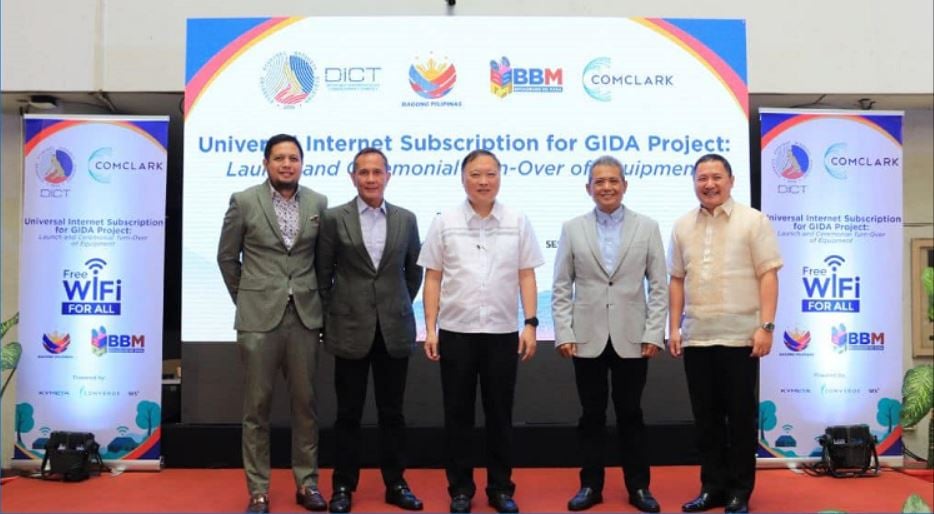
More than 2,000 geographically isolated and disadvantaged areas or GIDAs across the country can now expect better connectivity through the Universal Internet Subscription for GIDA or UISG Project.
The project, a tie-up between the Department of Information and Communications Technology and ComClark Network and Technology Corp., supports the national government's digital inclusivity push.
"The Free Public Internet Access Program, under the Broadband ng Masa Initiative, seeks to bridge the digital divide and connect Filipinos to limitless opportunities the digital economy offers," DICT Secretary Ivan John Uy said on Tuesday.
"Our collaboration with ComClark for the UISG Project exemplifies our dedication to turning this vision into reality. We are committed to ensuring that the benefits of the digital revolution reach every corner of our nation," he said.
Fixed fiber technology and satellite communications
Three decades after the Marcopper mining disaster devastated Marinduque’s waterways, the province is again pressing the…
Housing is probably the biggest issue affecting people the world over.
Malacañang on Monday called for a more thorough investigation into the questioned flood control projects in Taguig…
The defense on Monday backed the move by senator-judges to exclude a prosecution witness who testified on the firearms…
The UISG Project deployed fixed fiber technology and satellite communications-on-the-move terminals for more than 2,000 areas identified as socially and economically disadvantaged.
The DICT said it will greatly aid the government in assisting local agencies with their connectivity needs during calamities.
For ComClark chief operations officer Benedicto Bulatao, the project will ensure that marginalized communities and groups will be at the front and center of the digital agenda.
Bulatao pointed out that an unprecedented 145-gigabit bandwidth capacity was allocated for the mixed-technology project.
Fiber-enabled access points
In areas with viable geographical terrain, fiber-enabled access points will be established. These fiber-enabled access points number around 1,400 sites.
Hilly and mountainous areas, meanwhile, will be serviced with fixed VSATs, which can be distributed to far-flung and isolated communities nationwide to provide satellite-enabled connectivity.
Powerful highly portable antennas
Additionally, 34 SatCom on the Satellite-on-the-Move terminals will also be deployed for this project. These are powerful and highly portable antennas that can be hooked up to moving vehicles, either automobiles or watercraft, making them ideal for augmenting disaster and emergency response.
Thirty-four of these units, which come with a carry-on case and a genset, were recently handed over to DICT for distribution to their regional offices.
The UISG Project, through engagements with an assortment of connectivity providers, currently tracks a total of 4,741 active sites in 1,871 locations, providing connectivity across all 17 regions of the country.
To date, these access points have already allowed the public to consume a total of 806TB of internet data.
The supply of these managed services between DICT and ComClark is a project implemented with We Are IT Philippines, Inc. and Telered Technologies and Services Corp.
