




Nearly 3.8M Pinoys get DSWD aid
The AICS program has been instrumental in extending different types of support to individuals and families who are experiencing various forms of crises
Text size
The AICS program has been instrumental in extending different types of support to individuals and families who are experiencing various forms of crises
The Department of Social Welfare and Development, through its Assistance to Individuals in Crisis Situation program, has served nearly 3.8 million clients with various types of aid nationwide from January to September this year.
DSWD Assistant Secretary and spokesperson Romel Lopez said 3,799,979 individuals received educational, medical, transportation, burial and food assistance from AICS at the DSWD Central Office in Quezon City and in various regions across the country.
"The AICS program has been instrumental in extending different types of support to individuals and families who are experiencing various forms of crises," Lopez said.
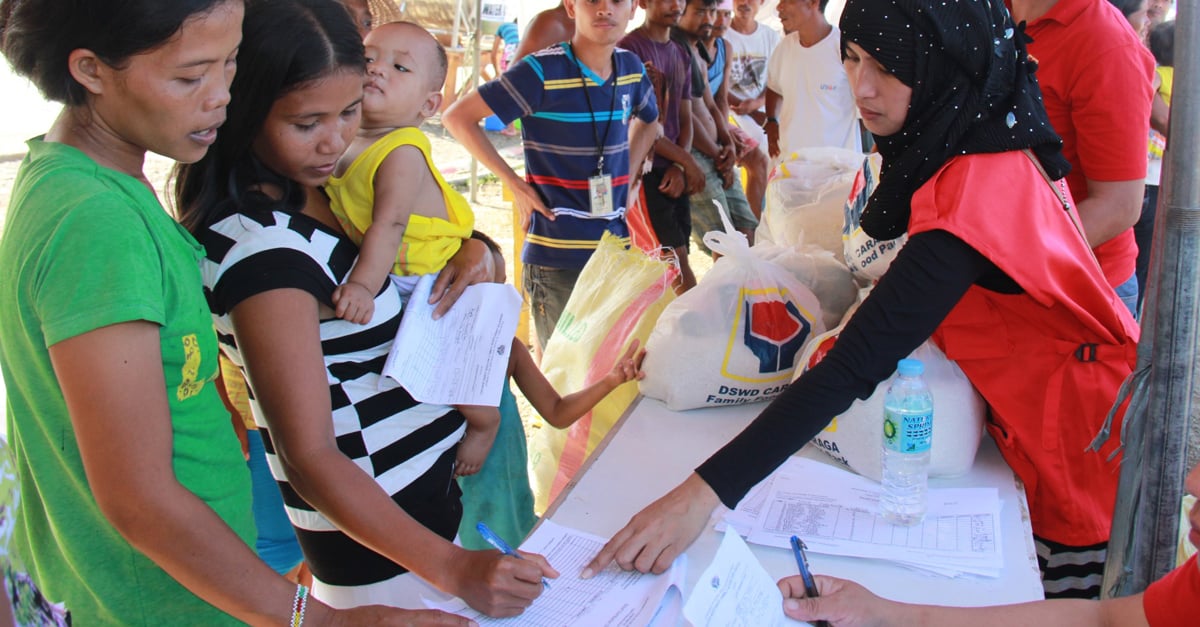
He said the DSWD also handed out hot meals, family food packs, assistive devices and psychosocial support to the identified recipients.
"Indeed, the program has been a lifeline for millions of Filipinos to enable them to overcome their challenging circumstances," he added.
Based on the official report, the most sought aid was psychosocial support with more than 1.7 million clients assisted, followed by food and medical aid with over 1.4 million and 1.1 million clients provided, respectively.
Lopez said the number of individuals assisted by the DSWD is higher than the actual number of clients served as individuals can avail of more than one assistance under the AICS program every three months.
The increased number of clients served, he added, is a result of the streamlined process, as directed by President Ferdinand R. Marcos Jr. during his first State of the Nation Address in July 2022.
Earlier this year, DSWD Secretary Rex Gatchalian instructed concerned department officials to bring the AICS program closer to its clients by establishing satellite offices.
To date, the department has AICS processing areas in Caloocan City, Parañaque City, Pasig City, San Jose del Monte in Bulacan and Montalban in Rizal.
4Ps recipients
Meanwhile, DSWD Undersecretary for Innovations Edu Punay said some 761,150 households will have to be retained in the list of the Pantawid Pamilyang Pilipino Program.
During PTV 4's Bagong Pilipinas Ngayon on Tuesday, Punay said the number of households to remain in 4Ps was determined as a result of the reassessment of beneficiaries in line with Gatchalian's directive.
"That means, they will not graduate; they will continue to benefit from the program. Because of the assessment, our department saw that they are still non-poor and still need assistance under the 4Ps program," he said.
The 761,150 households were part of the 1.1 million households earlier assessed as non-poor under the Listahanan 3 of the National Household Targeting System for Poverty Reduction.
Of the 1.1 million 4Ps members, 339,660 households were assessed as Level 3 or self-sufficient which are recommended for graduation or exit from the program.
Punay said the retention of most of 4Ps members was brought about by the impact of the pandemic, based on the assessment report of the department.
