
- NEWS
- the EDIT
- COMMENTARY
- BUSINESS
- LIFE
- SHOW
- ACTION
- GLOBAL GOALS
- SNAPS
- DYARYO TIRADA
- MORE
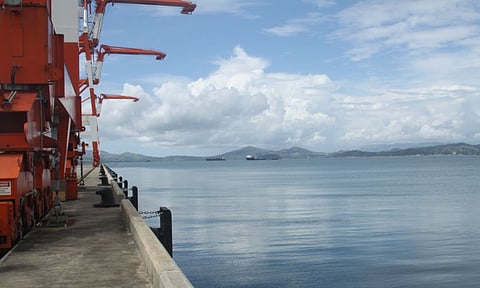
Subic port's full digital shift can spur the economy of northern Philippines, or NorthPhil, and the rest of the country.
This projection came from economist and teacher Ronilo Balbieran of the University of Asia and the Pacific, citing the vast expanse and strategic location of NorthPhil's constituent regions north of Metro Manila.
Balbieran said Central Luzon, Cagayan Valley, Ilocandia and the Cordilleras could gain unprecedented economic growth from the Subic Port's development into a truly world-class international gateway vis-a-vis a similarly ongoing modernization of the Clark Freeport Zone, creating a logistical superhighway and growth corridor, whose benefits would spill over to the rest of the archipelago.
The HCPTI's development plan envisions the Subic Port as the main draw in the marketing of Subic as an investment destination, the facility being a supposedly world-class international gateway and a catalyst of global trade and commerce.
Underscoring the significance of distance in logistics, particularly involving marine freight, Balbieran said the Subic port would highlight the strategic location of NorthPhil in relation to six of the countries in the ASEAN and most of those in the Pacific Rim, including Central America.
Balbieran also echoed the "sales pitch" of the Department of Tourism and the Tourism Promotions Board hailing NorthPhil as an undisrupted land mass of diverse nature, culture and adventure, featuring a wealth of resources of four large regions between the West Philippine Sea and the Pacific, or from ridge to reef and from coast to coast.
"Those regions account for 18 percent of the country's total GDP, or gross domestic product, adding P3.9 trillion to the national economy last year. And in the last two years, these (regional economies) have grown faster than Metro Manila and the entire nation," Balbieran explained. "With larger investments in expansion and digitalization, the Subic port can further ignite domestic and international trade to and from Luzon, which will expand the economy of NorthPhil even faster," Balbieran added.
NorthPhil comprises 84,526 square kilometers, accounting for 28.2 percent of the country's entire 300,000 sq. km.
NorthPhil's total land mass alone is equivalent to 76.9 percent of Luzon's 109,965 square kilometers and 87 percent of Mindanao's 97,530 square kilometers.
At the same time, the HCPTI's modernization of the Subic port is also "consistent and fully aligned" with the PBBM administration's infrastructure and logistics development policy thrust.
Balbieran said the National Logistics Strategy of the Department of Trade and Industry included both public and private investments in Logistics 1 of the 6 pillars of improving the country's logistics efficiency.
Massive investments in pipeline
"The strategy emphasizes massive investments in ports nationwide, as more than 90 percent of goods pass through the ports," Balbieran said of what was revealed by the DTI at the recent conference of the Supply Chain Management Association of the Philippines.
