
SUBSCRIBE NOW SUPPORT US

Tech protects people, predator

The cameras were immediately effective, picking up a tiger just 300 meters from a village, and on another occasion, identifying a team of poachers.
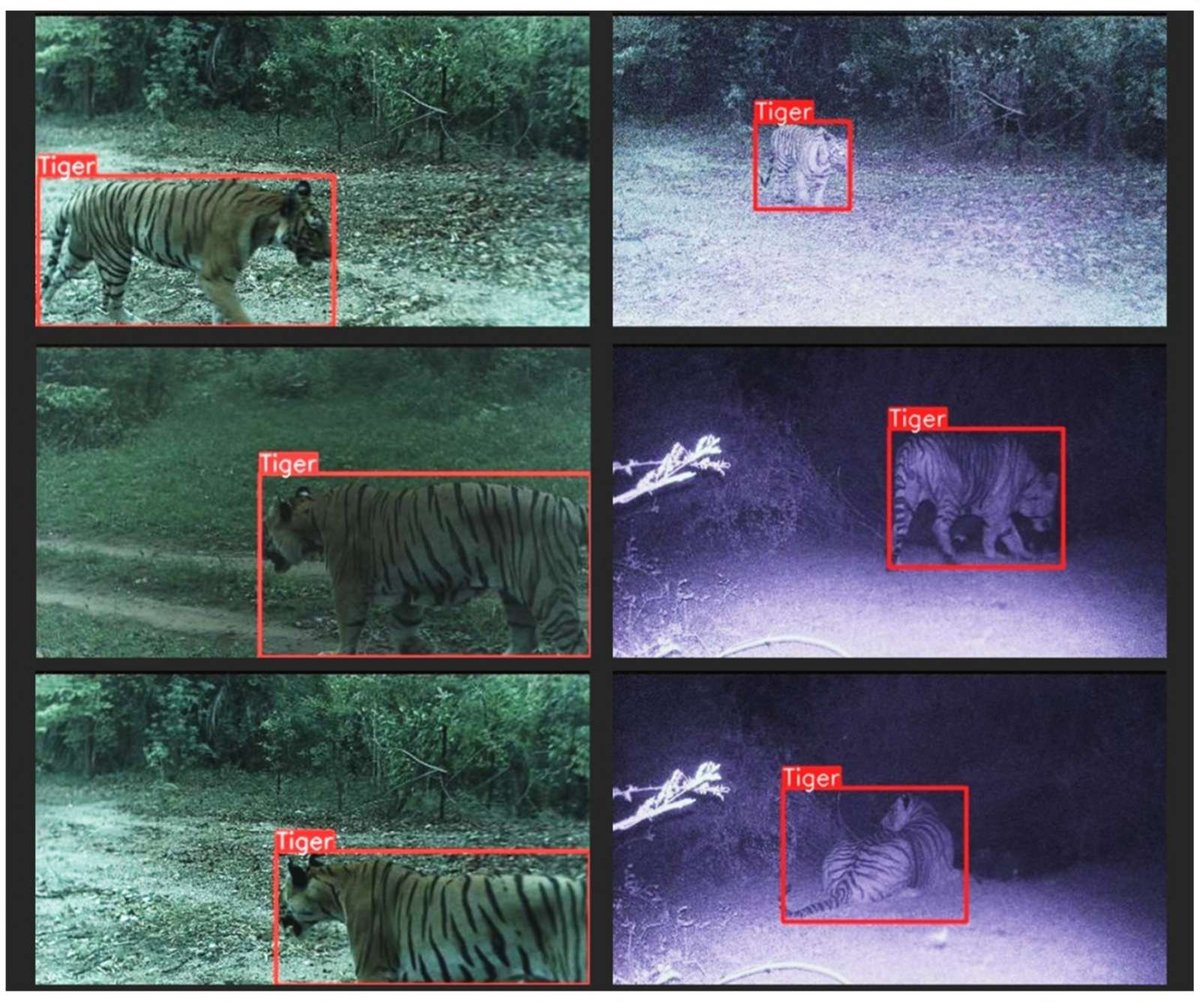
Easy as a pie AI-enabled cameras can easily identify tigers straying near human communities, but the challenge is identifying people — like poachers — who threaten wildlife. | EREMY DERTIEN/RESOLVE INC. AND CLEMSON UNIVERSITY/Agence france-presse
Published on

Conservationists are racing to find solutions to prevent conflict as tiger populations are growing in the jungles of India and Nepal, and the predators are straying closer to settlements.

AI or Artificial intelligence, a group of technologies intended to think and act like humans, is helping them solve problems in an increasing number of cases.

Researchers using AI-enabled cameras, including those from Clemson University in South Carolina and several NGOs, published research last month that they claim could revolutionize tiger conservation.

Both the villagers and the predators were protected by the small devices that were placed around enclosures in the two South Asian countries.

Their study, which was published in the BioScience journal, claims that the camera system known as TrailGuard can tell tigers apart from other species and send images to park rangers or villagers in a matter of seconds.

"We have to find ways for people and tigers and other wildlife to coexist," Eric Dinerstein, one of the authors of the report, told AFP. "Technology can offer us a tremendous opportunity to achieve that goal very cheaply."

The research claims the cameras were immediately effective, picking up a tiger just 300 meters from a village, and on another occasion, identifying a team of poachers.

False alarms

They say their system was the first AI camera to identify and transmit a picture of a tiger, and it has almost wiped out false alarms — when traps are tripped by passing boars or falling leaves. The scheme is one of several putting an AI spin on the established ideas of wildlife surveillance.

Researchers in Gabon are using AI to sift their camera trap images and are now trying a warning system for elephants. Teams are testing equipment in the Amazon that can identify the sounds of tractors, chainsaws, and other machinery used in deforestation.

And four years ago, the US tech giant Google joined forces with academics and non-profit organizations to gather millions of images from camera traps. The project, Wildlife Insights, automates the process of classifying images and species, saving researchers countless hours of tedious work.

Technology, in the opinion of conservationists like Dinerstein, who also heads the Resolve NGO's tech team, is advancing their cause. Their goal is to ensure that 30 percent of the Earth's land and oceans are designated protected zones by 2030, as agreed by dozens of governments last year, with that number eventually going up to 50 percent.

Those zones will need to be monitored, and animals will need to move safely between protected areas. "That's what we're shooting for, and the critical element of that is an early warning system," he said.

Big challenge

The plight of tigers underscores the size of the challenge. Their habitats have been devastated across Asia and their numbers in India fell to an all-time low of 1,411 in 2006, before steadily rising to current levels of around 3,500.

In the mid-20th century, India was home to an estimated 40,000.

Jonathan Palmer, head of conservation technology at the US-based Wildlife Conservation Society, who was not involved in the study, said TrailGuard had exciting potential.

But Palmer, who helped found Wildlife Insights with Google, said the broader uses of AI in conservation were not yet settled. "In most cases, AI species identification is still in its infancy," he said.

With AFP

Latest Stories

No stories found.
logo
Daily Tribune
tribune.net.ph