Living among the dead in cemeteries
Text size


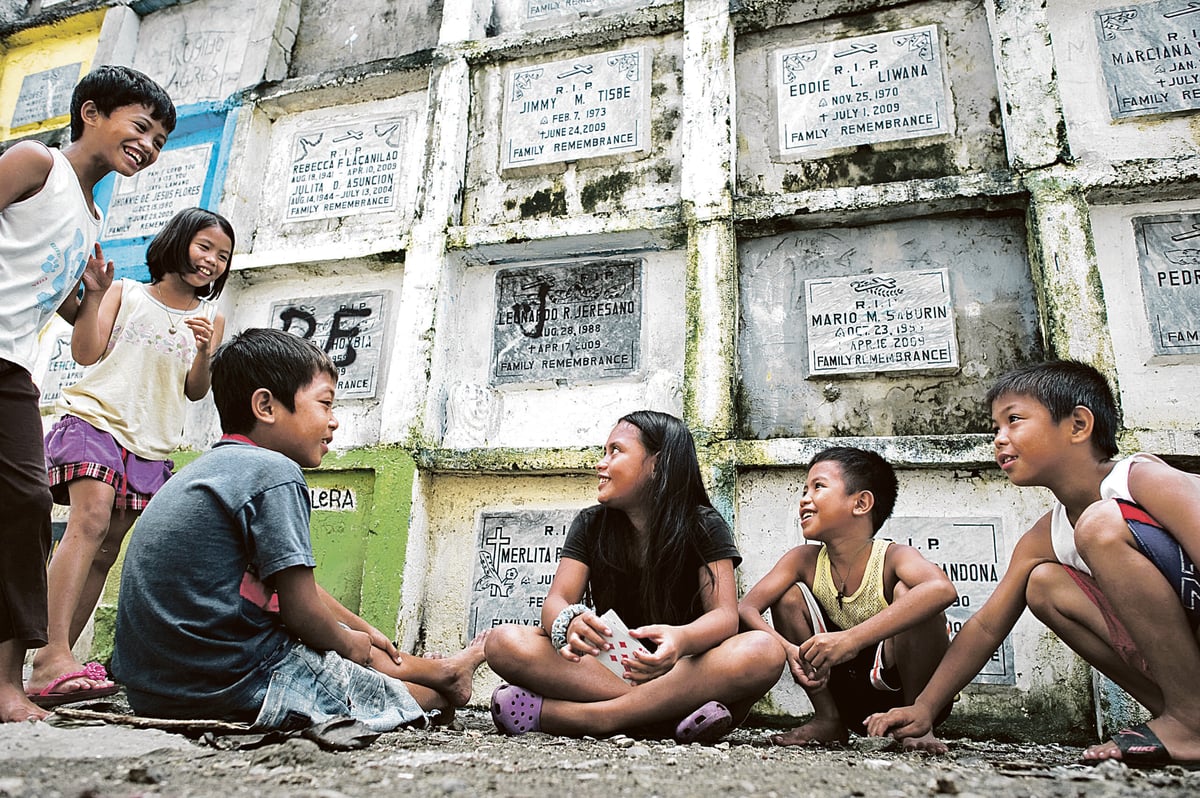
Earning a living inside the land of the dead at Manila's South Cemetery has been the only way of life that Raquel Leonardo and her nine siblings have known since the 70s.
Days before the nation commemorates All Saints' and All Souls' days on 1 to 2 November, Leonardo sat down for an interview with Daily Tribune to give a glimpse of life for the thousands of informal settlers at Philippine cemeteries.
"My father and mother had lived here since the 60s and we, all 10 of us brothers and sisters, were born in this place," Leonardo said, referring to the sprawling 25-hectare public cemetery in Sta. Ana Manila.
Leonardo recalled her father working as a mason hired to build tombs and at times the mausoleums housing the remains of the dead.
"We slept atop the nitso (cement tombs) that my father himself built," she said in Filipino. "We have no problem with electricity for a while because the men just tapped lines direct from electric posts."
Leonardo said none of her siblings had the opportunity to finish their studies because the jobs to be had inside the cemetery, like serving as caretakers, have never paid enough.
She said it did not help that the cemetery management cracked down on them and their fellow illegal settlers years back, evicting them.
Chased off
But unlike other informal settlers relocated by the government away from river banks, creeks and under bridges, Leonardo said those who have lived for decades inside cemeteries simply return after being chased off.
"It's difficult to turn our backs on the only jobs we've come to know inside the cemetery. We were born here and there's money to be made," she said.
Beaming with pride, she recalled getting married in 1988 to a tomb maker and then being blessed with their first of seven children only in 1997, with the eldest now a call center agent and the youngest still in high school.
She said her husband Magtanggol, now 74, can still assist in constructing tombs and even mausoleums, but that most of their income comes from guarding tombs, P100 to P300 per month.
"Sometimes we are not paid, but some pay us yearly and so we are happy when the monthly fees come in all at once," she said.
Digging graves
Manila's South Cemetery's population of informal settlers are dwarfed however by those who live inside Manila's North Cemetery, one of the city's oldest near the equally historic La Loma and Manila Chinese cemetery.
A 2018 estimate put the number of people living inside Manila North Cemetery at 6,000, a conservative figure as other surveys put the population of the living inside at 10,000 among a million buried bodies since 1904.
For caretakers inside the North Cemetery, the going-on rate for guarding tombs is lower than at South Cemetery at about P600 per year or just P50 per month. Lapida makers or tombstone carvers earn more, but not as much as the masons who can get preoccupied with the about 80 burials there per day.
Those who are not squeamish can get paid P50 to P100 for digging up the remains of those whose families had been remiss in paying or renewing the five-year lease for rented tomb space.
The remains are put into common graves. According to the Manila Police District, criminality and the sale of illegal drugs inside cemeteries occupied by informal settlers have become big problems, especially since cemeteries have become the favorite hideouts of criminals.