
- NEWS
- the EDIT
- COMMENTARY
- BUSINESS
- LIFE
- SHOW
- ACTION
- GLOBAL GOALS
- SNAPS
- DYARYO TIRADA
- MORE

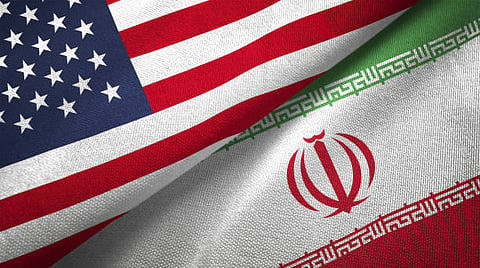
The US–Iran conflict, which has thrown the world and millions of people into a topsy-turvy spin, might hopefully soon be on pause mode. On 15 June, both sides announced a memorandum of understanding that ostensibly would allow everyone to heave a sigh of relief for at least 60 days while key issues are negotiated.
Why should this be of interest to us?
The Philippines is undoubtedly very much a casualty of this war. Our inflation is going bonkers at almost a 7-percent clip, which is way over the 2- to 4-percent target of our economic planners.
Interest rates have bumped up as the BSP raised the key interest rate to 4.75 percent with no end in sight as a defense mechanism to the burgeoning inflation.
The BSP lending rate is now at 5.25 percent, suggesting commercial lending rates will now likely be at the 7- to 8-percent range. The peso exchange rate, the barometer of investor confidence, is hovering close to the P61 to $1 rate. As a consequence, the growth rate is now expected to be at the lower range of 4.4 percent versus the government’s projections of 5- to 6 percent for 2026.
A cursory survey of a few businesses seems to validate the pessimistic and cautious outlook that the numbers convey. On top of all this, notwithstanding the final resolution of the Senate leadership row, at least for now anyway, our domestic political turmoil will likely continue over the next few weeks as the long-delayed impeachment trial of VP Sara Duterte will finally get going.
The recent drop in crude oil prices because of the purported ceasefire is a glimmer of light for us that the final resolution of the US–Iran conflict could soon be at hand. But the big question of course is will this agreement hold?
Let’s run through some of the key points of the agreement to get a sense of its doability.
The MoU calls for an immediate and permanent cessation of military operations on all fronts. The most contentious aspect of this aspiration, however, is a ceasefire in Lebanon, the stronghold of Hezbollah which has not ceased its military strikes against Israel. It recently killed four Israeli soldiers, for which Israel retaliated with airstrikes killing 47 Lebanese. This outbreak happened barely a day after the signing.
The animosity with Hezbollah dates back to 1985 when Israel invaded Lebanon to expel the Palestine Liberation Organization. It occupied southern Lebanon until 2000 and continues to do so in some areas to form a security buffer for Israel. Hezbollah was founded to resist the occupation, positioning itself as the defender of the Palestinians with the aid of Iran which persists to this day.
I expect this continuing enmity between the two warring states will make it extremely unlikely for any cessation of hostilities to take hold. The only leverage that could possibly be employed against Lebanon is for Iran to stop funding Hezbollah’s militarism, a long shot by any measure.
As for Israel, the US has to keep Netanyahu on a tight leash, which is a big risk politically for Netanyahu and his ability to hold on to Israel’s leadership if he accedes to Trump.
On the other hand, with the coming November US midterm elections, Trump is under pressure to convey to the American people that the war the US initiated has succeeded, particularly since voter sentiment appears to be tilting away from the Republican Party because of the unpopularity of the war. In Trump’s haste, ironically for the US, the other points in the deal seem to be more of a win for Iran.
The biggest give to Iran is the unfreezing of the economic sanctions allowing oil revenues to start flowing again and the recovery of about $300 billion in frozen deposits which will enable it to rebuild its destroyed pre-war infrastructure.
Iran’s uranium enrichment program, the primary concern of the US, will be effectively held in status quo since the agreement does not call for any measurable mechanism to ensure Iran will keep its word that it will not produce nuclear warheads. And most significantly, as of this writing, the Strait of Hormuz continues to be closed because of Lebanon and Israel’s recent clashes.
So what can we make of this uneasy truce? I think as in past accords in the highly volatile Middle East, for as long as oil continues to be the dominant source of energy, self-serving interests of the world’s major powers will inevitably clash with the gatekeepers of this black gold.
Sooner or later, until such time that renewable energy sources can replace oil, any ceasefire agreements shall continue to be topsy-turvy, which the world will have to live with.
Until next week… OBF!
For comments, email bing_matoto@yahoo.com.
