
Marcos Jr., Rubio set talks as Manila hosts ASEAN ministers

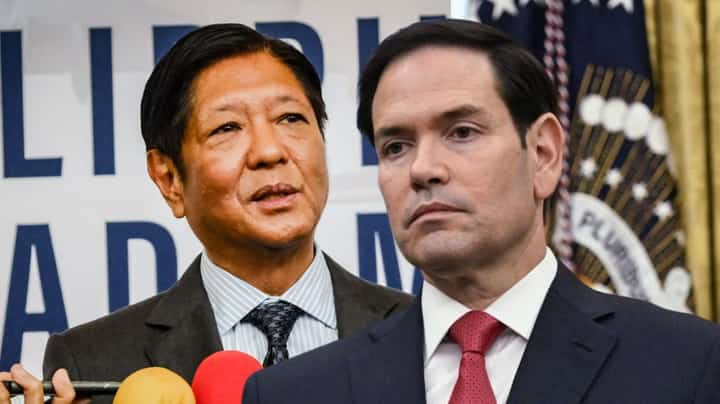
U.S. Secretary of State Marco Rubio will visit Manila for high-level talks with President Ferdinand Marcos Jr. and ASEAN ministers, highlighting Washington’s push to strengthen its alliance with the Philippines, address South China Sea tensions, and deepen Indo-Pacific engagement amid rising U.S.-China rivalry.
U.S. Secretary of State Marco Rubio will travel to the Philippines next week for high-level meetings with Southeast Asian counterparts and talks with President Ferdinand Marcos Jr., underscoring Washington's efforts to reinforce its alliance with Manila and deepen engagement in the Indo-Pacific amid persistent tensions with China.
Rubio will be in Manila from 19 to 23 July to attend the ASEAN Post-Ministerial Conference, the East Asia Summit Foreign Ministers' Meeting and the ASEAN Regional Forum, according to the U.S. State Department. The visit will also include a bilateral meeting with Marcos and Philippine officials.
The trip comes as the Philippines, this year's ASEAN chair, hosts a series of regional diplomatic meetings expected to draw major powers, including Chinese Foreign Minister Wang Yi and Russian Foreign Minister Sergei Lavrov, with maritime disputes in the South China Sea, the Myanmar crisis and regional security expected to dominate discussions.
Rubio's visit marks one of the highest-level engagements between Washington and Manila since U.S. President Donald Trump returned to office and highlights the Philippines' growing role in Washington's Indo-Pacific strategy.
According to the State Department, Rubio will use the visit to "demonstrate the tangible results of the U.S.-ASEAN partnership" while strengthening the United States' comprehensive strategic partnership with the Philippines.
His meeting with Marcos is expected to focus on defense cooperation, economic ties and regional security, particularly in the contested South China Sea, where confrontations between Philippine and Chinese vessels have intensified over the past several years.
The visit also comes as Manila and Washington continue expanding military cooperation under the Enhanced Defense Cooperation Agreement (EDCA), which grants U.S. forces access to additional Philippine military sites, and after the two allies elevated their security coordination through regular joint patrols and large-scale military exercises.
Diplomats also expect Rubio to hold discussions with Wang on the sidelines of the ASEAN meetings as Washington and Beijing seek to stabilize relations ahead of a possible summit between Trump and Chinese President Xi Jinping later this year.
Despite recent efforts to improve dialogue, the two powers remain at odds over trade, Taiwan and competing strategic interests in the Indo-Pacific.
The ASEAN meetings are expected to test the region's ability to navigate intensifying U.S.-China rivalry while maintaining its longstanding policy of strategic neutrality.
Aside from maritime security, foreign ministers are expected to tackle negotiations for a long-awaited Code of Conduct in the South China Sea, developments in Myanmar following the 2021 military coup, transnational crime and the economic effects of conflicts in the Middle East on regional trade.