
Into the lava
Naturally, people asked the obvious question: How does someone self-finance a campaign costing more than twice his declared net worth?

There are bad explanations. There are worse explanations. And then there are explanations that seem to solve one problem only by opening the door to a much, much bigger one.
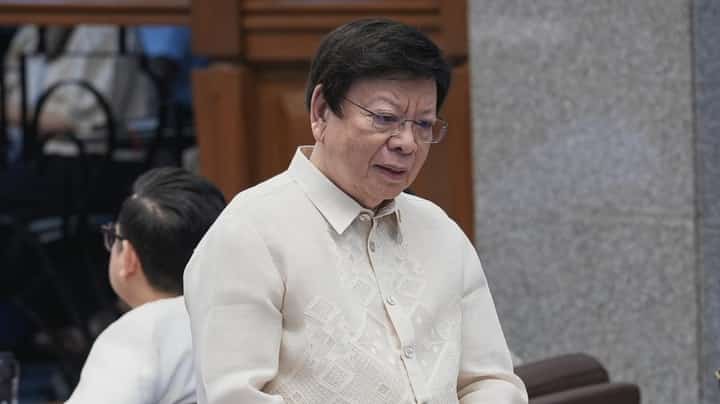
Senator Rodante Marcoleta may have just given us a textbook example.
The controversy started simply enough. Marcoleta’s Statement of Contributions and Expenditures (SoCE) for the 2025 senatorial elections reportedly showed around P112.8 million in campaign spending. His declared net worth in his 2025 SALN was around P51.9 million. More curious still, his SoCE declared zero campaign contributions.
Naturally, people asked the obvious question: How does someone self-finance a campaign costing more than twice his declared net worth?
For a while, that was the issue. It looked like a campaign finance problem. Marcoleta later explained that he had, in fact, received donations, but the donors supposedly asked to remain anonymous.
That answer raised another obvious problem because campaign donors are not supposed to be treated like mystery guests at a private dinner. Campaign finance rules exist precisely because voters have a right to know who is funding candidates for public office.
Eventually, the matter reached the Comelec. Marcoleta’s defense was that the donations were received in January 2025, before the official campaign period, and therefore did not have to be treated as campaign contributions in his SoCE. The Comelec accepted the explanation and cleared him of an election offense.
That spared him from Comelec action at the cost of leading him down a much thornier path. Because if the P75 million he publicly admitted receiving was not a campaign contribution, then what was it?
Remember that Marcoleta was not an ordinary private citizen in January 2025. He was a sitting member of Congress. If that much money was given to him, and if it was not legally a campaign donation, then it begins to look very much like a gift to an incumbent public officer. And gifts to public officers are not exactly treated casually under Philippine law.
Article 211 of the Revised Penal Code punishes indirect bribery, which covers a public officer who accepts gifts offered by reason of his office. Presidential Decree 46 separately prohibits public officials from receiving gifts or valuable things given by reason of their official position.
The Plunder Law also includes, among the acts that may constitute ill-gotten wealth, the receipt of any gift or pecuniary benefit by reason of public office, once the aggregate amount reaches at least P50 million.
P75 million is not spare change. It is not a fruit basket. It is not a bottle of wine handed over at Christmas. It is not a cup of coffee at the nearest Starbucks. It was 144 percent of Marcoleta’s declared net worth.
At that level, the size of the amount itself creates a strong factual inference that the money was given because of who he was and the public office he held. That may still need to be proven in court, of course. No one is saying conviction should happen automatically. But as a basis for charging him before the Sandiganbayan? Come on.
And that is the funny part, if anything about this can be called funny. In trying to escape a campaign finance problem, Marcoleta’s explanation appears to have led him straight into the path of indirect bribery, Presidential Decree 46 and plunder.
One route might have involved fines, administrative liability, or possibly the narrower criminal issue of perjury. The route he chose now involves a non-bailable plunder case, possible suspension from office and the risk of reclusion perpetua upon conviction.
That is not just jumping out of the frying pan into the fire. That is jumping out of the frying pan, clearing the fire and landing face-first in scorching hot lava.
###