
Bomb threats, deadly weapons now top school offenses under DepEd rules

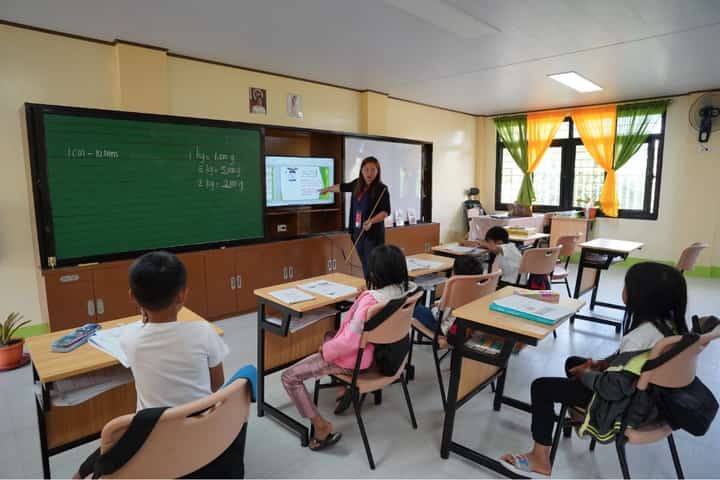
The Department of Education has enforced streamlined guidelines classifying severe security violations as critical offenses. Part of a broader School Safety Campaign under Education Secretary Sonny Angara, this measure introduces a structured approach to learner discipline to foster a safe, protective, and motivating environment across public schools.
DepEd PH
The Department of Education (DepEd) has reinforced school discipline policies by classifying bomb threats and the carrying of deadly weapons on school grounds as the most serious offenses under its new learner behavior guidelines, warning that violators could face non-readmission or outright exclusion from school.
In a statement released Thursday, DepEd said the policy is anchored on DepEd Order No. 006, s. 2026, which institutionalized the Guidelines on Ensuring a Safe and Motivating Learning Environment (ESMLE).
“The DepEd hereby adopts the Guidelines on Ensuring a Safe and Motivating Learning Environment (ESMLE), which harmonize all DepEd issuances aimed at ensuring a safe learning environment by providing coherent instructions on security measures,incident reporting procedures,and the provision of mental health and psychosocial support,” it read.
“This Order reflects the DepEd's commitment to promoting the welfare,safety and security of learners through child-friendly,gender-sensitive,safe,and motivating environment,with particular focus on mitigating cases of LRP concerns nationwide,strengthening prevention and response mechanisms in schools and CLCs,and increasing stakeholder involvement in addressing LRP concerns,” it added.
Under the guidelines, making bomb threats or bomb jokes and bringing deadly weapons—including firearms, ammunition, explosives, and bladed weapons—to schools or school-sanctioned activities are classified as third-level offenses, the highest disciplinary category.
Students found liable for third-level violations face non-readmission for a first offense, preventing them from enrolling in the same school for the following academic year while allowing them to complete the current one.
A second offense carries the penalty of exclusion, resulting in the learner's immediate removal from the school's class list, although educational interventions may still be provided.
Schools are also required to immediately refer such cases to law enforcement agencies and social welfare offices for appropriate legal action and intervention.
The ESMLE guidelines establish a graduated disciplinary system based on the severity of offenses.
First-level offenses include relatively minor violations such as using profanities within school premises, simple vandalism, disruptive behavior, and spreading false information that may cause confusion or commotion.
Sanctions include a written reprimand, parent conferences, and suspension.
Second-level offenses cover more serious or repeated misconduct, including stalking, theft, intimidation, harassment, and inflicting slight physical injuries. Penalties escalate from mandatory suspension for a first offense to non-readmission for a second offense and exclusion for a third.
Third-level offenses cover the gravest violations, including hazing, homicide, murder, sexual assault, serious physical injuries committed inside or outside school, joining street gangs, bringing illegal drugs or liquor to school, acts of lasciviousness, cheating during examinations, and sharing demeaning or sexually explicit videos involving learners or school personnel.
Beyond disciplinary sanctions, the guidelines require schools to conduct risk assessments, follow standardized confidential incident reporting procedures, and provide immediate mental health and psychosocial support to victims.
DepEd said the policy aims to strengthen learner protection and foster a safe, inclusive, and accountable learning environment across the country's basic education system.