
Japanese firms wary of Manila investments
However, Japanese manufacturers remain hesitant to commit additional capital due to persistent challenges affecting the ease of doing business.

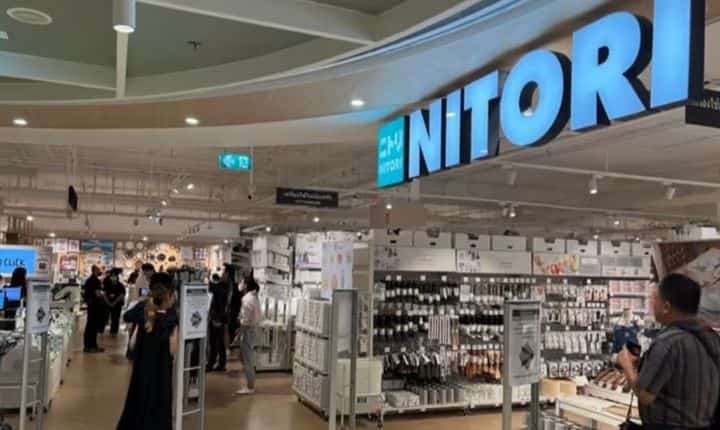
Not all Japanese businesses are hesitant to place shops in the country, as Nitori Holdings decided to expand operations to tap rising consumer demand.
Photograph courtesy of Philippine Franchisers Association
Japanese companies remain cautious about expanding their presence in the Philippines, with unresolved tax issues, corruption concerns, infrastructure weaknesses, and political uncertainty continuing to affect the country’s attractiveness as an investment destination.
The Philippines’ economy has an advantage that few regional markets can match: domestic consumption accounts for around 70 percent of gross domestic product (GDP), creating opportunities for businesses focused on retail, services and consumer goods.
However, Japanese manufacturers remain hesitant to commit additional capital due to persistent challenges affecting the ease of doing business.
In the Japan Bank for International Cooperation’s fiscal 2025 survey on overseas direct investment, the Philippines ranked eighth among the most promising destinations for Japanese manufacturers over the next three years.
It trailed other Southeast Asian economies such as Vietnam, Indonesia, Thailand and Malaysia, while India topped the list.
A banker from a major conglomerate-affiliated institution that advises Japanese companies said many investors ultimately choose other regional markets after comparing business conditions across Asia, with Vietnam often emerging as a preferred destination.
One of the biggest concerns raised by Japanese firms is the country’s tax environment, particularly delays and uncertainty surrounding value-added tax (VAT) refunds.
Under the Philippines’ 12 percent VAT system, foreign companies may claim refunds for excess input taxes, but some businesses have reported difficulties receiving the amounts they believe they are entitled to.
Dole, a fruit and vegetable company operating under Japanese trading firm Itochu, has continued pursuing legal action over VAT refund claims, with one case remaining unresolved for nearly a decade.
The company has cited uncertainty over refund timelines and amounts as a factor affecting future investment decisions.
Japanese business groups operating in the Philippines have also raised concerns over frequent tax inspections, lengthy documentation requirements, and disputes with tax authorities.
“We were charged penalties equal to our entire sales revenue,” one company representative said, while another executive complained that extensive tax documents submitted by firms were rejected with limited review.
Beyond taxation, corruption remains another major barrier for investors. Business groups have pointed to governance concerns and inconsistent implementation of regulations as factors that weaken confidence in the Philippine market.
Infrastructure limitations also continue to affect competitiveness. In the 2025 World Competitiveness Ranking by Swiss business school IMD, the Philippines ranked 60th out of 69 economies in the broader infrastructure category, reflecting challenges in transport systems, logistics networks and connectivity.
The country’s infrastructure gap has been a particular concern for manufacturers that require efficient movement of goods and reliable supply chains.
Political uncertainty has added to investor concerns, with the breakdown of the alliance between major political families creating questions over policy continuity and stability.
Despite these challenges, the Philippines continues to attract Japanese companies in consumer-driven industries due to its large domestic market.
Major Japanese retailers, including furniture brand Nitori Holdings, footwear chain ABC-Mart and department store operator Mitsukoshi Isetan Holdings, have expanded operations in the country to tap rising consumer demand.
The growing number of Filipino tourists visiting Japan has also strengthened awareness of Japanese brands and created additional business opportunities.
However, for Japanese manufacturers looking to establish or expand production bases, business groups said the Philippines must address long-standing issues affecting investor confidence.
Improving tax administration, reducing bureaucratic hurdles, strengthening infrastructure, and ensuring policy stability will be critical in convincing more Japanese companies to choose the Philippines over competing markets in the region.