
Divine audit
Hernandez testified that only 30 to 50 percent of each contract actually went to construction; the rest was siphoned off and stuffed into luggage delivered to politicians.

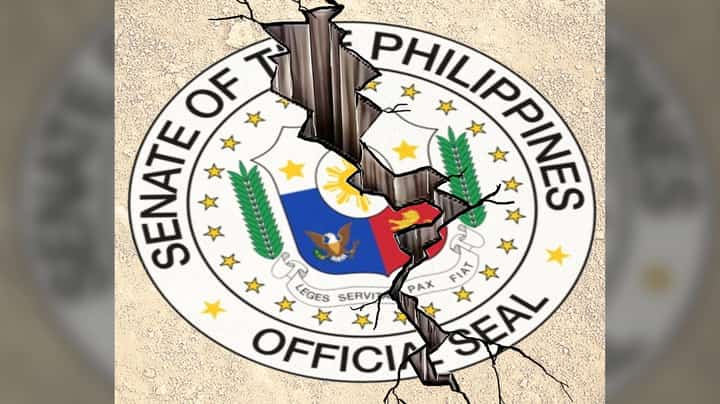
The heavens have delivered another invoice, right as the earth spoke of what the country’s supposed leaders would not. While the Senate manufactured a constitutional crisis where rival factions squabbled over quorum counts, leadership legitimacy and floor walkouts, and the Blue Ribbon hearings spun their wheels, the ground itself intervened.
At 7:37 a.m. on 8 June, a magnitude-7.8 earthquake, the strongest to hit the country since 1990, struck offshore Sarangani province, sending violent shockwaves across Regions 9, 11, 12, and the Bangsamoro Autonomous Region in Muslim Mindanao. The tremor killed scores and left many injured, and caused widespread anxiety as it happened on the first day of the school year.
The earthquake measured something the government has yet to quantify with full precision, which is the structural deficit in public infrastructure built under a regime of systemic corruption.
Initial reports confirmed widespread damage to schools, hospitals, government buildings and other structures. Power outages and telecommunications blackouts blanketed several affected areas, while damaged roads and bridges cut off access to communities in need of rescue.
It felt not just like a natural disaster but a report card from above.
Governance watchdogs were swift and unsparing, raising urgent alarm over damaged and collapsed school buildings and renewing calls for accountability, demanding a government investigation into the structural reliability of school buildings, corruption in construction projects and the persistent neglect of public learning facilities.
“The safety of teachers and learners,” a teachers’ group said, “should never be compromised by negligence, underfunding and corruption.”
In one of the public hearings on the flood control corruption scandal, sacked Department of Public Works and Highways Bulacan assistant district engineer Brice Hernandez admitted that all the buildings the agency built were likely substandard because the prices of materials were routinely inflated and cheaper substitutes were purchased instead.
There was a simple explanation for the shoddy work — kickbacks. Hernandez testified that only 30 to 50 percent of each contract actually went to construction; the rest was siphoned off and stuffed into luggage delivered to politicians.
That confession should have alerted the government and prompted it to look into the stability of all public infrastructure, but it did not. Instead, the issue was used as political ammunition.
Across Mindanao, over 37 structures were reported damaged, including schools, hospitals and commercial buildings, with power outages affecting South Cotabato, Sarangani, Sultan Kudarat and parts of Davao.
The tragedy has yet to end. Phivolcs recorded more than 138 aftershocks in the immediate aftermath.
The paradox writes itself. The typhoons that exposed the substandard flood control projects, dikes that crumbled, drainage systems that choked and embankments that never held have now been joined by an earthquake that is doing the same to roads, bridges, schools and public buildings.
In both cases, corruption created the vulnerability that nature merely revealed.
The Senate, meanwhile, remains consumed by a leadership quarrel that grows more theatrical by the day. The heavens submitted evidence that no privilege speech can address and no quorum dispute can delay.