
When the Senate refuses to function
The Constitution vests legislative authority in the Senate as an institution, not in any single officer. A Senate President presides over the chamber, but does not own it.

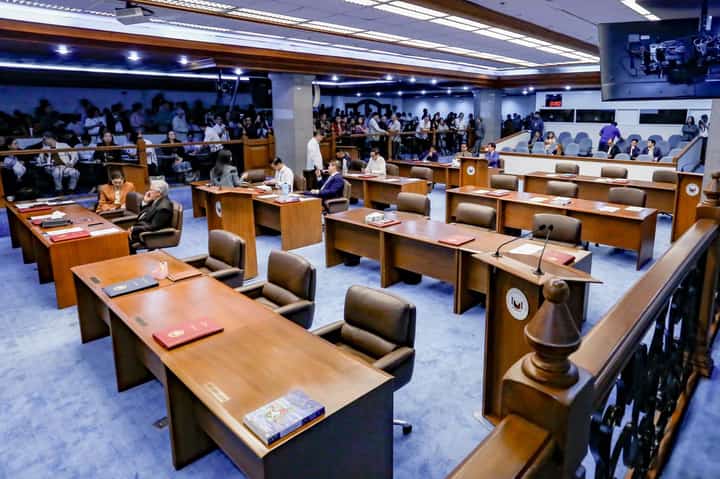
The recent spectacle in the Senate had all the ingredients of political theater: disputed authority, rival interpretations of the rules, walkouts and accusations of an unconstitutional “coup.”
Beneath the noise: What happens when the Senate leadership itself refuses to allow the chamber to function?
At the heart of the drama is the decision of a group of senators to proceed with the Senate’s business despite questions of attendance and quorum. Critics say this is illegitimate. But supporters argue the move is lawful and necessary to prevent legislative paralysis.
We must view the issue through the lens of constitutional law and what is good for the country, rather than partisan loyalty.
We start with the concept of “sine die.” Derived from Latin, it means “without a day.” When a legislative body adjourns sine die, it ends a session without setting a date for reconvening. Traditionally, this marks the conclusion of legislative business.
But was the Senate business effectively halted before a valid and functioning chamber could complete its work?
The Constitution vests legislative authority in the Senate as an institution, not in any single officer. A Senate President presides over the chamber, but does not own it. If the presiding officer’s absence or refusal to convene prevents the Senate from performing its constitutional duties, the question becomes whether the remaining members are powerless to act.
History suggests “no.”
On 5 May 2015, the Senate conducted sessions with only 12 senators present. Then Senate President Franklin Drilon ruled that a quorum existed after determining that the senators who were either detained or abroad on official business should not be counted in computing the number necessary to transact business. The ruling was accepted as a valid exercise of the chamber’s authority to interpret its own rules, and the Senate proceeded with its work.
The precedent is significant because legislative bodies have long been accorded substantial discretion in determining whether or not they have a quorum.
The issue also has the guidance of the Supreme Court.
The 1949 landmark case of Avelino v. Cuenco arose from a dramatic leadership struggle in the Senate. During the controversy, 12 senators remained in session while the others walked out. The Supreme Court ultimately recognized the validity of the actions taken by the remaining senators and upheld the election of Mariano Jesús Cuenco as Acting Senate President.
In what has since become known as the Avelino doctrine, the Court explained that a constitutional majority need not mean all members of the Senate; that 12 senators constituted a valid majority; and the walkout by other members could not disable the institution from exercising its powers.
The Court went even further, noting that legislative bodies possess constitutional authority to compel the attendance of absent members to secure a quorum.
The principle is simple and straightforward: democratic institutions cannot be held hostage by the non-attendance of their own members or the non-participation of their own officers.
Otherwise, any Senate President could suspend the operations of an entire constitutional body through inaction. That outcome would be far more troubling to the interests of the Filipino people than any dispute over parliamentary procedure.