
ICSC urges shift to indigenous energy amid global fossil fuel price surge
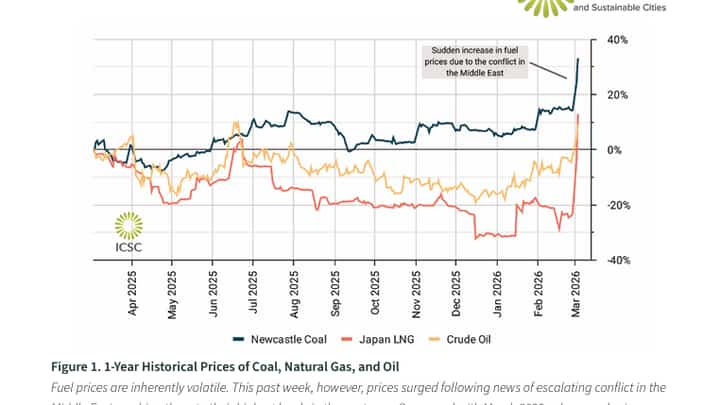
Amid rising prices of fossil-based commodities triggered by the conflict in the Middle East, the Institute for Climate and Sustainable Cities (ICSC) urged the Philippines to reduce its dependence on fossil fuels and expand the use of indigenous energy sources.
The non-government organization said the country is well positioned to adopt policies that promote and revive indigenous energy resources as alternatives to imported fossil fuels.
“Today, the Philippines is in an advantageous position where policy decisions that favor indigenous energy—solar, wind, hydro, and geothermal—can shift the country away from its dependence on volatile global fuel markets”, the ICSC said.
The organization said these indigenous energy resources are largely immune to global price swings and that history has shown the country’s potential to reduce reliance on volatile fuel markets.
“History already offers a clear lesson. In the early 1970s, when the country faced periods of heavy dependence on imported fuels that exposed the power sector to global supply and price shocks, the government pivoted toward developing indigenous energy resources. As geothermal and hydropower expanded, the Philippines ultimately achieved a 52% renewable energy share in the early 1980s,” the ICSC noted.
The organization added that when the Russia–Ukraine war began in 2022, the country faced similar vulnerabilities to global supply and price shocks, with coal prices rising by 400%.
According to ICSC, the national government responded by adopting policies that promoted renewable energy such as the preferential dispatch policy, the expanded rooftop solar program, and the implementation of Renewable Portfolio Standards, the Green Energy Option Program, the Green Energy Auction Program, and the Net-Metering Program.
By 2026, with the conflict in the Middle East ongoing, fossil-based commodity prices have again surged, with crude oil up 19%, Japan LNG rising 47%, and Newcastle coal climbing 15%, according to data from ICSC.
Figures from the group also showed that coal prices in March 2026 are 33.14% higher than in March 2025, while natural gas and crude oil prices have risen by 12.93% and 9.05%, respectively.
“These price shocks have immediate and tangible effects on consumers and the economy. Rising oil prices drive broader inflation, increasing the cost of transportation, goods, and services across the economy”, the organization said.
ICSC also emphasized that rising fossil fuel prices significantly affect off-grid areas that rely on diesel generation, as higher coal and gas prices are passed directly to households and businesses.
Reducing dependence on fossil fuels and reviving indigenous energy sources is a “no-regret” strategy to strengthen energy security, the ICSC said, adding that faster deployment of renewable energy is needed to turn policy into action.