
'A Chorus Line' brings global Filipino talent to Manila
Known for bringing world-class Filipino talents together in productions like 'Request Sa Radyo' and 'Into the Woods', TGA’s staging gathers Filipino performers from across the globe.


Emmy-winning choreographer Karla Puno Garcia; Filipino-American actor and singer, Lissa DeGuzman; Conrad Ricamora; and Filipino-American Broadway performer
Late one night in 1974, director and choreographer Michael Bennett gathered a group of Broadway dancers and asked them to share their stories—their childhood memories, insecurities, struggles in the industry, and dreams that kept them going despite constant rejection.
Those taped conversations would eventually inspire A Chorus Line.
When the musical premiered on Broadway in 1975, it changed theater history. With music by Marvin Hamlisch, lyrics by Edward Kleban, and a book by James Kirkwood Jr. and Nicholas Dante, the show shifted the spotlight from stars to the anonymous dancers usually standing in the back row.
Instead of a glamorous showbiz story, A Chorus Line became something more intimate—a portrait of performers fighting for a place onstage.
The musical would go on to become one of Broadway’s most celebrated works, earning multiple Tony Awards and the rare distinction of winning the Pulitzer Prize for Drama.
The story
The premise is simple: a group of dancers are competing for eight spots in the chorus line of a new show. Their director, Zach, asks them to do something unusual during the audition: talk about themselves.
One by one, the dancers step forward and reveal deeply personal stories—Cassie, a former star trying to return to the chorus; Paul, who shares a painful coming-of-age story that becomes the emotional centerpiece of the show; and Diana, who reflects on finally finding confidence after years of rejection.
By the end of the audition, the dancers have laid their lives bare, yet the outcome is blunt and unsentimental. Only a few are chosen.
Once they step into costume, their individuality disappears as they move in perfect unison. Just another chorus line.
A global Filipino cast
Five decades later, the musical returns to the stage in Manila, this time with a cast that brings together Filipino performers from around the world.
To celebrate the 50th anniversary of A Chorus Line, Theatre Group Asia (TGA) is staging a new production this month at the Samsung Performing Arts Theater in Circuit Makati.
Known for bringing world-class Filipino talents together in productions like Request Sa Radyo and Into the Woods, TGA’s staging gathers Filipino performers from across the globe.
Directed and choreographed by Emmy Award-winner Karla Puno Garcia, the musical is led by a powerhouse Filipino cast, including Tony Award nominee and two-time Grammy Award nominee Conrad Ricamora as Zach, and Filipino-American Broadway "triple threat" Lissa DeGuzman as Cassie.
The full cast was selected through an extensive global search spanning New York and key Philippine cities, culminating in an intensive Manila bootcamp under Puno Garcia’s direction.
Serving as associate director is Jamie Wilson, while associate choreographer JM Cabling has been part of the process from the very beginning—from the New York workshops through every audition city. Cabling is also an Asian Cultural Council grantee for dance.
The visual world of the production is shaped by London- and New York–based set designer Miguel Urbino and New York–based costume designer Kat Ibasco. Lighting design is led by Cha See, the first Filipina to head lighting design for a major Broadway production with Oh, Mary!, while sound design is by Megumi Katayama, fresh from her recent work on New York City Center’s Encores! series. Bringing Marvin Hamlisch’s iconic score to life is music director Farley Asuncion.
A shared mission
Christopher Mohnani, one of TGA’s founders, said during a recent press conference that the company’s 2026 season has truly been a “banner year.”
“We are ambitious in our goals and are very steadfast in our mission, where Filipino artists from around the world can come together to present world-class theater we can play as our own. For us, this is just not about staging beloved musicals. It's about creating more opportunities for Filipino talent to shine and making sure local audiences have access to performances of this scale and quality.”
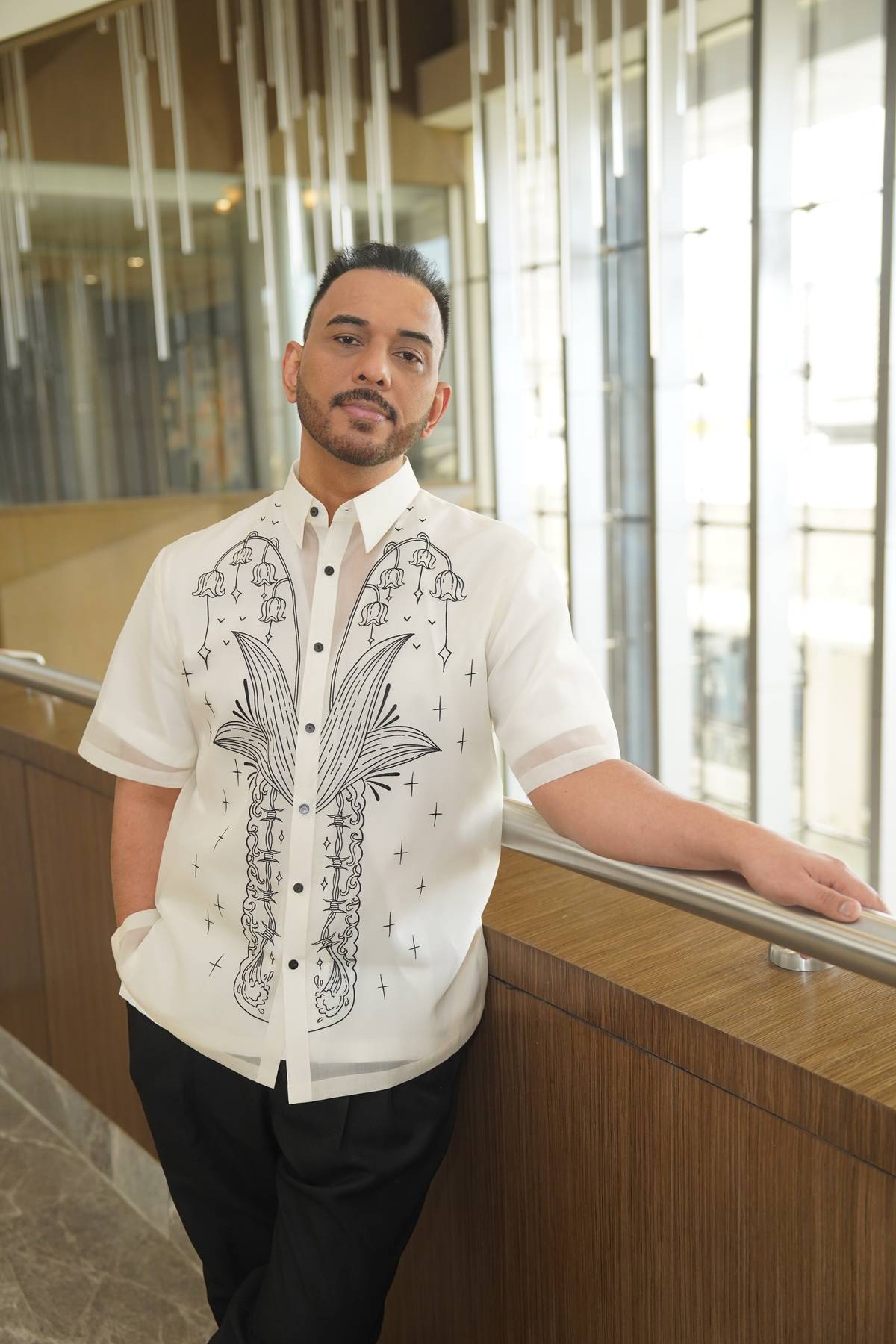
Chris Mohnani, managing director of the Samsung Performing Arts Theater and executive director of Theatre Group Asia (TGA).
RYAN ONG
Finding belonging
Puno-Garcia, meanwhile, expressed her admiration for Filipino performers.
“I think that the talent here is incredible. And the people that we found to tell this story is just undeniable. So, it's just very exciting. Very exciting.”
“So being on Broadway in shows like Hamilton and Adam's Family, I feel the idea of an ensemble has evolved. And I take that experience with me into A Chorus Line,” she added.
“It is wild how everyone is coming from all corners of the globe, all being Filipino. And somehow, it's like this incredible synchronicity and richness where you don't really know where anybody's from when you watch it. But when they come together and do this material, it is like they all were born from the same person. And I think that's something that feels very Filipino. We are all intersections of many different experiences.”

Emmy-winning choreographer Karla Puno Garcia serves as director and choreographer of TGA’s 'A Chorus Line'.
Eric Shelton
For Ricamora, the experience carries a deeply personal meaning.
“Growing up in the U.S. with not a lot of Filipino representation, fighting through this industry where you get marginalized a lot of time as a Filipino performer in Hollywood and on Broadway. Now to be a part of this gorgeous all-Filipino cast is so healing for me personally because I have spent so much of my life feeling like I just didn't belong."'
"Trying to fight, fight to get into rooms, fight to get on stages, fight to get on camera and it feels like I've come home in a way after all of this struggle and fighting in the industry. So yeah, it means a lot. It means a lot for us to have you here, watching this man work in the role is amazing,” Ricamora said.
“Karla, I think, is incredible because she can get the best performance out of all of us…. It's a testament to Karla's directing skill that she can create a space where we can use our instruments the best way that we know how,” he added.

Conrad Ricamora, a Filipino-American actor and singer known for his work on Broadway and television, plays Zach in 'A Chorus Line'.
Meanwhile, DeGuzman, who played Elphaba in the Broadway production of Wicked and Princess Jasmine in the Broadway musical Aladdin, shared that since arriving in the Philippines, she has been blown away by the talent around her.
“So carrying on the legacy of Cassie, there's obviously so many Cassies who grace the stage and are incredible. But, specifically, the legacy here (in the Philippines), the talent here, is unreal and the triple threat of it all is absolutely unreal," she said.
“And it's so humbling and exciting to be here playing Cassie because it's just so special to be in the room and it's so elevating. And to be with you all and watch you all do all of your parts every day and sing. Even today, just what you all saw today, you haven't even seen them dance yet, you know what I mean? And so it's not just Cassie's legacy, it's the legacy of all the stories that are being told up there and all of these personal stories that are being told up there,” she added.
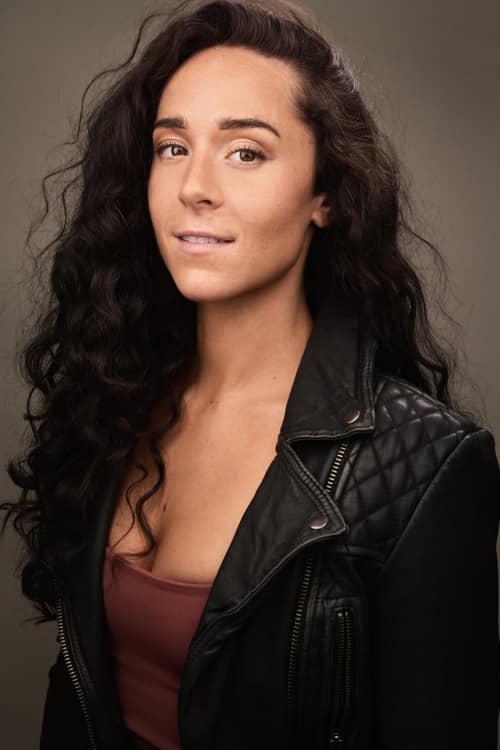
Lissa DeGuzman, a Filipino-American Broadway performer known for roles in 'Wicked' and 'Aladdin', plays Cassie in 'A Chorus Line'.
TGA
Show details
Performances run from 12 to 29 March 2026, with shows scheduled on Thursdays and Fridays at 7:30 p.m., and on Saturdays and Sundays at 2:00 p.m. and 7:30 p.m.
Tickets are available via TicketWorld, priced from ₱900 to ₱5,500.