
Google PH country head speaks on YouTube, AI and the future


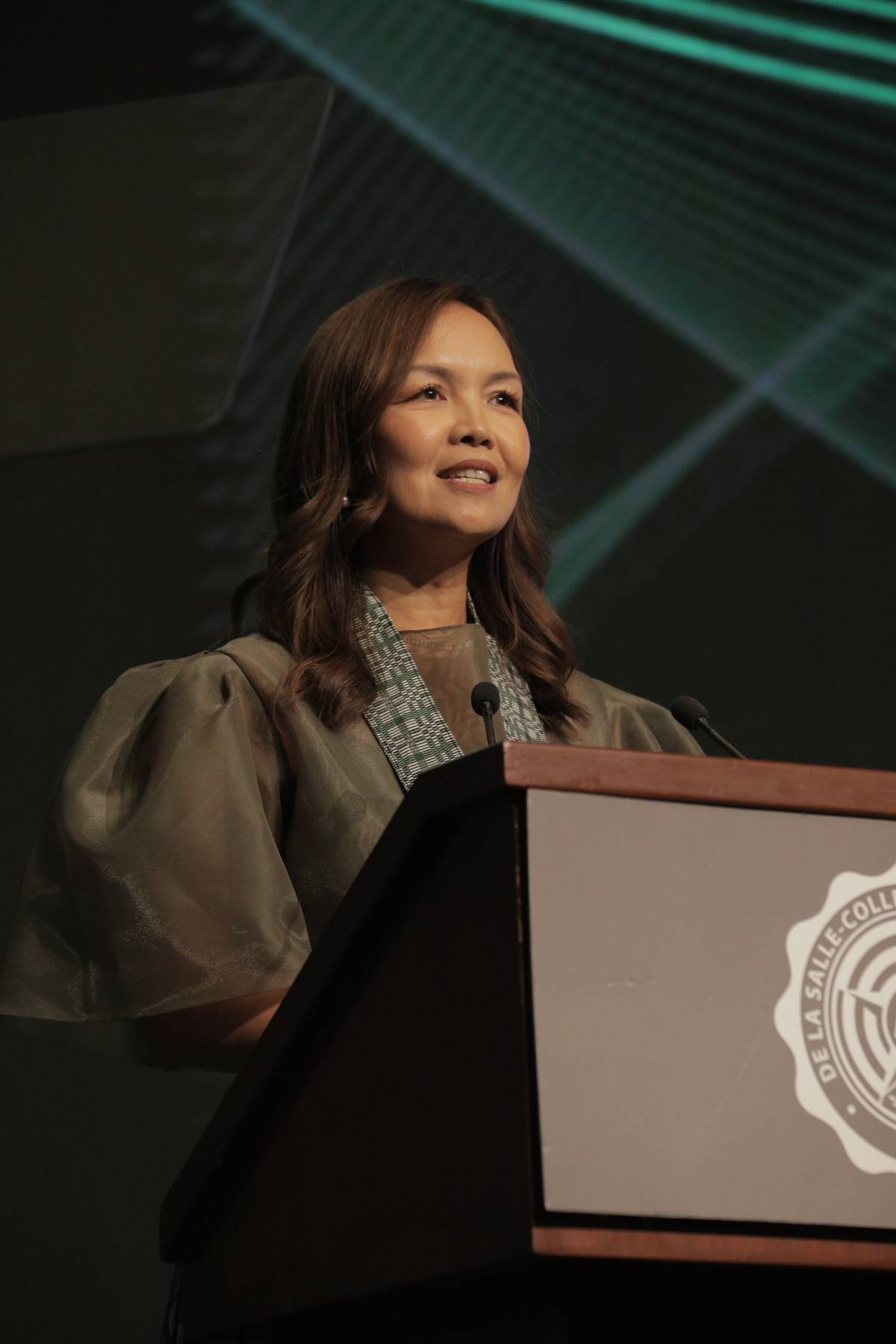
PREP Palacios delivers her speech at the recently-concluded De La Salle-College of Saint Benilde Commencement Exercises.
Thirty-three years after she walked out of the storied halls of De La Salle-College of Saint Benilde (DLS-CSB) as a graduand, Prep Palacios stood with pride before a new generation of graduates as one of the most accomplished individuals in the tech industry today.
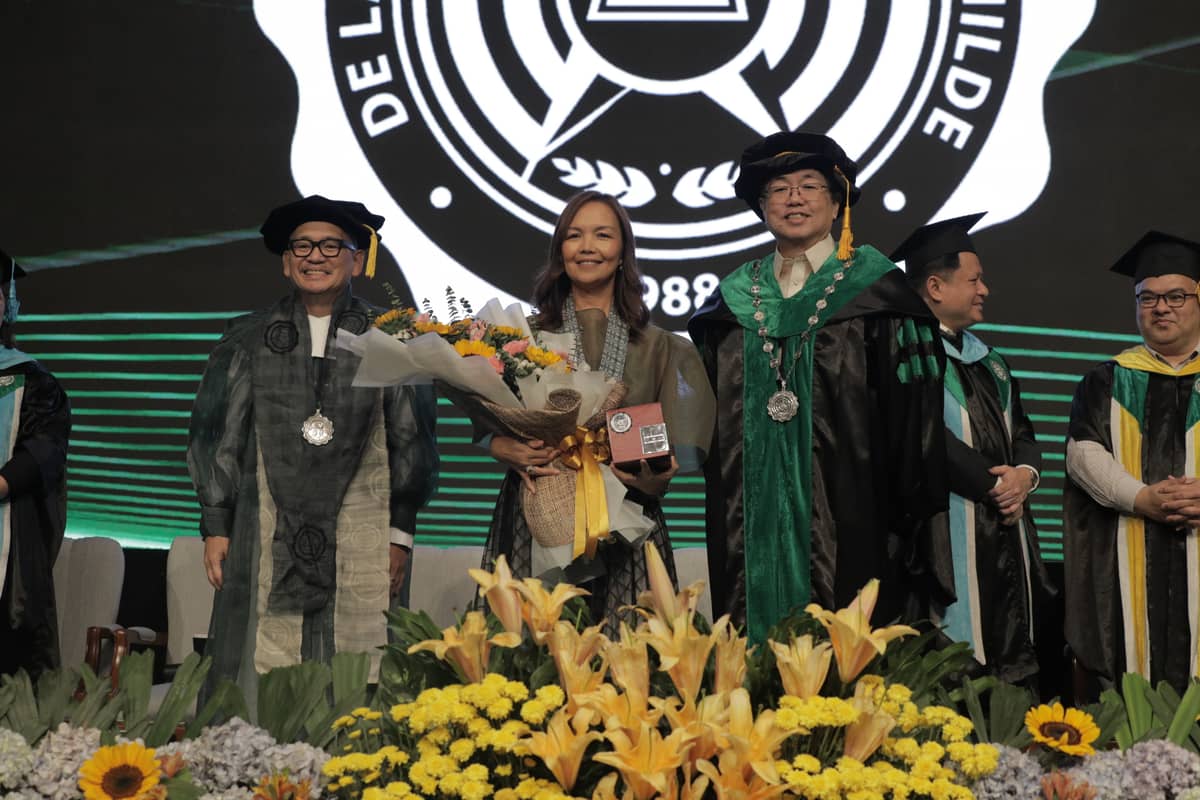
THE outstanding Benilde Alumna is flanked by DLS-CSB president Br. Edmundo Fernandez FSC and Chancellor Benhur Ong.
PHOTOGRAPHS courtesy of prep palacios
At the helm of Google Philippines, Palacios traced her career, which unfolded and developed alongside the spread of the internet itself! “The ‘90s was a decade of profound transformation; we were witnessing the very birth of the commercial internet. To put it in perspective for you: when I graduated, I was using a desktop with a green screen and an operating system that lived on a floppy disk,” she recalled.
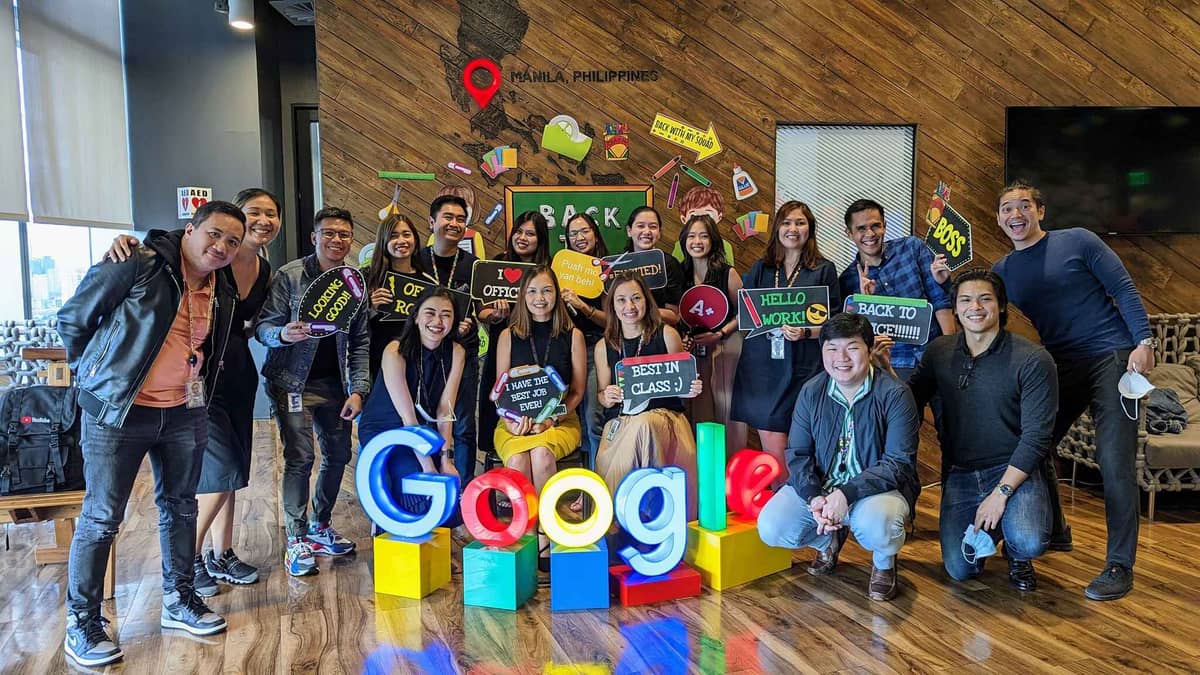
THE Google PH Team.
It was a period when “we had a dial-up modem and a dream,” she quipped during the most recent DLS-CSB Commencement Exercises.
Speaking to students poised at the edge of the job market, Palacios returned to basic principles. “As you start your own journeys tomorrow, don’t rush to the ‘top’ so fast that you forget to build your foundation. First, firm up your identity. In your early career, choose a role that gives you the right experience and learning. Look closely at the values of the people and the company you’ll be working with. Your environment will help you identify your own beliefs, and these will be the gravity that guides your decisions for the rest of your life.”
Goals, she said, must follow close behind. “Second, align with your purpose. Success isn’t just about a title, a paycheck, or a big team. It’s about finding meaning. When your career aligns with your personal purpose, it gives you the ‘superpowers’ to make things happen.” And each day, she urged them to ask: “What impact do I want to make? What problems do I want to solve? And how can I use my unique capability to create a better world?”
In the age of artificial intelligence, Palacios, as country lead, addressed the anxiety surrounding its rise. “I want to be very clear: AI is not here to do your job for you; it is here to help you do your job better than ever before. Think of AI as your ‘supercharged guide, mentor or coach’ and your ‘brainstorming partner’.”
Efficiency, she noted, should return time to what machines cannot replicate: “leading with your heart and mind.” In an “AI reality,” she reminded them, “your human values are not obsolete — they are your greatest competitive advantage.”
Her closing challenge was simple yet demanding: to become “net positive” — a presence that drives force, uplifts communities, and improves lives.
We recently exchanged some words through an online medium, and these are her thoughts on some pressing topics:
On personal philosophy
“My personal philosophy is rooted in the belief that intention is the architect of reality. I’ve always maintained that you can achieve almost anything if you are willing to commit both your heart and your mind to it — it’s that intersection of passion and discipline where the magic happens.
“For me, leadership starts with a clear vision. I believe that how you see yourself in the future acts as a North Star; it creates a mental framework that subconsciously influences every conversation held, every decision, and every risk taken. If you can see the destination clearly, the path — no matter how difficult — becomes a series of logical steps rather than an insurmountable obstacle.”
On pursuing a career in tech:
“I chose a degree in technology because I was fascinated by the idea that code and logic could solve human problems at scale. I didn’t just want to see the future; I wanted to build it.
“I began my journey as a business software consultant, which was a formative experience. It taught me that technology is never just about the hardware or the software — it’s about the people and the businesses it empowers. Even then, I held a quiet, ‘bold’ ambition: I dreamed of working for a company that didn’t just build tools, but defined the very frontier of what was possible.”
On joining Google
“Joining Google was the realization of that dream. What triggered my lifelong passion for this industry is the same thing that excites me today about AI: the opportunity to take complex, powerful technology and make it universally accessible and useful. In the ‘90s, we were connecting computers. Today, through AI, we are connecting human intent with helpful solutions. My career has been a 30-year mission to ensure that as technology becomes more sophisticated, it also becomes more human-centric.”
On role at Google
“In essence, my role is to ensure that as the world moves into an AI-driven future, the Philippines isn’t just a spectator, but a leader. I see myself as a bridge between Google’s global innovation and the unique, vibrant needs of the Filipino people.
Championing the digital economy. I lead our local strategy to help Filipino businesses — from large corporations to micro-entrepreneurs — harness tools like Google Search and YouTube to grow. My goal is to help reinforce the Philippines’ position as the fastest-growing digital economy in Southeast Asia.
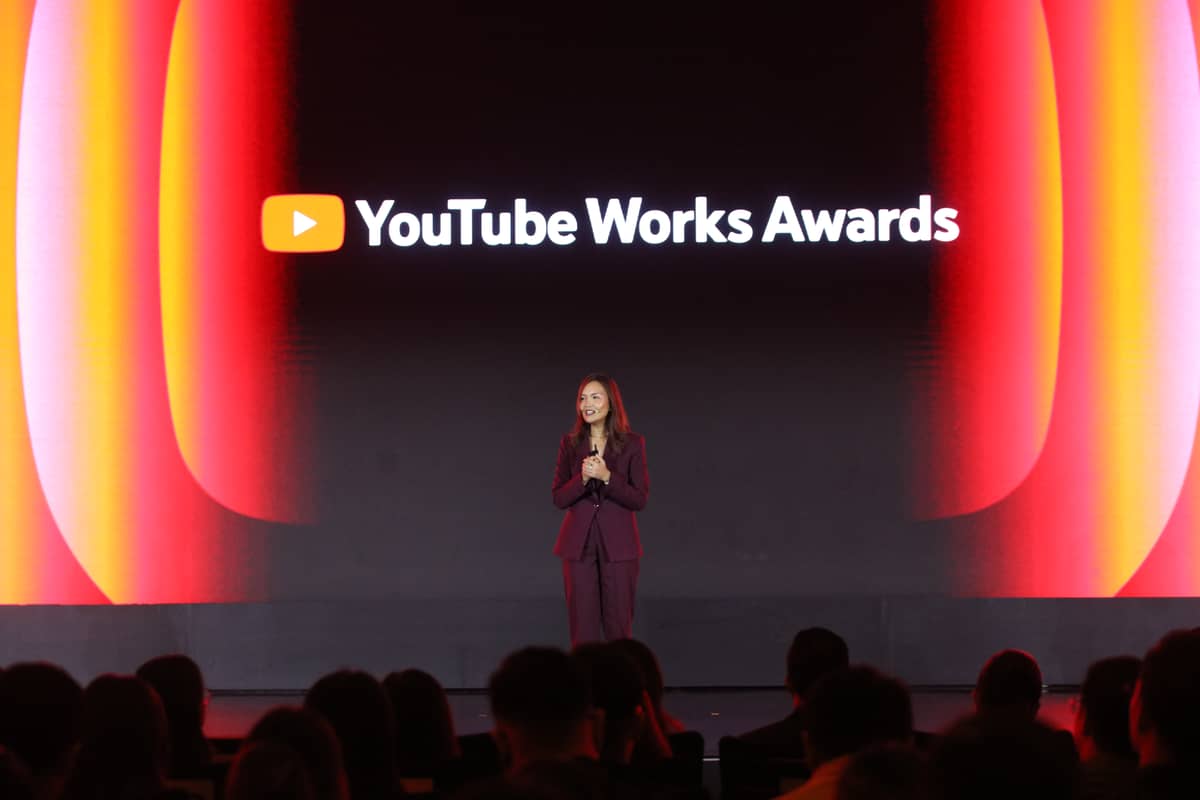
THE Google PH country Head at the YouTube Works Awards.
Driving the ‘AI transition.’ We are at a pivotal moment where AI is transforming everything. My job is to empower organizations to navigate this shift responsibly, ensuring they have the skills and the technology (like Gemini-supercharged Search) to innovate and scale.
Local advocacy and impact. I am the ‘voice’ of Google in the Philippines and the ‘voice’ of the Philippines within Google. Whether it’s through initiatives like Google Career Certificates that upskill our workforce, or infrastructure projects like subsea cables to improve our internet, my role is to ensure our presence here creates a meaningful ‘handprint’ on the nation’s progress.
“On a personal level, it’s about service. I feel a deep responsibility to ensure that the technology we build at Google translates into real-world opportunities for the Filipino family, student, and business owner.”
On Google tools
“In the simplest terms, AI acts as a supercharged tutor for students and a teaching assistant for educators, helping them move past the ‘blank page’ and focus on deep learning.
“For the average student, AI isn’t about finding shortcuts; it’s about personalized learning. For a professor, it’s about scaling their impact and reducing the administrative burden that leads to burnout.
“I recommend these three simple-to-use tools in our arsenal:
“Gemini. Professors can use ‘Help me write’ to instantly generate a first draft of a lesson plan or create five different versions of a quiz to cater to different learning levels. For students, it’s an incredible brainstorming partner — if you’re stuck on an essay topic, you can ‘chat’ with Gemini to explore different angles and perspectives.
“NotebookLM. This is perhaps the most powerful tool for academia. You can upload your syllabus, textbooks, or lecture notes, and it creates a personalized AI ‘expert’ on that material. It can generate study guides, cite its sources directly from your notes, and even help you understand complex concepts by explaining them in simpler terms.
“Google Lens. This is a lifesaver for STEM students. If you’re stuck on a complex calculus equation or a physics diagram in a textbook, you can simply take a photo. Lens doesn’t just give you the answer; it provides a step-by-step explanation of the logic required to solve it, reinforcing the actual learning process.
“At Google, we want to ensure AI helps students ‘learn how to learn,’ making education more interactive, accessible, and inclusive for everyone.”
On YouTube’s prevalence
“In the Philippines, we’ve reached a fascinating turning point where we can confidently say that YouTube has become the new mainstream media. It’s no longer just a video site; for 90 percent of Filipinos, it is a daily habit and their primary window to the world.
“To answer your question directly: has it replaced television? In the hearts and habits of Filipinos, it has redefined it. Our data from 2025 shows that 88 percent of Filipinos in rural Visayas and Mindanao are now on YouTube daily. What’s even more telling is that one in two Filipinos now says that watching YouTube on their phone is ‘watching TV.’ The screen size doesn’t matter as much as the connection they feel with the content. We are seeing a ‘Living Room Revolution’ where more than half of Pinoy households are now streaming YouTube directly on their actual TV sets.”
On ‘Moonshots’
“At Google, we often talk about ‘Moonshots’—aiming for a 10x improvement rather than just 10 percent. My philosophy mirrors that: when you set an audacious goal and align your ‘headspace’ with it, you stop looking for reasons why things won’t work and start finding the one way they will. Whether I am navigating the complexities of the AI era or mentoring the next generation of leaders, I lead with the conviction that purpose-driven clarity is the most powerful tool we own.”
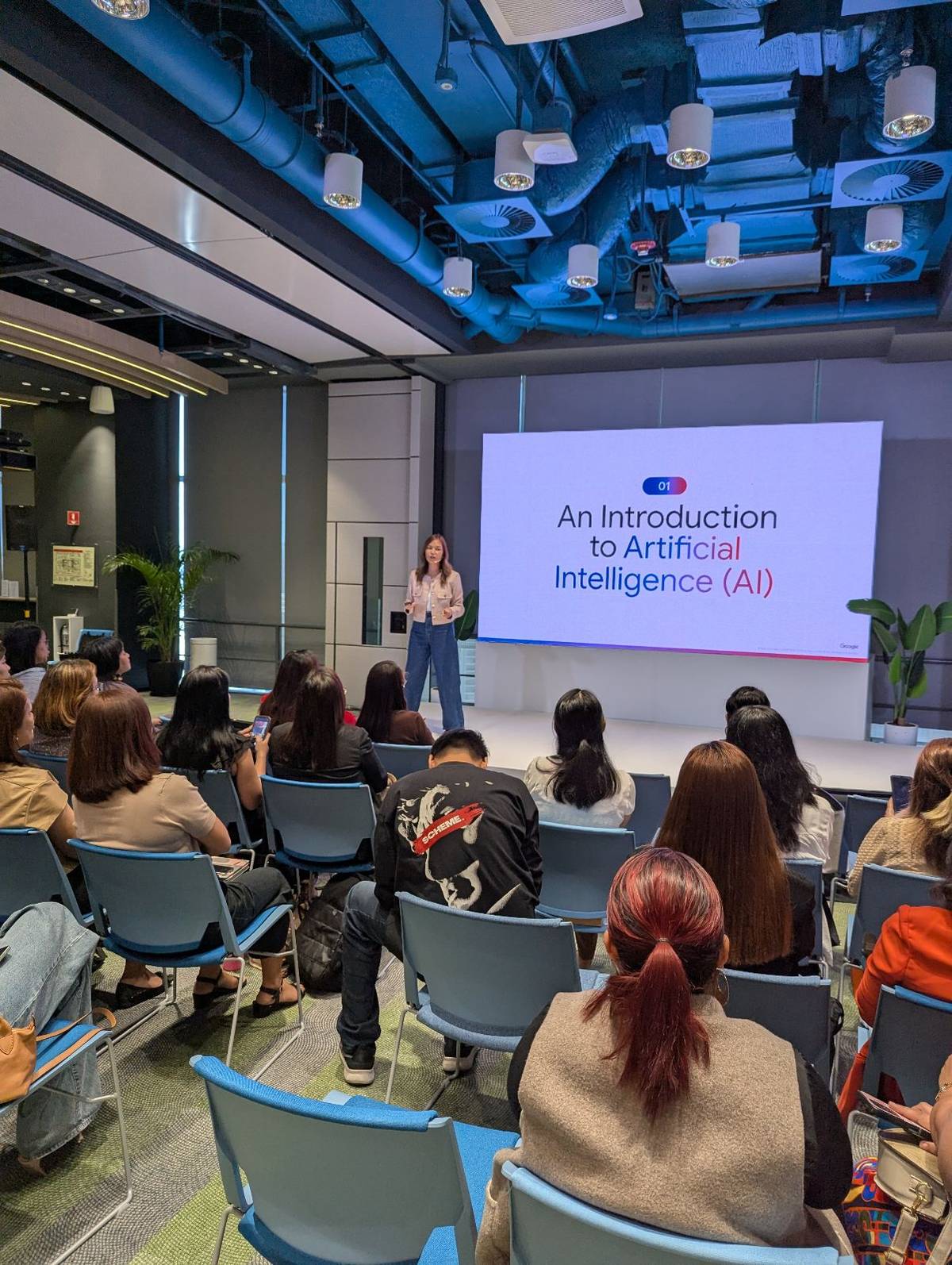
THE industry leader introduces AI to the younger crowd.
PHOTOGRAPH courtesy of prep palacios
On mitigating negative effects of AI
“At Google, we believe our approach to AI must be bold and responsible. Being bold means we recognize AI as the most powerful tool we’ve ever had to tackle global challenges like climate change.
“But being responsible means we are clear-eyed about the environmental footprint required to build it.
“To mitigate these effects, we are focusing on three core pillars:
Leading by Example in our Operations: Our data centers are already some of the most efficient in the world. We’ve set a ‘moonshot’ goal to operate on 24/7 carbon-free energy on every grid where we operate by 2030. Even as AI demand grows, we are decoupling our growth from our emissions through custom-built hardware — like our Trillium TPUs, which are significantly more energy-efficient than standard chips — and using AI itself to optimize our data center cooling in real-time.
AI as a Climate Catalyst: While AI consumes energy, its greatest value lies in its “handprint” — how it helps the rest of the world reduce emissions. From Project Green Light, which uses AI to reduce stop-and-go traffic in cities, to contrail prevention in aviation, we are already seeing AI enable emissions reductions that far exceed our own footprint.
“Transparency and Stewardship: We don’t have all the answers yet, and the road to Net Zero is complex. That’s why we focus on transparency, publishing our environmental reports and investing in water replenishment projects where we aim to return 120 percent of the freshwater we consume by 2030.”
On advice for women in tech
“Align your career with your life’s purpose. In my three decades in the tech industry, I’ve learned that true success isn’t just about technical skills; it’s about finding meaning in your work. When your career aligns with your personal purpose, you’re not just working a job, you’re fulfilling a calling. This also helped me build resilience over time. There will always be challenges, no matter what industry or career you choose. But when you’re driven by a deeper purpose, you’re better equipped to navigate those obstacles. Ask yourself: What impact do I want to make? What problems do I want to solve? How can technology be a vehicle for my values? When you find that connection, you’ll find a reason to get up each morning and will sustain you through the inevitable ups and downs.
“Cultivate a learner mindset. Technology is evolving at an unprecedented pace. What’s cutting-edge today might be obsolete tomorrow. To thrive in the tech industry, you must embrace a learner mindset. This means being curious, adaptable, and committed to lifelong learning. Do not allow the continuous introduction of new technologies overwhelm you. Instead, see it as an opportunity to expand your knowledge and skills. Take advantage of online courses, workshops, conferences, and mentorship opportunities. Embrace challenges as learning experiences.
“Be passionate on how technology impacts people’s lives. Technology is not just about complex programs or algorithms; it’s about how it improves people’s lives. It’s about connecting people, solving problems, and or providing access to the world’s information (hint: Google it). Let your passion for helping people through technology drive your work. “When you see the real-world applications of your skills, you’ll find a deeper sense of fulfillment. Whether you’re developing software that simplifies everyday tasks or creating solutions that address critical social issues, remember that your work has the potential to make a difference. This passion will not only fuel your career but also inspire others to join the tech field.”